

15:00 JST, February 8, 2026
Just because many parties have pledged a consumption tax cut, does that mean that one really needs to be implemented? Do each party’s assertions truly outline a path to deal with the rapidly changing circumstances on the international stage?
Each person must cast their very important vote for the party or candidate they feel has presented convincing policies.
The 51st general election of the House of Representatives was held Sunday. The primary focus of the election was whether the new coalition of the Liberal Democratic Party and the Japan Innovation Party could win the public’s confidence.
Before the lower house was dissolved, the ruling coalition barely maintained a majority, with the cooperation of unaffiliated lawmakers. The situation largely reflected the impact of the LDP’s crushing defeats in the most recent two national elections.
If Prime Minister Sanae Takaichi can regain the support that was lost from conservative and young voters and lead the coalition to a significant increase in seats, her administration will likely stabilize.
Meanwhile, the newly formed Centrist Reform Alliance has put forward realistic pledges, such as to acknowledge the constitutionality of security-related legislation. However, opinion surveys suggest the party is struggling. Depending on the election results, there could be a political realignment involving other opposition parties.
For the latest lower house election, the period between the dissolution and voting day was just 16 days, the shortest since the end of World War II.
In some municipalities, polling station admission tickets were sent out late. However, partly because of calls from local governments, the number of early votes in the single-seat constituency segment had reached about 20.79 million as of Friday, an increase of over 4 million compared to the corresponding period in the previous general election in 2024.
Since 2012, voter turnout in lower house elections has remained in the 50% range for five consecutive elections. In the 2024 general election, it stood at 53.85%, the third lowest figure since the end of World War II. This situation, in which over 40% of eligible voters do not exercise their right to vote, could undermine the foundation of democracy.
In this election, concerns remain that severe weather could drag turnout down.
The slump in voter turnout is particularly noticeable in younger generations. According to an Internal Affairs and Communications Ministry survey, voter turnout stood at only 39.43% among teens and just 34.62% among those in their 20s.
Parties have advocated measures to reduce people’s burdens. However, if alternative fiscal sources are not secured, the bill will be passed onto future generations. This is a critical issue for young people. Elections are important opportunities for them to express their will.
The spread of social media is said to have increased people’s interest in elections and politics. However, cyberspace is also rife with false and misleading information.
In this latest election too, fake videos, likely created by third parties using generative artificial intelligence, have gone viral. Voter behavior could be distorted, which would be utterly unacceptable.
Voters should use other reliable media to fact-check information.
(From The Yomiuri Shimbun, Feb. 8, 2026)





Most Read
Popular articles in the past 24 hours
-
Seeking Nuclear Waste Site, Japan Eyes Remote Island of Minami-To...
-

Total Lunar Eclipse Visible for Some in Japan, While Clouds Block...
-

Japan Ministry Asks to Conduct Nuclear Waste Disposal-related Sur...
-

WBC to Begin: All the Pieces are in Place for Japan’s Second Stra...
-

Milano Cortina 2026: Ceremony for Winter Paralympic Torch Relay T...
-

Tokyo High Court Upholds Unification Church Dissolution Order; Li...
-

How Trump Assassination Attempts Played into His Decision to Atta...
-

CARTOON OF THE DAY (March 4)
Popular articles in the past week
-
Tokyo Spends Big on Children, Wins Over Parents
-

Japan’s Miura, Kihara Announce Withdrawal from Figure Skating Wor...
-

South Korea Tightens Rules on Foreigners Buying Homes in Seoul Me...
-

BOJ Keeping Eye on Economy and Takaichi's ‘Proactive Fiscal Polic...
-
Tokyo Measles Patient Traveled to Fukuoka Aboard JAL Planes; Susp...
-
Nidec Chairman Resigns Amid Accounting Scandal at Major Japanese ...
-

Strait of Hormuz Closure Shakes Markets; Prolonged Closure Could ...
-

Tourists Ignore Safety Barriers Near Famous Zao ‘Snow Monsters’ i...
Popular articles in the past month
-

Producer Behind Pop Group XG Arrested for Cocaine Possession
-

Japan PM Takaichi’s Cabinet Resigns en Masse
-

Man Infected with Measles Reportedly Dined at Restaurant in Tokyo...
-

Israeli Ambassador to Japan Speaks about Japan’s Role in the Reco...
-

Videos Plagiarized, Reposted with False Subtitles Claiming ‘Ryuky...
-

Prudential Life Insurance Plans to Fully Compensate for Damages C...
-

Woman with Measles Visited Hospital in Tokyo Multiple Times Befor...
-

iPS Treatments Pass Key Milestone, but Broader Applications Far f...
Top Articles in Editorial & Columns
-
Riku-Ryu Pair Wins Gold Medal: Their Strong Bond Leads to Major Comeback Victory
-

Reciprocal Tariffs Ruled Illegal: Judiciary Would Not Tolerate President’s High-Handed Approach
-
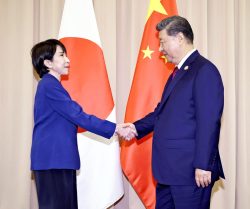
China Provoked Takaichi into Risky Move of Dissolving House of Representatives, But It’s a Gamble She Just Might Win
-
Flu Cases Surging Again: Infection Can Also Be Prevented by Humidifying Indoor Spaces
-
Japan’s Plan for Investment in U.S.: Aim for Mutual Development by Ensuring Profitability
JN ACCESS RANKING
-
Producer Behind Pop Group XG Arrested for Cocaine Possession
-
Japan PM Takaichi’s Cabinet Resigns en Masse
-
Man Infected with Measles Reportedly Dined at Restaurant in Tokyo Station
-
Israeli Ambassador to Japan Speaks about Japan’s Role in the Reconstruction of Gaza
-
Videos Plagiarized, Reposted with False Subtitles Claiming ‘Ryukyu Belongs to China’; Anti-China False Information Also Posted in Japan