
Insurance Coverage for Childbirth: Financial Burden on Expectant Mothers Must Be Reduced
14:29 JST, December 23, 2025
If childbirth costs were uniformly capped regardless of which hospital or clinic is used, mothers could give birth with peace of mind, free from financial worries.
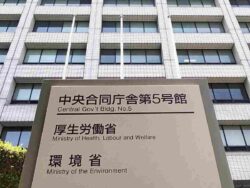
The Health, Labor and Welfare Ministry has announced a policy to abolish the program that provides a lump-sum allowance for childbirth and childcare for expectant mothers and instead introduce a system to cover all childbirth costs through public health insurance. The ministry aims to realize the necessary legal revisions during next year’s ordinary Diet session.
Currently, the costs of normal deliveries are determined at the discretion of medical institutions because normal deliveries are not covered by the public health insurance program. To help cover these expenses, the government began providing a lump-sum allowance to expectant mothers through organizations such as health insurance associations starting in 1994.
The amount of the lump-sum allowance was initially ¥300,000, but it is now ¥500,000. A cycle has persisted in which medical institutions raise delivery fees, prompting the government to increase the lump sum, which then leads medical institutions to raise fees again, followed by another government lump sum increase.
Having the public health insurance program cover childbirth costs aims to put an end to this game of cat and mouse.
According to the ministry’s survey, the national average fee for childbirth in fiscal 2024 was ¥520,000. In Tokyo, the average was ¥650,000. Fees tend to be higher in urban areas. Reducing the burden on expectant mothers as part of measures to counter the declining birth rate is understandable.
However, medical institutions have expressed concern that a uniform official price for childbirth set by the government could worsen their financial situation.
Many medical institutions include the costs of celebratory luxury meals and commemorative photography in childbirth fees. A uniform official price set by the government is seen as one factor behind the concern of medical institutions because setting one would make it difficult to include such services, which are unrelated to medical treatment, within the childbirth fees.
Obstetrics inherently tends to involve various high costs. To maintain a 24-hour readiness for deliveries, sufficient staff must be secured in advance.
Due to the declining birth rate, the number of medical institutions handling deliveries has halved over nearly 30 years. If more institutions cease providing care because they believe insurance coverage for delivery costs eliminates potential revenue, it would be pointless.
When setting an official price, sufficient consideration must be given to the financial conditions of medical institutions. Shouldn’t consideration be given to providing additional medical service fees to medical institutions in rural areas facing a shortage of obstetricians, as well as to clinics to secure robust medical staff?
Furthermore, while women who give birth through cesarean section also receive a lump-sum payment, they must pay out-of-pocket fees to bear a portion of the surgical costs. The government’s policy is to partially subsidize these surgical costs if delivery expenses are set at an official price. A sense of unfairness compared to normal deliveries must be prevented from arising.
(From The Yomiuri Shimbun, Dec. 23, 2025)




Most Read
Popular articles in the past 24 hours
-
JR Tokai Breaks Ground on Yamanashi Maglev Station; Will Be Part ...
-

Milano Cortina 2026: Japan’s Alpine Skier Muraoka Extends P...
-
Rising Kabuki Star Works to Ensure Deaf Audience's Enjoyment of P...
-

Japan Considering Taking Part in U.S. ‘Golden Dome’ Defense Syste...
-

Lady Bess: Iroha Okuda, Mayuko Kominami Discuss Performing Elizab...
-

46 Evacuated from UAE, Oman on Japanese Govt-chartered Flight
-

Japan's TEPCO Releases Footage from Fukushima N-Plant Reactor
-

Driver Dies in Collision with Express Train at Crossing in Mito; ...
Popular articles in the past week
-

Japan Figure Skating Legend Yuzuru Hanyu Is Proud Disaster Surviv...
-

Nippon Life Insurance's U.S. Arm Sues OpenAI Over Legal Assistanc...
-

Govt to Utilize ODA for Ensuring Economic Security; Securing Ener...
-
Massive Sewer Pipe Found Jutting Out of Highway in Osaka
-

15 Measles Patients Confirmed in Tokyo in Past 6 Days; 1 May Have...
-
Japan Govt to Tighten Requirements to Receive Permanent Residency...
-

Beckoning Cats Get Makeover to Fit Modern Lifestyles with Sleek D...
-
Japan Govt Survey Finds Just 10% of Workers Want Working Hours to...
Popular articles in the past month
-

Producer Behind Pop Group XG Arrested for Cocaine Possession
-

Japan PM Takaichi’s Cabinet Resigns en Masse
-

Man Infected with Measles Reportedly Dined at Restaurant in Tokyo...
-

Videos Plagiarized, Reposted with False Subtitles Claiming ‘Ryuky...
-
Japan Figure Skating Legend Yuzuru Hanyu Is Proud Disaster Surviv...
-

iPS Treatments Pass Key Milestone, but Broader Applications Far f...
-

Sanae Takaichi Elected Prime Minister of Japan; Keeps All Cabinet...
-

Nepal Bus Crash Kills 19 People, Injures 25 Including One Japanes...
Top Articles in Editorial & Columns
-

Riku-Ryu Pair Wins Gold Medal: Their Strong Bond Leads to Major Comeback Victory
-

Reciprocal Tariffs Ruled Illegal: Judiciary Would Not Tolerate President’s High-Handed Approach
-
Japan’s Plan for Investment in U.S.: Aim for Mutual Development by Ensuring Profitability
-

Chronic Issues Erode Thailand’s Economy as Political Confusion Persists, Threatening Terminal Decline in Its Economy
-
Iran Situation: Japan Must Exert Diplomatic Efforts without Merely Standing by
JN ACCESS RANKING
-
Producer Behind Pop Group XG Arrested for Cocaine Possession
-
Japan PM Takaichi’s Cabinet Resigns en Masse
-
Man Infected with Measles Reportedly Dined at Restaurant in Tokyo Station
-
Videos Plagiarized, Reposted with False Subtitles Claiming ‘Ryukyu Belongs to China’; Anti-China False Information Also Posted in Japan
-
Japan Figure Skating Legend Yuzuru Hanyu Is Proud Disaster Survivor and Gold Medalist, Vows to Continue Support Efforts