
13:59 JST, December 9, 2025
Next year’s shunto spring wage negotiations will be a critical moment for overcoming prolonged high prices. The labor and management sides are urged to deepen dialogue more actively than ever to achieve increases in real wages.
At the end of last month, the Japanese Trade Union Confederation (Rengo) formulated its basic policy for the 2026 shunto. It will demand a wage increase of “5% or more” overall, and “6% or more” for small and midsize companies. The targets are a combination of pay-scale hikes to raise the level of base pay for employees and regular salary increases.
Price increases began accelerating in spring 2022 due to soaring energy prices following Russia’s launch of its aggression against Ukraine and supply constraints caused by the COVID-19 pandemic. Wage increases have failed to keep pace with inflation, resulting in negative real wage growth for over 3½ years. Public dissatisfaction is strong.
The average wage increase rate after the 2024 shunto was 5.10%, and for 2025 it was 5.25%, achieving rates in the 5% range for two consecutive years and yielding results to some extent. However, unless real wage increases turn positive, a tangible sense of improved living standards will remain elusive.
While high tariffs imposed by U.S. President Donald Trump have had an impact, large corporations still enjoy high profit levels. They are urged not to use U.S. tariffs as an excuse to slow wage increases.
To broaden the wave of wage growth, substantial wage increases at small and midsize companies, which account for 70% of overall employment in the nation, are essential.
Over the past two years, wage increases at small and midsize companies have consistently fallen short of demands, remaining in the mid-4% range. Correcting the gap in wage increases between large corporations and small and midsize companies must be urgently addressed.
When taking price trends into consideration, next year’s spring wage negotiations carry immense significance. This is because real wages may reach a phase in which they turn to growth.
The increases in the consumer price index for items excluding fresh food have generally remained above 3% this year. According to a private research institution, the surge in prices for items like food is expected to ease next year, with the increase in the overall CPI forecast to be less than 2%.
Labor shortages are worsening and competition for human resources is intensifying across all industries. It is important for management to reaffirm that continuous investment in people is the source of growth.
Prime Minister Sanae Takaichi convened a meeting of leaders of the government as well as the business and labor circles to exchange opinions. It was the first such tripartite meeting since Takaichi took office, and the prime minister called for wage increases on the same levels as the ones in 2024 and 2025.
The government should also strengthen oversight of large corporations to ensure that small and midsize companies can pass on rising costs of such items as raw materials in their bills to large corporations, thereby supporting wage increases at small and midsize companies.
Japan is in a phase of moving toward a “growth-oriented economy” in which both wages and investment increase, a situation in which fueling inflation must be avoided. It is also vital for the government and the Bank of Japan to carefully manage fiscal and monetary policies to prevent rising prices driven by excessive depreciation of the yen.
(From The Yomiuri Shimbun, Dec. 9, 2025)




Most Read
Popular articles in the past 24 hours
-

McDonald's Japan Raises Prices; Big Mac to Cost ¥500, Double Chee...
-

Nepal Bus Crash Kills 19 People, Injures 25 Including One Japanes...
-

Japan’s Nikkei Stock Average Rises as AI-Related Stocks Shine; Co...
-

Aggression against Ukraine: Malignant Precedent Must Not Be Set t...
-

Joruri Bunraku Narrative Performed in Honor of Donald Keene by La...
-

Milano Cortina 2026: Gold Medal Olympic Figure Skaters Riku Miura...
-

Kanto's 1st Spring Wind Blows as Tokyo Sees Unseasonably High Tem...
-

How Keri Russell's Suede Coach Boots Ended up in My Closet
Popular articles in the past week
-

Producer Behind Pop Group XG Arrested for Cocaine Possession
-

Sanae Takaichi Elected Prime Minister of Japan; Keeps All Cabinet...
-

Japan's Govt to Submit Road Map for Growth Strategy in March, PM ...
-

Bus Carrying 40 Passengers Catches Fire on Chuo Expressway; All E...
-

Japan, U.S. Name 3 Inaugural Investment Projects; Reached Agreeme...
-

Riku-Ryu Pair Wins Gold Medal: Their Strong Bond Leads to Major C...
-

iPS Treatments Pass Key Milestone, but Broader Applications Far f...
-

Tokyo Skytree's Elevator Stops, Trapping 20 People; All Rescued (...
Popular articles in the past month
-
Producer Behind Pop Group XG Arrested for Cocaine Possession
-

Japan PM Takaichi’s Cabinet Resigns en Masse
-

Japan Institute to Use Domestic Commercial Optical Lattice Clock ...
-

Man Infected with Measles Reportedly Dined at Restaurant in Tokyo...
-

Israeli Ambassador to Japan Speaks about Japan’s Role in the Reco...
-

Videos Plagiarized, Reposted with False Subtitles Claiming ‘Ryuky...
-

Man Infected with Measles May Have Come in Contact with Many Peop...
-

Prudential Life Insurance Plans to Fully Compensate for Damages C...
Top Articles in Editorial & Columns
-
Riku-Ryu Pair Wins Gold Medal: Their Strong Bond Leads to Major Comeback Victory
-
Reciprocal Tariffs Ruled Illegal: Judiciary Would Not Tolerate President’s High-Handed Approach
-
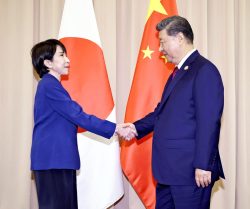
China Provoked Takaichi into Risky Move of Dissolving House of Representatives, But It’s a Gamble She Just Might Win
-
University of Tokyo Professor Arrested: Serious Lack of Ethical Sense, Failure of Institutional Governance
-
Japan’s Plan for Investment in U.S.: Aim for Mutual Development by Ensuring Profitability
JN ACCESS RANKING
-
Producer Behind Pop Group XG Arrested for Cocaine Possession
-
Japan PM Takaichi’s Cabinet Resigns en Masse
-
Man Infected with Measles Reportedly Dined at Restaurant in Tokyo Station
-
Israeli Ambassador to Japan Speaks about Japan’s Role in the Reconstruction of Gaza
-
Videos Plagiarized, Reposted with False Subtitles Claiming ‘Ryukyu Belongs to China’; Anti-China False Information Also Posted in Japan