
15:38 JST, November 12, 2025
It is impossible to tell what might lead to a suspect’s arrest in a case. The hope is that police will analyze again the evidence and information that have already been gathered to find clues that will lead to the resolution of a case.
In the murder incident in which housewife Namiko Takaba was killed in an apartment in Nagoya in November 1999, the Aichi prefectural police arrested Kumiko Yasufuku, a resident of the same city, on suspicion of murder. This marked a significant development 26 years after the incident occurred.
Yasufuku was in the same year at the high school attended by the victim’s husband, Satoru, and they were also members of the same club at the school. Yasufuku is suspected of killing Namiko through such actions as stabbing her in the neck with a knife in a room of the apartment where Namiko lived with her family of three. Yasufuku has reportedly admitted to the allegations against her.
During the investigation, the prefectural police questioned over 5,000 people, primarily focusing on acquaintances and associates. The suspect was reportedly one of the individuals questioned.
The incident entered a new phase last year when the police reexamined investigative documents concerning the incident and picked out again several hundred people who investigators deemed to require further questioning. After the police questioned Yasufuku multiple times on a voluntary basis starting in August this year, she ultimately turned herself in, according to the police.
It can be said that the review of the investigation led to the suspect’s arrest, but it also raises a point for reflection as to why it took as many as 26 years. It is crucial for the police to learn lessons from this case and apply them to future incidents.
According to the National Police Agency, there are at least 370 unsolved murder cases nationwide. Beyond these, numerous other cases remain unresolved, including missing children and others, as well as hit-and-run incidents.
Long-term unsolved incidents are called “cold cases.” This is because it is said that time passes and investigations are at a deadlock. However, there is always a possibility that such cases could move toward resolution due to new information arising or advances in science and technology.
DNA testing technology and its accuracy have made tremendous strides in recent years. DNA samples collected by police are entered into databases and utilized to identify perpetrators in unsolved cases.
Investigators in charge change as investigations drag on, but a review of investigations from a fresh perspective could surely lead to resolution in some cases.
Is there anything within the evidence and information already collected that could connect to the perpetrator? Police must reexamine the investigative materials of unsolved incidents.
The Code of Criminal Procedure was revised in 2010, abolishing the statute of limitations for murder charges. Without this change, it is highly likely that the incident in Nagoya would have been subject to the statute of limitations. It was victims’ families, including Namiko’s husband, who had advocated for the abolition of the statute of limitations.
To fulfill the wishes of these bereaved families, it is hoped that police will spare no effort in working toward resolving these unsolved cases.
(From The Yomiuri Shimbun, Nov. 12, 2025)



Most Read
Popular articles in the past 24 hours
-

Japan Defense Agency to Develop AI Intelligence Analysis System f...
-

Moai Statue Shows Lasting Bond Between Miyagi Pref. Town, Easter ...
-

Milano Cortina 2026: Japan’s Oguri Wins Para Snowboard Silver at ...
-
Japan's Defense Ministry: North Korea Appears to Have Fired Balli...
-
Aichi Fisheries Cooperatives Use Smart Tech to Farm Triploid Oyst...
-
Teachers Support Students’ Inquiry Learning behind the Scenes
-
Japan's Lower House Passes Budget Proposal; Could Be Delayed in U...
-

National Intelligence Council: Proposed Body Must Be Utilized To ...
Popular articles in the past week
-
Japan Figure Skating Legend Yuzuru Hanyu Is Proud Disaster Surviv...
-
Govt to Utilize ODA for Ensuring Economic Security; Securing Ener...
-
15 Measles Patients Confirmed in Tokyo in Past 6 Days; 1 May Have...
-
Massive Sewer Pipe Found Jutting Out of Highway in Osaka
-
Japan Govt to Tighten Requirements to Receive Permanent Residency...
-
JR Tokai Breaks Ground on Yamanashi Maglev Station; Will Be Part ...
-

Beckoning Cats Get Makeover to Fit Modern Lifestyles with Sleek D...
-
Power Outage Forces About 980 Passengers in Yokohama to Walk to T...
Popular articles in the past month
-

Producer Behind Pop Group XG Arrested for Cocaine Possession
-

Japan PM Takaichi’s Cabinet Resigns en Masse
-

Man Infected with Measles Reportedly Dined at Restaurant in Tokyo...
-

Videos Plagiarized, Reposted with False Subtitles Claiming ‘Ryuky...
-
Japan Figure Skating Legend Yuzuru Hanyu Is Proud Disaster Surviv...
-

iPS Treatments Pass Key Milestone, but Broader Applications Far f...
-

Sanae Takaichi Elected Prime Minister of Japan; Keeps All Cabinet...
-

Nepal Bus Crash Kills 19 People, Injures 25 Including One Japanes...
Top Articles in Editorial & Columns
-

Riku-Ryu Pair Wins Gold Medal: Their Strong Bond Leads to Major Comeback Victory
-
Reciprocal Tariffs Ruled Illegal: Judiciary Would Not Tolerate President’s High-Handed Approach
-
Japan’s Plan for Investment in U.S.: Aim for Mutual Development by Ensuring Profitability
-
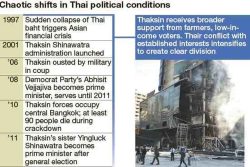
Chronic Issues Erode Thailand’s Economy as Political Confusion Persists, Threatening Terminal Decline in Its Economy
-
Iran Situation: Japan Must Exert Diplomatic Efforts without Merely Standing by
JN ACCESS RANKING
-
Producer Behind Pop Group XG Arrested for Cocaine Possession
-
Japan PM Takaichi’s Cabinet Resigns en Masse
-
Man Infected with Measles Reportedly Dined at Restaurant in Tokyo Station
-
Videos Plagiarized, Reposted with False Subtitles Claiming ‘Ryukyu Belongs to China’; Anti-China False Information Also Posted in Japan
-
Japan Figure Skating Legend Yuzuru Hanyu Is Proud Disaster Survivor and Gold Medalist, Vows to Continue Support Efforts