
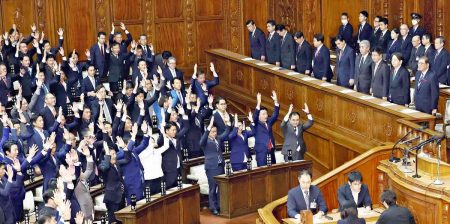
The House of Representatives was last dissolved on Oct. 10, 2024.
8:00 JST, January 24, 2026
About two months ago, Prime Minister Sanae Takaichi wrote on social media that she had broken a glass ceiling when she was elected president of the ruling Liberal Democratic Party and then took office as the first female head of Japan’s government. Now, the House of Representatives has been dissolved at her direction and a lower house election will be held in February. No one knows whether the ruling coalition will make a good showing that enhances her power base or a poor showing that forces her to step down.
In either case, I hope this election sets the stage for breaking another rigid traditional “ceiling,” one that is based on lawmakers’ seniority or number of terms. In Japanese politics, a Diet member is usually evaluated more on how many times he or she has been elected than on ability or leadership.
Veteran leaders have assumed the reins of successive LDP-led governments. Takaichi and her most recent predecessors — Shigeru Ishiba, Fumio Kishida and Yoshihide Suga — each spent more than two decades as Diet members before becoming prime minister. Shinzo Abe, Japan’s longest-serving prime minister, was first elected to the lower house in 1993 and formed his first Cabinet a “short” 13 years later. But his grandfather, Nobusuke Kishi, was a prime minister, and Abe had been a secretary for his father, Shintaro Abe, a leading LDP politician. Shinzo Abe was regarded as having had a long political career considering his age.
In the LDP leadership elections, the number of terms a politician has served counts for a lot. How did this come to pass? I suppose part of the reason is that a certain procedural rule for LDP presidential races has blocked motivated but less experienced young members. If an LDP lawmaker wants to run for party president, he or she needs to collect endorsements from more than 20 colleagues.
A faction leader or powerful politician who has taken care of newcomers for a long period has a great advantage over younger members. Maverick but longtime leaders like Takaichi and Ishiba, who served as ministers and held prominent party positions before running in presidential elections, had also gained popularity among the party’s regular members.
In forming a cabinet, one of the most important criteria for choosing a new minister is the number of terms they have served. Although there have been some exceptions, an LDP member of the House of the Representatives needs to have been elected at least five times to be eligible for a cabinet post. Even a Diet member who has experience serving as a prefectural governor has no special advantage in contests for promotion within the LDP.
It takes many years to become a full-fledged politician in such a party. This seniority ranking system is likened to an apprenticeship in a traditional Japanese organization, and some party members may think that this is natural and easy to understand rather than an arbitrary choice.
Among Takaichi’s Cabinet members, the only exception to this criterion is digital minister Hisashi Matsumoto, who was first elected to the House of the Representatives in 2021 and has won election only twice. He is a famous doctor and a leading authority on emergency care, and was handpicked by Takaichi.
A seniority-based approach to the qualification of leaders is not limited to the LDP. The three prime ministers from the Democratic Party of Japan, in power from 2009 to 2012, had served in the Diet for a long time and held major party positions before taking office.
One might expect these features to be common in countries that have parliamentary cabinet systems. That is so, but there have been some exceptions. British Prime Minister Keir Starmer entered politics in 2015 and took office in 2024. Giorgia Meloni became prime minister of Italy at age 45, just 16 years after her first election to Parliament. Canada chose ruling party leader Mark Carney as the prime minister before he became a member of the lower house.
These countries had suffered economic crises or a loss of trust in government. So, they dared to apply new criteria, choosing an outsider or less experienced politician as their leader to change the direction of politics. As Japan needs to revitalize its stagnant economy, even if it may be risky, we should learn from their flexibility.
I am afraid that Japan’s younger generation may become more indifferent to politics if parties continue to be mired in this seniority system. Generation Z, born between the mid-1990s and the early 2010s, puts significant importance on efficiency related to time, also known as time performance, which is abbreviated to the Japanese-English word “tai-pa.” It is said that Gen Z job-hunters prefer positions that have only short probation periods. From their point of view, “politician” may seem to be one of the most unattractive occupations. If parties fail to tap excellent human resources among newcomers, political disorder and deterioration will be inevitable. Nobody wants that.
The coming lower house election is a test of whether voters will give the Takaichi administration a public mandate. Campaign issues will include measures to cope with rising prices or the handling of diplomatic relations with China and the Trump administration and so on.
This is a chance to be able to improve the traditional personnel system of parties and open the door to newcomers who have the ability and the will to reform Japan.
An opinion poll conducted by The Yomiuri Shimbun last year showed that young voters supported Takaichi’s policies. If the LDP wants to regain its popularity, it should break not only the glass ceiling but also the seniority ceiling. Similarly, if the opposition parties show that they prioritize the role of the young generation, they may gain voters’ support and beat the ruling bloc. Beyond that, it would be a good way to increase turnout among young voters and promote their participation in politics.
Political Pulse appears every Saturday.
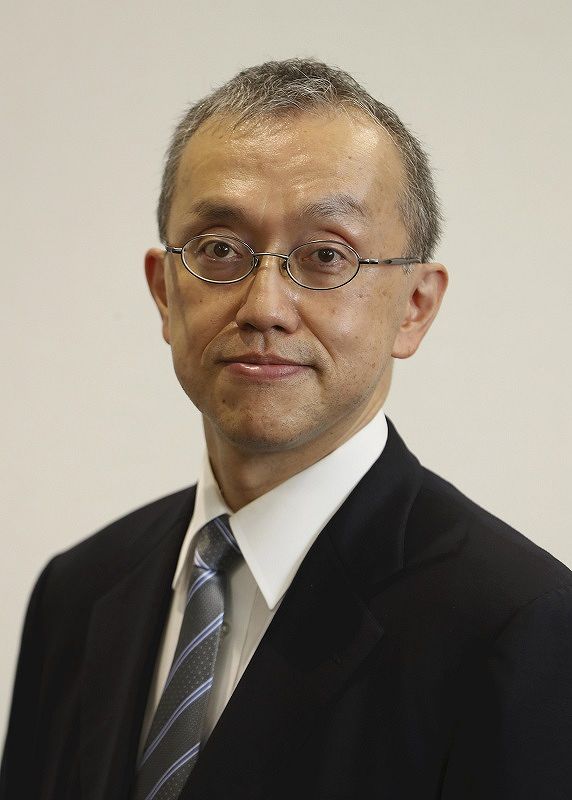
Takayuki Tanaka
Takayuki Tanaka is the president of The Yomiuri Shimbun, Osaka. His previous posts included managing editor of The Yomiuri Shimbun, Tokyo.






Most Read
Popular articles in the past 24 hours
-

Ukrainian Ambassador Closely Watching Japan’s Revision of Defense...
-

Milano Cortina 2026: Sakamoto Serves as Flag Bearer; Japan Earns ...
-

Milano Cortina 2026: There Were Cheers across the Country, after ...
-

Emperor Turns 66 Ahead of Disaster Milestones
-
Luna Sea Drummer Shinya Dies at 56; Powerful Drummer Behind ‘Desi...
-

Milano Cortina 2026: ‘Magical’ Italian Games Close wi...
-

Milano Cortina 2026: Riku-Ryu Duo Stick Together During Closing C...
-

1.2 Mil. Rapeseed Flowers Attract Cute Birds, People in Aichi Pre...
Popular articles in the past week
-

Japan PM Takaichi’s Cabinet Resigns en Masse
-

Man Infected with Measles Reportedly Dined at Restaurant in Tokyo...
-

Sanae Takaichi Elected Prime Minister of Japan; Keeps All Cabinet...
-

Japan's Govt to Submit Road Map for Growth Strategy in March, PM ...
-

Bus Carrying 40 Passengers Catches Fire on Chuo Expressway; All E...
-

Milano Cortina 2026: Figure Skaters Riku Miura, Ryuichi Kihara Pa...
-

U.S. Firm to Build Training Hub in Fukushima N-plant for Debris R...
-

Japan, U.S. Name 3 Inaugural Investment Projects; Reached Agreeme...
Popular articles in the past month
-
Japan PM Takaichi’s Cabinet Resigns en Masse
-

Japan Institute to Use Domestic Commercial Optical Lattice Clock ...
-

Israeli Ambassador to Japan Speaks about Japan’s Role in the Reco...
-
Man Infected with Measles Reportedly Dined at Restaurant in Tokyo...
-

Videos Plagiarized, Reposted with False Subtitles Claiming ‘Ryuky...
-

Man Infected with Measles May Have Come in Contact with Many Peop...
-

Prudential Life Insurance Plans to Fully Compensate for Damages C...
-

Woman with Measles Visited Hospital in Tokyo Multiple Times Befor...
Top Articles in Editorial & Columns
-

Riku-Ryu Pair Wins Gold Medal: Their Strong Bond Leads to Major Comeback Victory
-

China Provoked Takaichi into Risky Move of Dissolving House of Representatives, But It’s a Gamble She Just Might Win
-
University of Tokyo Professor Arrested: Serious Lack of Ethical Sense, Failure of Institutional Governance
-

Japan’s Plan for Investment in U.S.: Aim for Mutual Development by Ensuring Profitability
-
Policy Measures on Foreign Nationals: How Should Stricter Regulations and Coexistence Be Balanced?
JN ACCESS RANKING
-
Japan PM Takaichi’s Cabinet Resigns en Masse
-
Japan Institute to Use Domestic Commercial Optical Lattice Clock to Set Japan Standard Time
-
Israeli Ambassador to Japan Speaks about Japan’s Role in the Reconstruction of Gaza
-
Man Infected with Measles Reportedly Dined at Restaurant in Tokyo Station
-
Videos Plagiarized, Reposted with False Subtitles Claiming ‘Ryukyu Belongs to China’; Anti-China False Information Also Posted in Japan