
- Film & TV
- FILMGOER'S GAZE
Netflix’s ‘Bullet Train Explosion’ a Thrilling Reboot of ’75 Classic; ‘Shin Godzilla’ Director Skilfully Revives Story
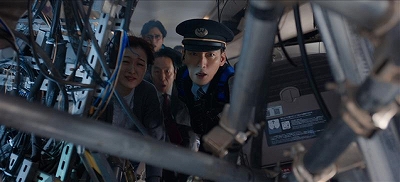
10:30 JST, May 16, 2025
As a Shinkansen bullet train starts its journey, it soon becomes clear the train is rigged with at least one bomb. However, it must keep running to avoid setting off the explosives.
“Shinkansen Daibakuha” (“Bullet Train Explosion”) is a Netflix reboot of the 1975 film of the same Japanese name, called “The Bullet Train” in English releases, produced by Toei Co. But the new film is no mere rehash — rather, it’s yet another masterpiece directed by Shinji Higuchi, who has breathed new life into classic tokusatu sci-fi films and made such gems as “Shin Godzilla.” Viewers are sure to be entertained by the speed, thrills and vision of hope for society.
The original film is famous for portraying the suspense of an unstoppable vehicle long before 1994 U.S. blockbuster “Speed.”
In the reboot, the bullet train is a Tokyo-bound Hayabusa No. 60 on the Tohoku Shinkansen Line, departing from Shin-Aomori Station. A phone call from an anonymous culprit says the train will explode the moment its speed falls below 100 kph. The ransom for deactivating the bomb is ¥100 billion and to be paid by the people of Japan. Still, the government sticks to its basic policy of not negotiating with terrorists.
So, what should be done to save the passengers? Is it possible to avoid an explosion at the destination? The railway men and women mount a rescue operation. On the front line of the operation is conductor Takaichi (played by Tsuyoshi Kusanagi), who believes the top priority should be the passengers’ safety.
East Japan Railway Co. collaborated specially with production, which allowed a bullet train of the same type as Hayabusa No. 60 to make seven round-trip journeys for filming. Such real objects are skillfully implemented, along with special effects and top quality hand-made props, like one-sixth-scale miniatures. Together they all created dynamic, heart-racing visuals, along with multiple moments where it appears as if the running train is doing fabulous stunt work.
The film’s dramatic storyline is good, too. In the 1975 film, the group of perpetrators included a former owner of a bankrupt factory and a former member of an anti-government group. Societal injustice led them to become the criminals who risk their lives in the bombing scheme, eventually meeting their fates. Their downfall added a bitter yet impactful complexity to the story.
Without giving away too much, the new film is not just rebooting the story of the original, but functions as a secret stand-alone sequel.
This time, the perpetrator wishes to destroy “the false normality,” wanting to remove the superficiality that masks daily life and reveal humankind’s true nature. Protagonist Takaichi is forced to make a choice that ultimately challenges his beliefs as a railroad worker.
While the original film ends after shedding light on societal divisions, the new film depicts what is necessary to heal these divisions. And it does so without making it feel like a fantasy. The sincere feeling is firmly supported by the actors’ fine performances and realistic portrayals of railway workers at work.
The story moves at a rapid pace, making some parts of the rescue mission difficult to follow. However, the benefit of streaming is that the film can be rewatched over and over. Having said that, I can’t help wanting to watch this dynamic film on the big screen.







Most Read
Popular articles in the past 24 hours
-

Japan's Budget on Track for Quick Passage, but Ruling Parties to ...
-

Japan-Based USS Tripoli, Marine Unit to Be Sent to Middle East, U...
-

7 Men Arrested Over Robbery of ¥423 Mil. on Tokyo Street; Members...
-

Ransomware Attacks Hitting Japan's Small, Midsize Firms
-

National Intelligence Council: Proposed Body Must Be Utilized To ...
-

Japan's Defense Ministry: North Korea Appears to Have Fired Balli...
-

North Korea Fires about 10 Missiles toward Sea in Show of Force, ...
-

‘Kokuho’ Wins Record 10 Awards at Japan Academy Film Prize; Demon...
Popular articles in the past week
-

Japan Figure Skating Legend Yuzuru Hanyu Is Proud Disaster Surviv...
-

Govt to Utilize ODA for Ensuring Economic Security; Securing Ener...
-

15 Measles Patients Confirmed in Tokyo in Past 6 Days; 1 May Have...
-

Massive Sewer Pipe Found Jutting Out of Highway in Osaka
-

Japan Govt to Tighten Requirements to Receive Permanent Residency...
-
Power Outage Forces About 980 Passengers in Yokohama to Walk to T...
-

JR Tokai Breaks Ground on Yamanashi Maglev Station; Will Be Part ...
-

Beckoning Cats Get Makeover to Fit Modern Lifestyles with Sleek D...
Popular articles in the past month
-

Producer Behind Pop Group XG Arrested for Cocaine Possession
-

Japan PM Takaichi’s Cabinet Resigns en Masse
-

Man Infected with Measles Reportedly Dined at Restaurant in Tokyo...
-
Japan Figure Skating Legend Yuzuru Hanyu Is Proud Disaster Surviv...
-

iPS Treatments Pass Key Milestone, but Broader Applications Far f...
-

Sanae Takaichi Elected Prime Minister of Japan; Keeps All Cabinet...
-

South Korea Tightens Rules on Foreigners Buying Homes in Seoul Me...
-

Nepal Bus Crash Kills 19 People, Injures 25 Including One Japanes...
Top Articles in Culture
-

Director Naomi Kawase’s New Film Explores Heart Transplants in Japan, Production Involved Real Patients, Families
-
Beckoning Cats Get Makeover to Fit Modern Lifestyles with Sleek Designs to Match with Any Kind of Space
-

Exhibition Featuring Yoshiharu Tsuge’s Manga World Underway in Chofu, Tokyo; Unique, Surreal Works Draw Steady Crowds
-
Traditional Japanese Silk Hakama Tradition Preserved by Sole Weaver in Sendai
-

2 Unpublished Early Novellas by Japan’s Kenzaburo Oe Discovered, Show Budding Promise of Future Nobel Prize-Winning Author
JN ACCESS RANKING
-
Producer Behind Pop Group XG Arrested for Cocaine Possession
-
Japan PM Takaichi’s Cabinet Resigns en Masse
-
Man Infected with Measles Reportedly Dined at Restaurant in Tokyo Station
-
Japan Figure Skating Legend Yuzuru Hanyu Is Proud Disaster Survivor and Gold Medalist, Vows to Continue Support Efforts
-
iPS Treatments Pass Key Milestone, but Broader Applications Far from Guaranteed