
Beckoning Cats Get Makeover to Fit Modern Lifestyles with Sleek Designs to Match with Any Kind of Space
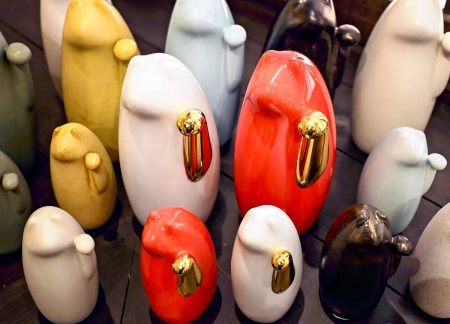
Stylish Setomaneki beckoning cats
16:33 JST, March 8, 2026
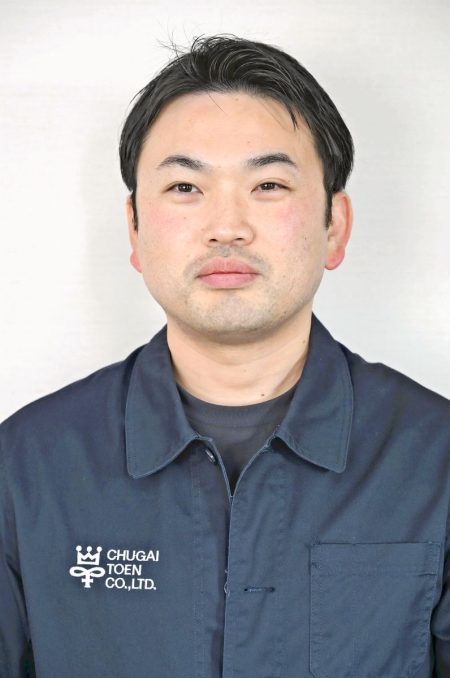
Yasuhiro Suzuki
SETO, Aichi — Sleek, streamlined manekineko beckoning cats made by Chugai Toen Co. in Seto, Aichi Prefecture, are likely to fit in anywhere with their stylish appearance.
Called Setomaneki, the cats come in three sizes: 10, 16 or 27 centimeters tall. The city of Seto is said to be one of the nation’s three major production areas for manekineko.
Fourth-generation Chugai Toen owner Yasuhiro Suzuki, 41, developed the Setomaneki design in 2022 in the hope they would “fit in with today’s diverse lifestyles and bring happiness to many people.”
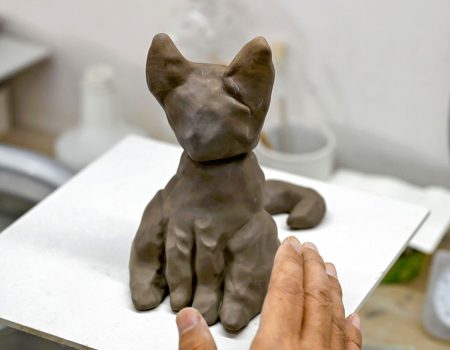
A beckoning cat is made in collaboration with a picture book artist.
In making the new style of cats, Suzuki wanted to respect the characteristics of beckoning cats made in Seto, such as their rounded body shape, while pursuing simple designs without drawing a face. He said that would allow the cats to be enjoyed in any space, including traditional and modern rooms just as well as entrances and living rooms.
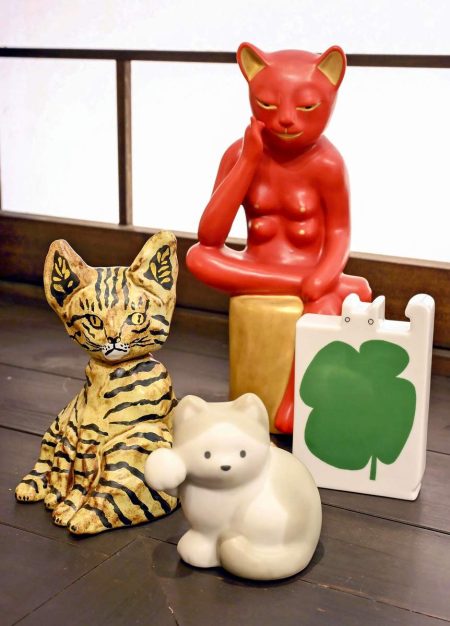
Beckoning cats with imaginative designs
Suzuki decided to make the Setomaneki in the wake of the sharp decline in sales of beckoning cats as souvenirs during the COVID-19 pandemic. Suzuki realized the need to transform them from mere souvenirs into objects that can be enjoyed in everyday life. “I wondered how much I could simplify the design. It was a great challenge for me,” Suzuki said.
Born in Seto in 1984, Suzuki studied economics at a university in Tokyo and worked for an airline for four years before joining Chugai Toen. Suzuki was appointed as a representative of the company in 2021 and opened a Seto ware painting experience facility in 2023.
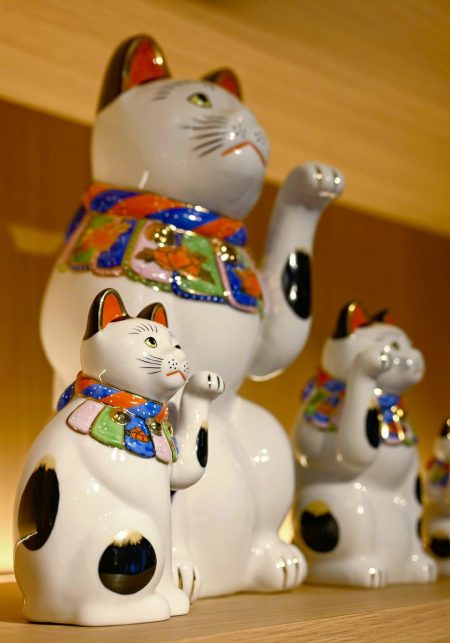
Furuseto beckoning cats
By the time he joined the Chugai Toen family business in 2011, he hoped to do something that fit with the times while preserving Seto ware traditions.
Suzuki has also worked with others such as an internationally active textile designer and an illustrator to create collaborative works. He also commissioned a picture book artist to create an original design for the company. “Some of the items have sold out within days of release,” Suzuki said.
Suzuki said traditional Furuseto beckoning cats continue to be popular, too. Seto ware has a long history of evolving with changing lifestyles, with tableware, ornaments and decorations having been produced. “I want to convey the depth and charm of Seto ware through the various forms of beckoning cats,” Suzuki said.
Museum of 5,000 beckoning cats
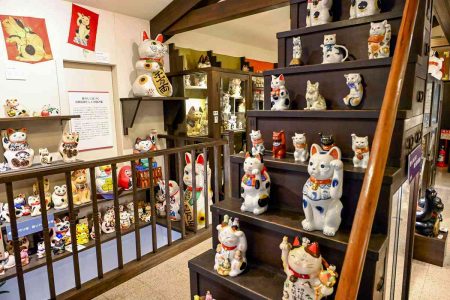
The Maneki-Neko Museum displays various beckoning cats.
Chugai Toen operates the Maneki-Neko Museum, displaying about 5,000 beckoning cats collected from across Japan.
It opened in 2005, coinciding with the 2005 Aichi Expo, to share the charm of beckoning cats dating back to the late Edo period (1603-1867).
The history of how the cats became popular is introduced and the characteristics of beckoning cats from other major ceramic production areas are also explained.
Visitors can learn about how Tokoname ware cats from Aichi Prefecture have a plump body and hold a koban — a thin, oblong gold coin — while Kutani ware beckoning cats from Ishikawa Prefecture are adorned with a vibrant painted design.


Related Tags




Most Read
Popular articles in the past 24 hours
-
Japan's 2nd Round of U.S. Investments May Be Worth Over $100 Bill...
-

Samurai Japan Grabs 2nd WBC Win, Beating South Korea 8-6
-
Japanese Beauty Products Gaining Attention in Paris
-
Niigata Univ. to Partner with Oisix Ra Daichi to Establish New Ed...
-

Japan Automakers Fear Middle East Conflict May Deal Major Blow to...
-

Mt. Meakan in Japan’s Hokkaido Erupts, Plume Reaches 100 Meters
-

My Daughter-In-Law, Grandson Are Verbally Abused by My Son
-

Newly Published Book Compiles Reporting by Child Reporters in Dis...
Popular articles in the past week
-

Ibaraki Pref.'s 1st Foreign Bus Driver Hired in Tsukuba
-

Amid Strait of Hormuz Blockade, Shipping Companies Scramble to Ge...
-
2 Unpublished Early Novellas by Japan's Kenzaburo Oe Discovered, ...
-

Strait of Hormuz Closure Shakes Markets; Prolonged Closure Could ...
-

Iran Situation: Japan Must Exert Diplomatic Efforts without Merel...
-
Measles Patient Visited Hospital in Bunkyo Ward, Tokyo, Metropoli...
-

Japanese Shipping Giants Halt Strait of Hormuz Transit as Iran Co...
-
Parents of Japanese Teen Shot in U.S. Strive for Gun Control
Popular articles in the past month
-

Producer Behind Pop Group XG Arrested for Cocaine Possession
-

Japan PM Takaichi’s Cabinet Resigns en Masse
-

Man Infected with Measles Reportedly Dined at Restaurant in Tokyo...
-

Videos Plagiarized, Reposted with False Subtitles Claiming ‘Ryuky...
-

Prudential Life Insurance Plans to Fully Compensate for Damages C...
-

Woman with Measles Visited Hospital in Tokyo Multiple Times Befor...
-

iPS Treatments Pass Key Milestone, but Broader Applications Far f...
-

Sanae Takaichi Elected Prime Minister of Japan; Keeps All Cabinet...
Top Articles in Culture
-

Director Naomi Kawase’s New Film Explores Heart Transplants in Japan, Production Involved Real Patients, Families
-
Traditional Japanese Silk Hakama Tradition Preserved by Sole Weaver in Sendai
-
Exhibition Featuring Yoshiharu Tsuge’s Manga World Underway in Chofu, Tokyo; Unique, Surreal Works Draw Steady Crowds
-
2 Unpublished Early Novellas by Japan’s Kenzaburo Oe Discovered, Show Budding Promise of Future Nobel Prize-Winning Author
-
Japanese Film, Anymart, Wins Critics’ Award at International Film Festival in Berlin, Director’s Debut Feature Film Shocks Audiences
JN ACCESS RANKING
-
Producer Behind Pop Group XG Arrested for Cocaine Possession
-
Japan PM Takaichi’s Cabinet Resigns en Masse
-
Man Infected with Measles Reportedly Dined at Restaurant in Tokyo Station
-
Videos Plagiarized, Reposted with False Subtitles Claiming ‘Ryukyu Belongs to China’; Anti-China False Information Also Posted in Japan
-
Prudential Life Insurance Plans to Fully Compensate for Damages Caused by Fraudulent Actions Without Waiting for Third-Party Committee Review