
Nissan’s Key Domestic Plant for EVs Produced Just 20,000 Cars in 2025, Around 10% of Its Annual Production Capacity
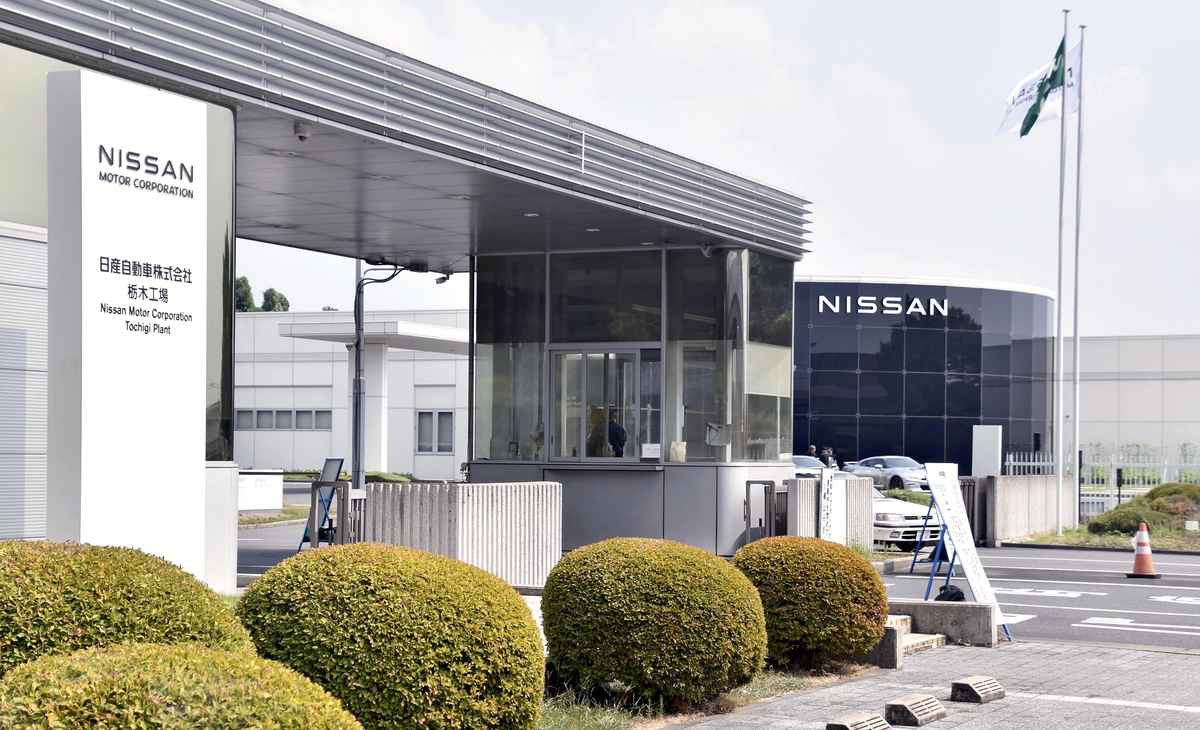
Nissan Motor Co.’s Tochigi plant in Kaminokawa, Tochigi Prefecture
2:09 JST, January 29, 2026
Nissan Motor Co.’s Tochigi plant in Tochigi Prefecture had a capacity utilization rate of just 10% in 2025, far below the widely believed break-even point of 80%, The Yomiuri Shimbun has learned.
The capacity utilization rate is the ratio of the number of units produced at a plant and its production capacity. The primary cause of the Tochigi plant’s low figure is the global slowdown in EV demand.
The plant is Nissan’s sole domestic production base for passenger EV models, including its mainstay Leaf and Ariya models, and has an annual production capacity of 190,000 units. According to sources, only about 20,000 cars were manufactured at the plant in 2025, a significant decline from the about 70,000 units in 2024.
The embattled automaker has been restructuring its operations through such means as the closure of domestic and overseas plants. Amid this, boosting the utilization rate of the Tochigi plant will likely be an urgent priority.
Nissan once led the EV market with the mass-market release of the Leaf in 2010. However, domestic sales of the Leaf and Ariya fell by about 40% year-on-year in 2025. Exports have also struggled due to shifts in EV policies in the United States and Europe. One example is the administration of U.S. President Donald Trump ending support measures for EVs.
Car production also decreased last year at the plant due to preparations for the next-generation Leaf and Ariya models. Production of the new Leaf has now begun, and a senior Nissan official said that car production “bottomed out in 2025.”
However, the outlook for the EV market remains uncertain, and concerns are being raised by auto parts suppliers that the new Leaf is not likely to drive a significant growth in sales.
High-end combustion-engine vehicles like the Skyline and Fairlady Z are also produced at the Tochigi plant. But significant growth in sale for them is seen unlikely partly due to declining brand strength.
Nissan announced in May a plan to close seven plants and cut 20,000 jobs worldwide as part of restructuring efforts. Of its five domestic plants, Nissan will end vehicle production at its Oppama plant and its subsidiary Nissan Shatai Co.’s Shonan plant, both in Kanagawa Prefecture, by the end of fiscal 2027.
Production will be consolidated at the three remaining plants. However, as the capacity utilization rate of the Tochigi plant is lower than at both the Oppama and Shonan plants, the restructuring efforts could be hindered.
Nissan President Ivan Espinosa stated at a press conference in July that the company does not plan to close more domestic plans.








Most Read
Popular articles in the past 24 hours
-

Japan Defense Agency to Develop AI Intelligence Analysis System f...
-

Moai Statue Shows Lasting Bond Between Miyagi Pref. Town, Easter ...
-

Milano Cortina 2026: Japan’s Oguri Wins Para Snowboard Silver at ...
-
Japan's Defense Ministry: North Korea Appears to Have Fired Balli...
-

Aichi Fisheries Cooperatives Use Smart Tech to Farm Triploid Oyst...
-

Teachers Support Students’ Inquiry Learning behind the Scenes
-

Japan's Lower House Passes Budget Proposal; Could Be Delayed in U...
-

National Intelligence Council: Proposed Body Must Be Utilized To ...
Popular articles in the past week
-

Japan Figure Skating Legend Yuzuru Hanyu Is Proud Disaster Surviv...
-
Govt to Utilize ODA for Ensuring Economic Security; Securing Ener...
-
15 Measles Patients Confirmed in Tokyo in Past 6 Days; 1 May Have...
-

Massive Sewer Pipe Found Jutting Out of Highway in Osaka
-

Japan Govt to Tighten Requirements to Receive Permanent Residency...
-
JR Tokai Breaks Ground on Yamanashi Maglev Station; Will Be Part ...
-

Beckoning Cats Get Makeover to Fit Modern Lifestyles with Sleek D...
-

Power Outage Forces About 980 Passengers in Yokohama to Walk to T...
Popular articles in the past month
-

Producer Behind Pop Group XG Arrested for Cocaine Possession
-

Japan PM Takaichi’s Cabinet Resigns en Masse
-

Man Infected with Measles Reportedly Dined at Restaurant in Tokyo...
-

Videos Plagiarized, Reposted with False Subtitles Claiming ‘Ryuky...
-
Japan Figure Skating Legend Yuzuru Hanyu Is Proud Disaster Surviv...
-

iPS Treatments Pass Key Milestone, but Broader Applications Far f...
-

Sanae Takaichi Elected Prime Minister of Japan; Keeps All Cabinet...
-

Nepal Bus Crash Kills 19 People, Injures 25 Including One Japanes...
Top Articles in Business
-

Nippon Life Insurance’s U.S. Arm Sues OpenAI Over Legal Assistance Provided by ChatGPT
-

Japan, U.S. Name 3 Inaugural Investment Projects; Reached Agreement After Considerable Difficulty
-

Japan’s Major Real Estate Firms Expanding Overseas Businesses to Secure Future Growth, Focusing on Europe, U.S., Asia
-

Transport Companies See Opportunity in Narita Expansion; Airlines, Railways Prepare to Meet Expected Growth in Demand
-

Amid Strait of Hormuz Blockade, Shipping Companies Scramble to Get Japan-Linked Vessels out of Persian Gulf
JN ACCESS RANKING
-
Producer Behind Pop Group XG Arrested for Cocaine Possession
-
Japan PM Takaichi’s Cabinet Resigns en Masse
-
Man Infected with Measles Reportedly Dined at Restaurant in Tokyo Station
-
Videos Plagiarized, Reposted with False Subtitles Claiming ‘Ryukyu Belongs to China’; Anti-China False Information Also Posted in Japan
-
Japan Figure Skating Legend Yuzuru Hanyu Is Proud Disaster Survivor and Gold Medalist, Vows to Continue Support Efforts