
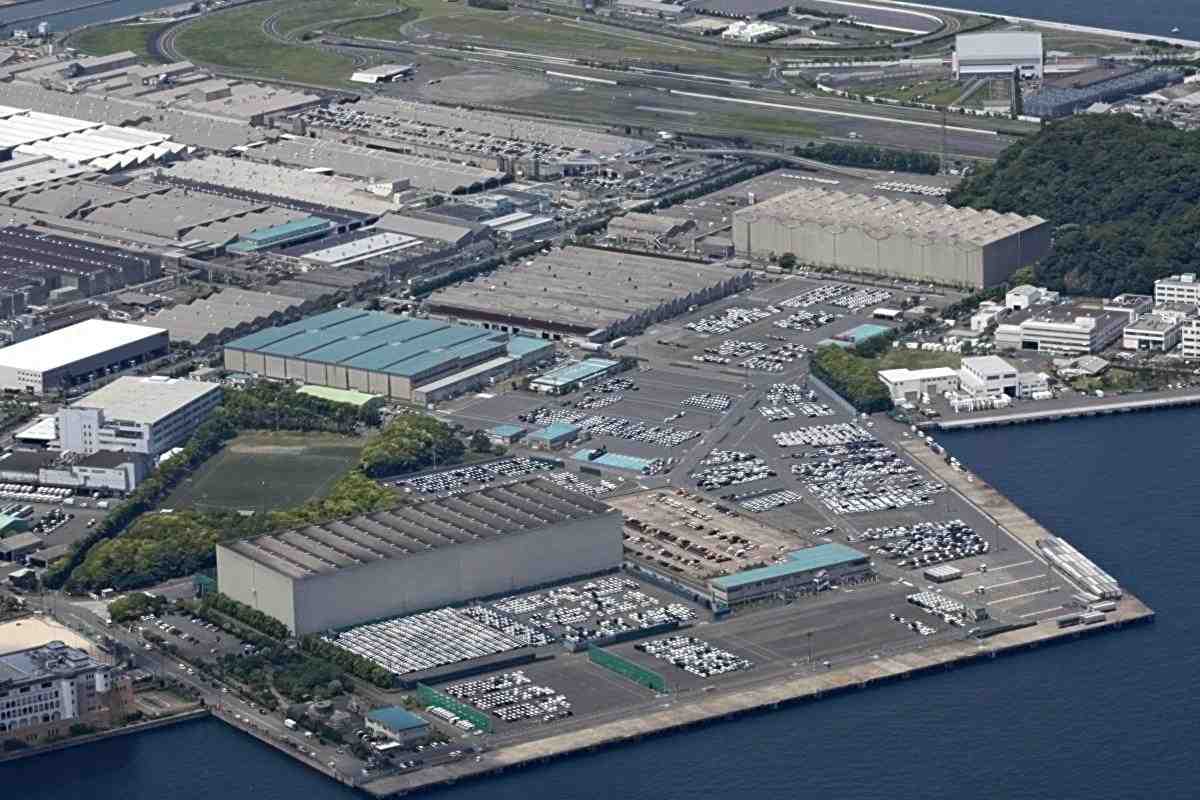
Nissan’s Oppama Plant in Yokosuka, Kanagawa Prefecture, in May 2024
20:00 JST, July 16, 2025
Nissan Motor Co. announced its determination to carry out restructuring measures without exceptions — it will effectively close its Oppama plant in Yokosuka, Kanagawa Prefecture, a symbol of its domestic production, at the end of fiscal 2027 and its Shonan plant in the prefecture by the end of fiscal 2026.
However, the road for the firm’s revival remains difficult considering the impact of high tariffs imposed by U.S. President Donald Trump’s administration and a serious sales slump in China, the world’s largest auto market.
“It was a difficult decision for both myself and the company,” Nissan President Ivan Espinosa told a press conference on Tuesday. “However, we believe it’s necessary for Nissan to overcome its current challenging situation and return to a growth trajectory.”
The Oppama plant in Kanagawa Prefecture, which is home to the company’s global headquarters in Yokohama, had been positioned as a “mother” plant for establishing the firm’s production technology.

Taiwan-based major electronics manufacturer Hon Hai Precision Industry Co. was believed to have been hoping for a partnership with Nissan that would have included jointly making electric vehicles at the plant. Espinosa denied any talks about establishing a joint venture or outsourcing production, suggesting that he made the painful choice of closing the plant.
Nissan’s domestic production capacity is about 1.2 million cars, but the company only produced 640,000 in fiscal 2024. Domestic sales in the January-June period of 2025 are expected to slump to about 220,000 units, the lowest in 30 years. Operating profit in the April-June period of 2025 is expected to fall into the red by about ¥200 billion.
U.S. tariffs on imported automobiles could push Nissan’s operating profit, representing its core business profit, down by as much as ¥450 billion in the fiscal year ending March 2026.
Espinosa said that exports are uncertain considering the U.S. tariff policy.
Nissan’s sales volume in China in fiscal 2024 fell 12% from the previous year, hit by the rise of local manufacturers.
Sales of the N7 electric sedan, whose development was led by local joint venture Dongfeng Nissan, have been strong. However, fierce price competition has left it uncertain whether the company will be able to secure stable profits.
Through a series of restructuring measures, Nissan is hurrying to downsize its excessive production facilities, putting pressure on management. Espinosa explained that with production terminated at its Oppama and Shonan plants, the capacity utilization rate of the remaining 10 factories in Japan and overseas will increase to an average of nearly 100%.
However, the financial market still has strong concerns about Nissan’s restructuring. The company’s share price fell to its lowest level in about 16 years this month, falling below ¥300 at one point.
Nissan once aimed to integrate its operations with Honda Motor Co. by establishing a holding company but decided to terminate talks with Honda in February of this year.
The Economy, Trade and Industry Ministry and Nissan’s main bank, Mizuho Bank, Ltd., have called for the resumption of talks, but Nissan remains committed to improving profitability by closing plants and prioritizing restructuring on its own for the time being.






Most Read
Popular articles in the past 24 hours
-
Business Hotels Expanding into Regional Areas in Japan, Aiming to...
-
Milano Cortina 2026: Japan Sees Leap in Olympic Performance Throu...
-

Milano Cortina 2026: Japan's Satoshi Furuno Places 4th in Men's S...
-

Fiji Defense Minister Hopes Japan Will Support Stabilization of P...
-
6 Injured at Naked Festival in Japan’s Okayama Prefecture; Police...
-

Milano Cortina 2026: Speed Skater Takagi Finishes 6th in the 1,50...
-

Milano Cortina 2026: Malinin Highlights Dangers of Social Media i...
-

Space One Delays Launch of No. 3 Kairos Rocket; Company to Announ...
Popular articles in the past week
-

Japan PM Takaichi’s Cabinet Resigns en Masse
-

Man Infected with Measles Reportedly Dined at Restaurant in Tokyo...
-

Sanae Takaichi Elected Prime Minister of Japan; Keeps All Cabinet...
-

Japan's Govt to Submit Road Map for Growth Strategy in March, PM ...
-

Bus Carrying 40 Passengers Catches Fire on Chuo Expressway; All E...
-

Milano Cortina 2026: Figure Skaters Riku Miura, Ryuichi Kihara Pa...
-

Japan, U.S. Name 3 Inaugural Investment Projects; Reached Agreeme...
-

U.S. Firm to Build Training Hub in Fukushima N-plant for Debris R...
Popular articles in the past month
-
Japan PM Takaichi’s Cabinet Resigns en Masse
-

Japan Institute to Use Domestic Commercial Optical Lattice Clock ...
-

Israeli Ambassador to Japan Speaks about Japan’s Role in the Reco...
-
Man Infected with Measles Reportedly Dined at Restaurant in Tokyo...
-

Videos Plagiarized, Reposted with False Subtitles Claiming ‘Ryuky...
-

Man Infected with Measles May Have Come in Contact with Many Peop...
-

Prudential Life Insurance Plans to Fully Compensate for Damages C...
-

Woman with Measles Visited Hospital in Tokyo Multiple Times Befor...
Top Articles in Business
-
Prudential Life Insurance Plans to Fully Compensate for Damages Caused by Fraudulent Actions Without Waiting for Third-Party Committee Review
-
Narita Airport, Startup in Japan Demonstrate Machine to Compress Clothes for Tourists to Prevent People from Abandoning Suitcases
-
Japan, U.S. Name 3 Inaugural Investment Projects; Reached Agreement After Considerable Difficulty
-
Toyota Motor Group Firm to Sell Clean Energy Greenhouses for Strawberries
-

SoftBank Launches AI Service for Call Centers That Converts Harsh Customer Voices into Softer Voices
JN ACCESS RANKING
-
Japan PM Takaichi’s Cabinet Resigns en Masse
-
Japan Institute to Use Domestic Commercial Optical Lattice Clock to Set Japan Standard Time
-
Israeli Ambassador to Japan Speaks about Japan’s Role in the Reconstruction of Gaza
-
Man Infected with Measles Reportedly Dined at Restaurant in Tokyo Station
-
Videos Plagiarized, Reposted with False Subtitles Claiming ‘Ryukyu Belongs to China’; Anti-China False Information Also Posted in Japan