
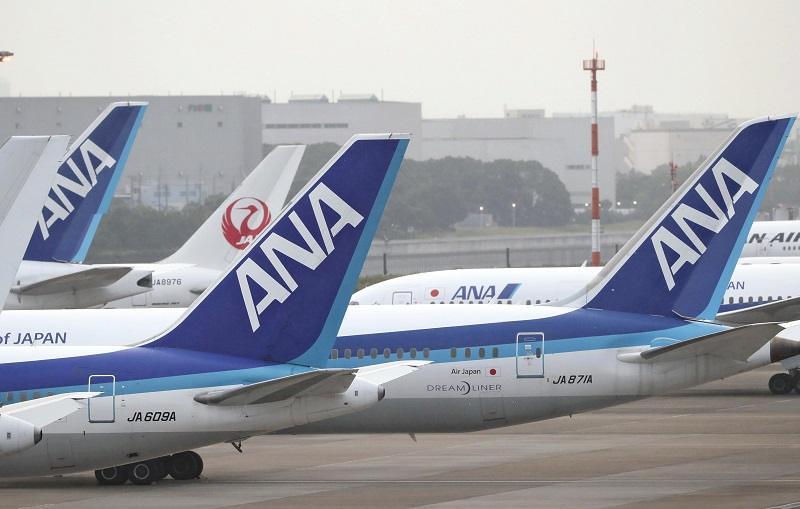
ANA aircraft
15:59 JST, October 6, 2022
TOKYO (Jiji Press) — All Nippon Airways told its labor union on Wednesday of its plan to pay winter bonuses for the first time in three years.
The major Japanese airline will resume its winter bonus payments in response to a recovery in travel demand from a plunge due to the novel coronavirus pandemic, and also in a bid to ease concerns among its workers over rising prices.
Specifically, the company plans to provide winter bonuses worth two months’ salary in fiscal 2022.
In fiscal 2019, ANA paid summer and winter bonuses each equivalent to two months’ salary.
Following the pandemic-induced deterioration in the business environment, the company halved the summer bonus payments to one month’s salary in fiscal 2020, skipped winter bonus payments in fiscal 2020 and paid no bonuses throughout fiscal 2021.
In the current fiscal year, the company paid summer bonuses worth one month’s salary.
The company also proposed providing special allowances worth up to one month’s salary that would be paid separately from summer and winter bonuses based on earnings results at the end of the fiscal year.







Most Read
Popular articles in the past 24 hours
-
Japan's Budget on Track for Quick Passage, but Ruling Parties to ...
-

Ransomware Attacks Hitting Japan's Small, Midsize Firms
-

German Journalist Traces Footsteps of Great-Grandfather Who Was P...
-

10 Foreign Tourists Sustain Injuries After Fire at Capsule Hotel ...
-

World Baseball Classic: Venezuela Beats Japan in Nail-biting Back...
-

World Baseball Classic: Red Sox’s Abreu Hits 3-run Homer, Giving ...
-

World Baseball Classic: Venezuela Beats Japan in Back-and-Forth Q...
-

Rapid Services on JR Chuo Line Suspended; Accident at Kokubunji S...
Popular articles in the past week
-

Japan Figure Skating Legend Yuzuru Hanyu Is Proud Disaster Surviv...
-
Govt to Utilize ODA for Ensuring Economic Security; Securing Ener...
-
15 Measles Patients Confirmed in Tokyo in Past 6 Days; 1 May Have...
-
Massive Sewer Pipe Found Jutting Out of Highway in Osaka
-

Japan Govt to Tighten Requirements to Receive Permanent Residency...
-
Power Outage Forces About 980 Passengers in Yokohama to Walk to T...
-
JR Tokai Breaks Ground on Yamanashi Maglev Station; Will Be Part ...
-

Parents in Japan to Get Instagram Notifications When Teens Repeat...
Popular articles in the past month
-

Producer Behind Pop Group XG Arrested for Cocaine Possession
-

Japan PM Takaichi’s Cabinet Resigns en Masse
-

Man Infected with Measles Reportedly Dined at Restaurant in Tokyo...
-
Japan Figure Skating Legend Yuzuru Hanyu Is Proud Disaster Surviv...
-

iPS Treatments Pass Key Milestone, but Broader Applications Far f...
-

Sanae Takaichi Elected Prime Minister of Japan; Keeps All Cabinet...
-

South Korea Tightens Rules on Foreigners Buying Homes in Seoul Me...
-

Nepal Bus Crash Kills 19 People, Injures 25 Including One Japanes...
Top Articles in Business
-

Nippon Life Insurance’s U.S. Arm Sues OpenAI Over Legal Assistance Provided by ChatGPT
-

Japan, U.S. Name 3 Inaugural Investment Projects; Reached Agreement After Considerable Difficulty
-

Japan’s Major Real Estate Firms Expanding Overseas Businesses to Secure Future Growth, Focusing on Europe, U.S., Asia
-
JR Tokai Breaks Ground on Yamanashi Maglev Station; Will Be Part of Linear Chuo Shinkansen Line from Tokyo to Nagoya
-

Transport Companies See Opportunity in Narita Expansion; Airlines, Railways Prepare to Meet Expected Growth in Demand
JN ACCESS RANKING
-
Producer Behind Pop Group XG Arrested for Cocaine Possession
-
Japan PM Takaichi’s Cabinet Resigns en Masse
-
Man Infected with Measles Reportedly Dined at Restaurant in Tokyo Station
-
Japan Figure Skating Legend Yuzuru Hanyu Is Proud Disaster Survivor and Gold Medalist, Vows to Continue Support Efforts
-
iPS Treatments Pass Key Milestone, but Broader Applications Far from Guaranteed