
Japan to Strictly Control Exports of Lethal Defense Equipment While Mulling Expanding Exports’ Range
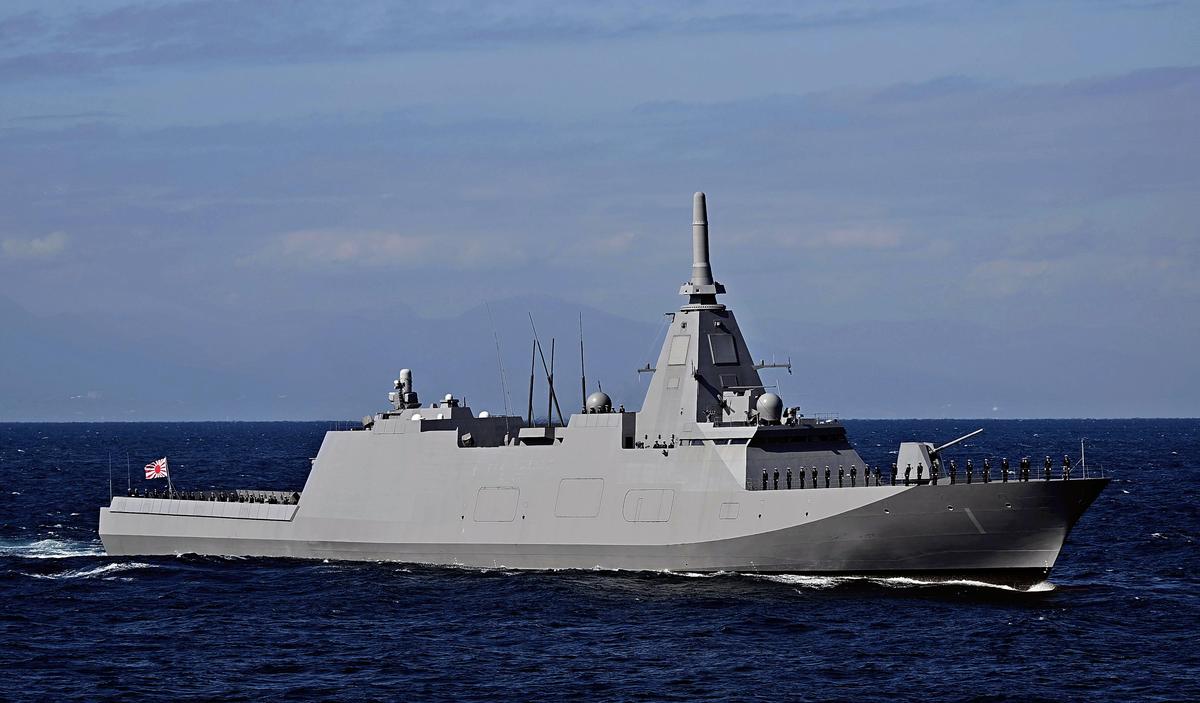
Maritime Self-Defense Force’s destroyer Mogami
14:23 JST, February 15, 2026
The government and the ruling Liberal Democratic Party are considering expanding the range of defense equipment that can be exported and controlling their exports based on their lethality by reviewing the operational guideline of the Three Principles on Transfer of Defense Equipment and Technology, it has been learned.
Regarding highly deadly weapons such as missiles, the government will have the National Security Council (NSC), attended by the prime minster and relevant ministers, decide whether to export such weapons to avoid the risk of escalating international conflicts and gain public understanding by establishing strict procedures for expanding exports, according to multiple sources close to the government and the LDP.
Under the current operational guideline, defense equipment that can be exported is limited to five categories: rescue, transport, vigilance, surveillance and minesweeping. The government plans to revise the guideline as early as this spring and scrap the “five categories” because the government believes that this rule is preventing the expansion of defense equipment exports. Ahead of this revision, the LDP will compile a proposal on the revisions of the guideline to the government in March.
In December, the LDP compiled a draft summary of issues, including that a matter for consideration is lifting the ban on the export of weapons as defined by the Self-Defense Forces Law. Currently, weapons refer to equipment designed to injure or kill people or inflict damage and include highly lethal weapons such as tanks, destroyers and missiles. Japan will be able to export these weapons if the “five-category rule” is eliminated.
On the other hand, without any restrictions on defense equipment exports, Japan could be seen as involved in overseas conflicts through the export of equipment, so the government is considering control measures.
The draft revision of the operational guideline proposes classifying defense equipment according to its use and killing capability and establishing examination procedures. Specifically, cabinet ministers will make political decisions regarding highly lethal equipment, meaning the NSC will decide whether or not to allow their exports to third countries, according to the sources.
Regarding the exports of advanced weapons such as fighter jets and hypersonic glide vehicles (HGVs), there is a proposal to put stricter procedures in place and require Cabinet approval for export. For non-weapons such as bulletproof vests and surveillance radars, the government will make it possible to make decisions through administrative-level discussions, the sources said.
Export destinations are expected to be limited to countries with which Japan has signed an agreement concerning the Transfer of Defense Equipment and Technology, which requires exported equipment to be used in accordance with the U.N. Charter, which advocates for the maintenance of international peace and security. Japan has concluded the agreement with more than a dozen countries, including the United States, Britain and India.





Most Read
Popular articles in the past 24 hours
-

Videos Plagiarized, Reposted with False Subtitles Claiming ‘Ryuky...
-

Milano Cortina 2026: Kagiyama Took Long, Difficult Road to Becomi...
-
Takaichi Pushes LDP Executives for Early Passage of Budget
-

South Korea to Establish ‘K-Food’ Brand as ‘K-Pop Demon Hunters’ ...
-

Milano Cortina 2026: Nikaido Wins Silver in Large Hill, Earning H...
-
17-Year-Old Fatally Stabbed in Osaka’s Dotonbori; Suspect at Larg...
-

Gold Smuggling into Japan Running Rampant
-

White and Pink Plum Blossoms Begin to Bloom at Yuki Shrine in Jap...
Popular articles in the past week
-

Prudential Life Insurance Plans to Fully Compensate for Damages C...
-

Woman with Measles Visited Hospital in Tokyo Multiple Times Befor...
-

Woman with No Overseas Travel History Infected with Measles in Na...
-

LDP Wins Historic Landslide Victory
-

Measles Patient Flew Between Tokyo, Hokkaido in Late January; Lik...
-

LDP Wins Landslide Victory, Secures Single-party Majority; Ruling...
-

Milano Cortina 2026: Kokomo Murase Comes Out on Top After Overcom...
-
CRA Leadership Election Will Center on Party Rebuilding; Lower Ho...
Popular articles in the past month
-

Japan Institute to Use Domestic Commercial Optical Lattice Clock ...
-

Israeli Ambassador to Japan Speaks about Japan’s Role in the Reco...
-

Man Infected with Measles May Have Come in Contact with Many Peop...
-

China Eyes Rare Earth Foothold in Malaysia to Maintain Dominance,...
-
Prudential Life Insurance Plans to Fully Compensate for Damages C...
-
Australian Woman Dies After Mishap on Ski Lift in Nagano Prefectu...
-
Woman with Measles Visited Hospital in Tokyo Multiple Times Befor...
-
Foreign Snowboarder in Serious Condition After Hanging in Midair ...
Top Articles in Politics
-
LDP Wins Historic Landslide Victory
-
LDP Wins Landslide Victory, Secures Single-party Majority; Ruling Coalition with JIP Poised to Secure Over 300 seats (UPDATE 1)
-
Japan Tourism Agency Calls for Strengthening Measures Against Overtourism
-
CRA Leadership Election Will Center on Party Rebuilding; Lower House Defeat Leaves Divisions among Former CDPJ, Komeito Members
-

Voters Using AI to Choose Candidates in Japan’s Upcoming General Election; ChatGPT, Other AI Services Found Providing Incorrect Information
JN ACCESS RANKING
-
Japan Institute to Use Domestic Commercial Optical Lattice Clock to Set Japan Standard Time
-
Israeli Ambassador to Japan Speaks about Japan’s Role in the Reconstruction of Gaza
-
Man Infected with Measles May Have Come in Contact with Many People in Tokyo, Went to Store, Restaurant Around When Symptoms Emerged
-
China Eyes Rare Earth Foothold in Malaysia to Maintain Dominance, Counter Japan, U.S.
-
Prudential Life Insurance Plans to Fully Compensate for Damages Caused by Fraudulent Actions Without Waiting for Third-Party Committee Review