
Maltese Pavilion’s Famous Ftira Bread Now Available in Osaka, Loaves Became Popular during 2025 Osaka-Kansai Expo
19:34 JST, February 8, 2026
OSAKA — The 2025 Osaka-Kansai Expo may be over, but memories of it — and more — live on as “After Expo” initiatives enable people to experience pavilion foods that are being leveraged across the region.
At a bakery in Tenjinbashi-suji Shopping Street in Kita Ward, Osaka, the Maltese bread, “Ftira,” which became popular at the Maltese Pavilion during the Expo, is now being sold.
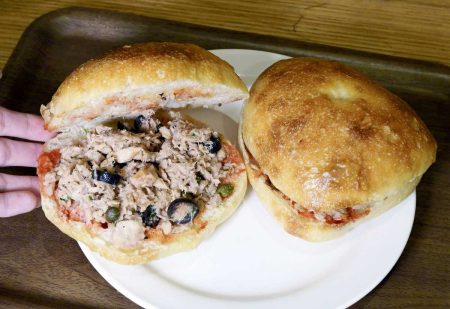
Loaves of Ftira, which became popular at the Expo
The shop owner who learned how to bake the bread for the Expo and supplied it to the Maltese Pavilion said, “I want to expand the circle of exchanges with Malta.”
Ftira is a traditional bread eaten in the Mediterranean island nation of Malta. The flattened sourdough bread is characterized by being baked at a high temperature and eaten with fillings such as tuna and olives.
Ftira was registered in 2020 on the list of the Intangible Cultural Heritage of Humanity by the United Nations Educational, Scientific and Cultural Organization (UNESCO).
The bread was sold at the Expo’s Maltese Pavilion. Its crispy exterior and springy internal texture proved popular, drawing long lines of people to buy a loaf.
One of the shops that supplied Ftira during the Expo was Orange Fields Bread Factory, located in the Tenjinbashi-suji Shopping Street near JR Tenma Station.
In February 2025, the shop owner, Go Nogami, was asked through the intermediary of an acquaintance to make the bread. The request came from Anthony Scicluna, the restaurant operator at the Maltese Pavilion.

Go Nogami sells Ftira at his bakery in Kita Ward, Osaka, on Dec. 22. Ftira is a traditional bread from Malta, and the Maltese Pavilion at the 2025 Osaka-Kansai Expo asked him to make it for them to sell.
“I had never been to Malta, and I didn’t know what Ftira was,” said Nogami, 47. “I wondered whether a local bakery could reproduce a traditional flavor of a foreign country.”
He was anxious at first, but eventually accepted the request as he felt honored to be involved with the Expo.
He learned the recipe and repeatedly practiced baking loaves quickly at 270 C, which is around 30 degrees higher than ordinary breads, and prepared for the opening of the Expo.
Nogami initially agreed to provide 40 loaves per day. However, shortly after the Expo opened, the Maltese Pavilion began urging him to bake more. By the closing days of the Expo, he was supplying 500 loaves a day.
Nogami had intended not to publicize the fact that his bakery was making Ftira. However, some Expo fans saw the bread being cooled inside his bakery and spread the discovery on social media. Then, requests came pouring in for the bakery to start selling it.
On Oct. 20, after the Expo had ended, the Scicluna family came to the bakery and expressed their gratitude to Nogami. They shared recipes for the fillings, with Scicluna saying that they hope Nogami can spread Maltese culture in his bakery, too.
Nogami started selling Ftira at his bakery on Nov. 15. Bread with fillings costs ¥880 (tax included), while the plain bread with no fillings sells for ¥330. They frequently sell out, Nogami said.
Makiko Tsujii, a 48-year-old organization employee from Higashiomi, Shiga Prefecture, who came to the bakery on Dec. 24, said she couldn’t forget the taste she had at the Expo and searched for it on social media. “I thought I could only eat it in Malta,” Tsujii said. “It’s great to be able to enjoy the Expo feeling even after it ended.”
Nogami developed his own filling for Ftira in December, making it with bacon and eggs. “While cherishing the Maltese tradition, I want to make bread that will go well with Japanese tastes and make it a specialty of this shopping district,” he said.


Related Tags




Most Read
Popular articles in the past 24 hours
-

SoftBank Launches AI Service for Call Centers That Converts Harsh...
-

Tokyo, Many Regions across Japan Hit with Heavy Snow
-
High Chocolate Prices Shake Up Valentine's Lineup at Japan's Depa...
-

Milano Cortina 2026: Japan’s Maruyama Wins Bronze Medal in Women’...
-

Milano Cortina 2026: Japan's Kimura, Kimata Dazzle in Big Air To ...
-

6 Injured, Taken to Hospital After Snow-related Car Collisions in...
-

Avg. Voter Turnout in Japan at 16.05% Nationwide as of 2:00 P.M. ...
-
Heavy Snow Affects Polling Stations in Japan’s Chugoku Region
Popular articles in the past week
-

Man Infected with Measles May Have Come in Contact with Many Peop...
-

BTS to Hold Comeback Concert in Seoul on March 21; Popular Boy Ba...
-

Israeli Ambassador to Japan Speaks about Japan’s Role in the Reco...
-
Milano Cortina 2026: Japan’s Athletes Arrive in Italy for Milano ...
-
Tokyo Had 65,000 More People Move In Than Out In 2025; Osaka Area...
-
Green Tea Exports Hit Record High in 2025 Amid Growing Demand, Li...
-
Sapporo Snow Festival Opens with 210 Snow and Ice Sculptures at 3...
-

U.N. Plans to Set Safety Regulation Standards on Automated Drivin...
Popular articles in the past month
-
Univ. in Japan, Tokyo-Based Startup to Develop Satellite for Disa...
-

Japan Institute to Use Domestic Commercial Optical Lattice Clock ...
-
JAL, ANA Cancel Flights During 3-day Holiday Weekend due to Blizz...
-

China Eyes Rare Earth Foothold in Malaysia to Maintain Dominance,...
-
Man Infected with Measles May Have Come in Contact with Many Peop...
-

Japan, Qatar Ministers Agree on Need for Stable Energy Supplies; ...
-
Australian Woman Dies After Mishap on Ski Lift in Nagano Prefectu...
-

Japan, Italy to Boost LNG Cooperation; Aimed at Diversifying Japa...
Top Articles in Features
-
Pangasius Catfish Increasingly Featured on Japanese Restaurant Menus, Home Dining Tables Due to Affordability, Mild Flavor
-
Sapporo Snow Festival Opens with 210 Snow and Ice Sculptures at 3 Venues in Hokkaido, Features Huge Dogu
-

Tourists Flock to Ice Dome Lodge at Resort in Hokkaido, Japan; Facility Invites Visitors to Sleep on Beds Made of Ice
-
Traditional Umbrellas Illuminated in Gifu City, Projection Mapping Lights Up Park Near Gifu Castle
-

Venison from Culled Deer Made into Prepackaged Curry in Mie Pref. City, Creator Hopes to Inspire Young People to Hunt
JN ACCESS RANKING
-
Japan Institute to Use Domestic Commercial Optical Lattice Clock to Set Japan Standard Time
-
China Eyes Rare Earth Foothold in Malaysia to Maintain Dominance, Counter Japan, U.S.
-
Man Infected with Measles May Have Come in Contact with Many People in Tokyo, Went to Store, Restaurant Around When Symptoms Emerged
-
Japan, Qatar Ministers Agree on Need for Stable Energy Supplies; Motegi, Qatari Prime Minister Al-Thani Affirm Commitment to Cooperation
-
Australian Woman Dies After Mishap on Ski Lift in Nagano Prefecture