
New Security Era: Japan, U.S. Deepen Cooperation Against China in Indo-Pacific Region
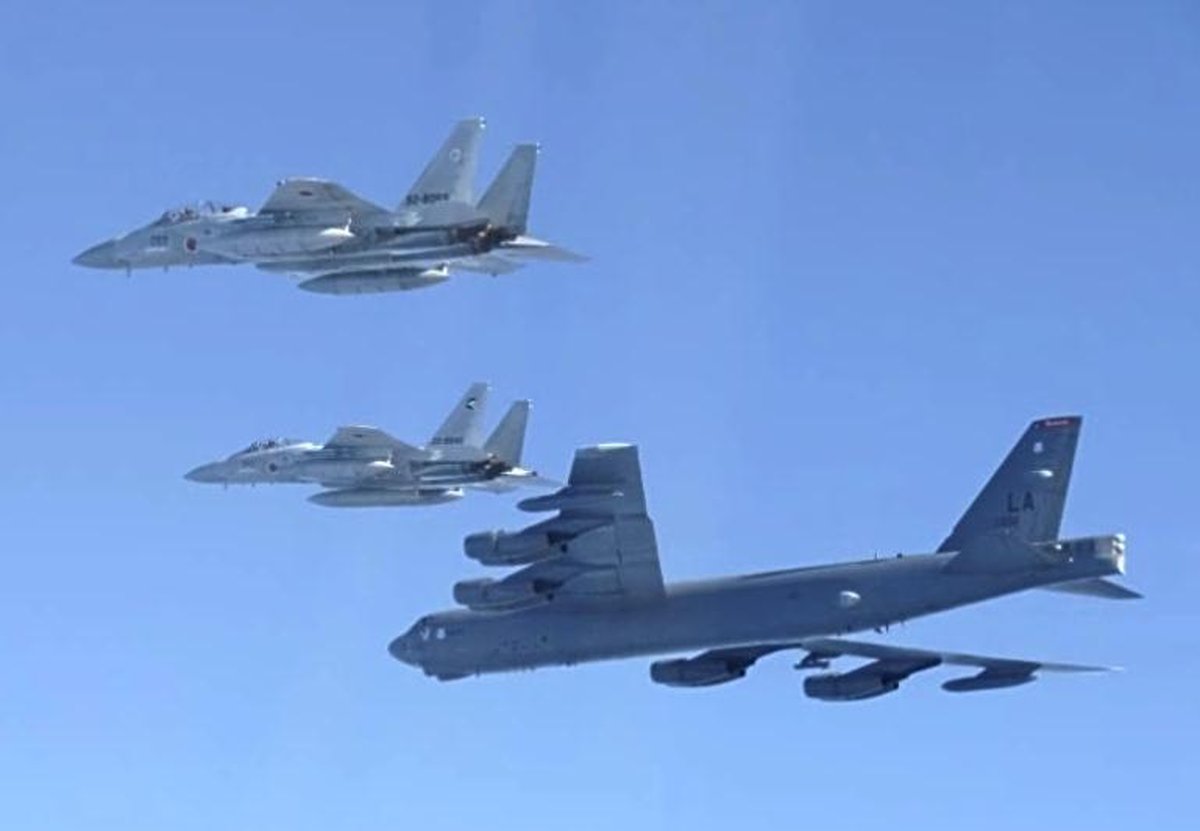
Japan Air Self-Defense Force F-15 fighter jets fly alongside a U.S. Air Force B-52 strategic bomber over the Sea of Japan on Dec. 10, 2025.
17:09 JST, January 16, 2026
The security environment surrounding Japan is growing increasingly severe with each passing year, primarily driven by China, which seeks to be ready to invade Taiwan by 2027. This special feature examines the current state of the Japan-U.S. alliance and the challenges facing it as it seeks to defend peace in the Indo-Pacific region.
Two U.S. nuclear-capable strategic bombers and six Japanese Air Self-Defense Force fighter jets flew over the Pacific on Dec. 10, 2025. It was a joint exercise Japan and the United States had conducted before, but its significance was markedly different on this occasion.
The day prior, strategic bombers from both the Chinese and Russian militaries had flown along a route toward Tokyo, reaching as far as the waters off the Shikoku region. If the flights continued along the same path, it would have led directly to the U.S. Navy and MSDF bases in Yokosuka, Kanagawa Prefecture, and the U.S. aircraft carrier USS George Washington was deployed nearby.
Japanese and U.S. officials shared the view that this was a show of force aimed at both countries. The U.S. military and the SDF put into action a joint training plan that had been prepared in advance.
Three days before the China-Russia flight, Chinese carrier-borne fighters directed radar toward ASDF aircraft. As such, it was crucial for Japan to demonstrate the unshakable unity of the Japan-U.S. alliance.
Defense Minister Shinjiro Koizumi called U.S. Secretary of Defense Pete Hegseth on Dec. 12 and they expressed “serious concern over any actions to increase regional tensions.”
Efforts have steadily been made to enhance the deterrence and response capabilities of the Japan-U.S. alliance.
Tokyo and Washington confirmed in 2024 their policy of upgrading the U.S. Forces Japan (USFJ) into a joint force command. Currently, the USFJ is responsible for administrative tasks, such as the management of bases, with operational command being held by the U.S. Indo-Pacific Command headquartered in Hawaii. For the SDF, therefore, its counterpart in terms of troop operations is located far away.
“There is no physical distance or time difference with the USFJ,” a senior Japanese defense ministry official said. “Granting the USFJ certain operational responsibilities will enhance the Japan-U.S. command and control framework.”
Japan established in March the JSDF Joint Operations Command (JJOC), which is responsible for commanding the SDF’s three branches. The United States also established a new liaison department within the USFJ to align efforts with JJOC.
Koizumi is taking the initiative in promoting Japan-U.S. unity. He inspected a U.S. Navy attack nuclear submarine that made a port call at Yokosuka last month. Yokosuka is part of the House of Representatives constituency that Koizumi represents. It was unusual for Japan’s defense minister to be allowed to inspect the nuclear submarine which is full of classified technology.
Koizumi and Hegseth exchanged contact information during the latter’s October visit to Japan and have since been in communication behind the scenes.
Koizumi started a trip to the United States from Monday. Ahead of a meeting with Hegseth on Thursday, Koizumi told those around him, “We need a sense of urgency in communication between high-ranking officials.”


Related Tags


Most Read
Popular articles in the past 24 hours
-
Kesennuma, Miyagi Pref., Locals Raise Carp Streamers as Symbol of...
-

Iran Situation: Significance of Rule of Law Must Be Conveyed
-
Toyota Advancing Plant-Based Biofuel Development in Fukushima Tow...
-

Trump Says Iran Had a New Site for Developing Nuclear Weapons
-
2 People Reportedly Found on Mt. Fuji; Hiking Trail Currently Clo...
-
CARTOON OF THE DAY (March 10)
-
Rapeseed Flowers Reach Peak Viewing Period at Tokyo's Showa Kinen...
-
Japan's TEPCO to Raise Electricity Rates for Corporations in Apri...
Popular articles in the past week
-

Ibaraki Pref.'s 1st Foreign Bus Driver Hired in Tsukuba
-

Amid Strait of Hormuz Blockade, Shipping Companies Scramble to Ge...
-
Govt to Utilize ODA for Ensuring Economic Security; Securing Ener...
-
Japan Govt Survey Finds Just 10% of Workers Want Working Hours to...
-
Japan's 2nd Round of U.S. Investments May Be Worth Over $100 Bill...
-

Imperial Family Watches World Baseball Classic Game Against Austr...
-

Nippon Life Insurance's U.S. Arm Sues OpenAI Over Legal Assistanc...
-

Beckoning Cats Get Makeover to Fit Modern Lifestyles with Sleek D...
Popular articles in the past month
-

Producer Behind Pop Group XG Arrested for Cocaine Possession
-

Japan PM Takaichi’s Cabinet Resigns en Masse
-

Man Infected with Measles Reportedly Dined at Restaurant in Tokyo...
-

Videos Plagiarized, Reposted with False Subtitles Claiming ‘Ryuky...
-

iPS Treatments Pass Key Milestone, but Broader Applications Far f...
-

Sanae Takaichi Elected Prime Minister of Japan; Keeps All Cabinet...
-

Nepal Bus Crash Kills 19 People, Injures 25 Including One Japanes...
-
South Korea Tightens Rules on Foreigners Buying Homes in Seoul Me...
Top Articles in Politics
-
Japan PM Takaichi’s Cabinet Resigns en Masse
-
Sanae Takaichi Elected Prime Minister of Japan; Keeps All Cabinet Appointees from Previous Term
-

Japan’s Govt to Submit Road Map for Growth Strategy in March, PM Takaichi to Announce in Upcoming Policy Speech
-
CRA Leadership Election Will Center on Party Rebuilding; Lower House Defeat Leaves Divisions among Former CDPJ, Komeito Members
-
LDP Begins Training New Lawmakers to Avoid Scandal, Gaffes; Historic Victory in Latest Election Heightens Focus on Party
JN ACCESS RANKING
-
Producer Behind Pop Group XG Arrested for Cocaine Possession
-
Japan PM Takaichi’s Cabinet Resigns en Masse
-
Man Infected with Measles Reportedly Dined at Restaurant in Tokyo Station
-
Videos Plagiarized, Reposted with False Subtitles Claiming ‘Ryukyu Belongs to China’; Anti-China False Information Also Posted in Japan
-
iPS Treatments Pass Key Milestone, but Broader Applications Far from Guaranteed