
Japan Lower House Election Likely to Be Held on Feb. 8 after Unusually Short Run-Up
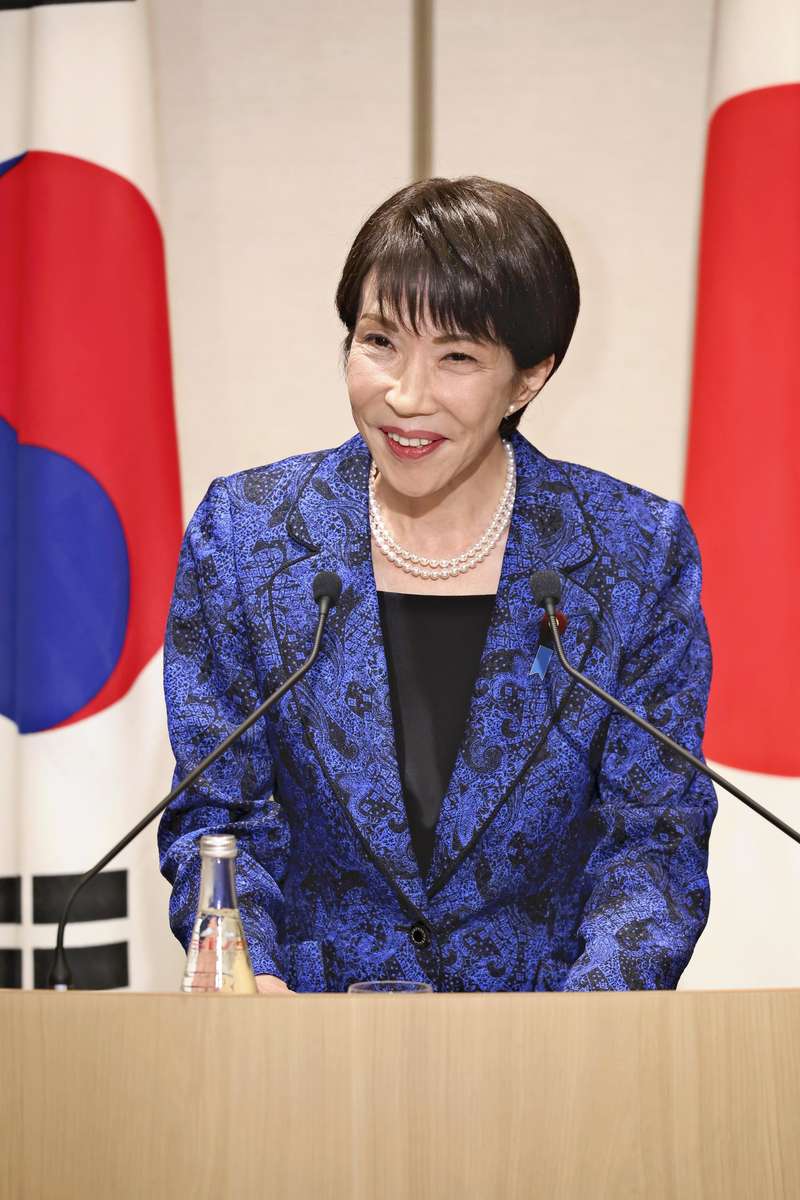
Prime Minister Sanae Takaichi speaks at a press conference in Nara on Tuesday.
2:00 JST, January 15, 2026
Prime Minister Sanae Takaichi is likely to schedule a House of Representatives election for Feb. 8, which would mean the interval after dissolving the lower house would be unusually short.
Her aim is to limit the impact on deliberations for the fiscal 2026 budget and stay in line with her administration’s policy of prioritizing the economy by winning a short, decisive electoral battle.
Takaichi held a joint press conference with visiting South Korean President Lee Jae Myung on Tuesday in Nara. Although this was the first press opportunity since reports surfaced that she was considering dissolving the lower house, Takaichi did not make any remarks on the matter.
However, she has told people around her that she is determined to fight an election in the shortest possible period once she decides to dissolve the lower house.
Reflecting her determination for a short battle, government and ruling party officials are turning their sights to the dissolution. On Tuesday, Chief Cabinet Secretary Minoru Kihara held talks with Liberal Democratic Party Secretary General Shunichi Suzuki and Junichi Ishii, secretary general for the LDP in the House of Councillors, separately. According to sources, they shared their views on the timing of the dissolution and the election.
LDP Diet Affairs Committee Chairperson Hiroshi Kajiyama and his Japan Innovation Party counterpart Takashi Endo also held talks in the Diet building. They confirmed cooperation among ruling parties with an eye toward the election.
If Takaichi dissolves the lower house on Jan. 23 and sets the lower house election for Feb 8, there would be only 16 days from the dissolution to the poll, which would be the shortest interval since the end of World War II. When former Prime Minister Fumio Kishida dissolved the house for the 2021 lower house election, votes were cast only 17 days after the dissolution.
Keeping political vacuum brief
Takaichi’s focus on having the interval between the lower house dissolution and the election be brief is due to her intention to minimize impact on deliberations over the fiscal 2026 budget and maintain consistency with her policy of prioritizing the economy. The election may make passing the budget by the end of the current fiscal year difficult. Even so, setting the earliest possible election date would increase the chances of passing the budget sooner.
The prime minister has emphasized her commitment to foreign policy, security and crisis management, too. Given the tense international situation, including developments in Iran, a source close to her said that Takaichi believes “the shorter the political vacuum caused by a lower house election, the better.”
Electoral strategy also appears to be a factor regarding the timing of the dissolution and election. Opposition parties, including the Constitutional Democratic Party of Japan, the Democratic Party for the People and Komeito, have not yet finalized preparations on such matters as nominations of lower house election candidates and their coordination of candidates for the poll. A LDP senior member stressed that it would be better for the ruling coalition not to give the opposition time to prepare.
The approval rating of the Takaichi Cabinet was 73% in a nationwide Yomiuri Shimbun survey in December. Many in the ruling coalition are also said to think it would be wise to make moves before momentum wanes.
Opposition cannot stop dissolution
Caught off guard by Takaichi, opposition parties are increasingly taking a confrontational stance toward the prime minister to put the brakes on her moves.
DPFP leader Yuichiro Tamaki said Tuesday that the dissolution will only lead to the handling of economic matters being postponed. It was only in December that the DPFP agreed with the LDP to cooperate on passing the fiscal 2026 budget at an early stage, after they agreed to raise the “annual income barrier” – the threshold at which income tax is levied – to 1.78 million yen. “This is not what we agreed to,” a senior DPFP member said.
“We are not in a situation where we can afford a political vacuum, as we need to seamlessly execute the budget,” CDPJ leader Yoshihiko Noda told reporters.
However, the opposition has no means to stop the dissolution. Speaking at a party meeting on Tuesday, Komeito leader Tetsuo Saito, whose party was in the ruling coalition until October, questioned the possible dissolution as something that “ignores the people’s livelihoods.” But he added: “We cannot stop [Takaichi from dissolving the lower house]. It is the exclusive purview of the prime minister.”


Related Tags

Most Read
Popular articles in the past 24 hours
-

Trump Fires Homeland Security Secretary Noem after Mounting Criti...
-

China’s National People’s Congress Opens: Military Expansion Cont...
-

Japanese Nationals in 4 Gulf Countries to Be Evacuated with Chart...
-

Hanamaruki to Sell Liquid 'Shio-Koji' Seasoning to U.S. Consumers
-

Strawberry Prince’s Rinu Discusses His Dream of Voice Acting, Suc...
-

CARTOON OF THE DAY (March 6)
-
Donald Keene’s Drinking Buddy and Translator Yukio Kakuchi Pays T...
-
Japan Foreign Minister Confirms Two Japanese Detained in Iran
Popular articles in the past week
-

South Korea Tightens Rules on Foreigners Buying Homes in Seoul Me...
-
2 Unpublished Early Novellas by Japan's Kenzaburo Oe Discovered, ...
-

Strait of Hormuz Closure Shakes Markets; Prolonged Closure Could ...
-

Ibaraki Pref.'s 1st Foreign Bus Driver Hired in Tsukuba
-

Iran Situation: Japan Must Exert Diplomatic Efforts without Merel...
-

Amid Strait of Hormuz Blockade, Shipping Companies Scramble to Ge...
-
Measles Patient Visited Hospital in Bunkyo Ward, Tokyo, Metropoli...
-

Tokyo’s ‘Strawberry War’ Intensifies as Producers Vie to Become ‘...
Popular articles in the past month
-

Producer Behind Pop Group XG Arrested for Cocaine Possession
-

Japan PM Takaichi’s Cabinet Resigns en Masse
-

Man Infected with Measles Reportedly Dined at Restaurant in Tokyo...
-

Videos Plagiarized, Reposted with False Subtitles Claiming ‘Ryuky...
-

Prudential Life Insurance Plans to Fully Compensate for Damages C...
-

Woman with Measles Visited Hospital in Tokyo Multiple Times Befor...
-

iPS Treatments Pass Key Milestone, but Broader Applications Far f...
-

Sanae Takaichi Elected Prime Minister of Japan; Keeps All Cabinet...
Top Articles in Politics
-
Japan PM Takaichi’s Cabinet Resigns en Masse
-
Sanae Takaichi Elected Prime Minister of Japan; Keeps All Cabinet Appointees from Previous Term
-

Japan’s Govt to Submit Road Map for Growth Strategy in March, PM Takaichi to Announce in Upcoming Policy Speech
-

LDP Wins Landslide Victory, Secures Single-party Majority; Ruling Coalition with JIP Poised to Secure Over 300 seats (UPDATE 1)
-

LDP Wins Historic Landslide Victory
JN ACCESS RANKING
-
Producer Behind Pop Group XG Arrested for Cocaine Possession
-
Japan PM Takaichi’s Cabinet Resigns en Masse
-
Man Infected with Measles Reportedly Dined at Restaurant in Tokyo Station
-
Videos Plagiarized, Reposted with False Subtitles Claiming ‘Ryukyu Belongs to China’; Anti-China False Information Also Posted in Japan
-
Prudential Life Insurance Plans to Fully Compensate for Damages Caused by Fraudulent Actions Without Waiting for Third-Party Committee Review