
Toki Crested Ibis Raised in Tokyo Surpass 100, Make Significant Contribution to Reintroduction Project on Sado Island
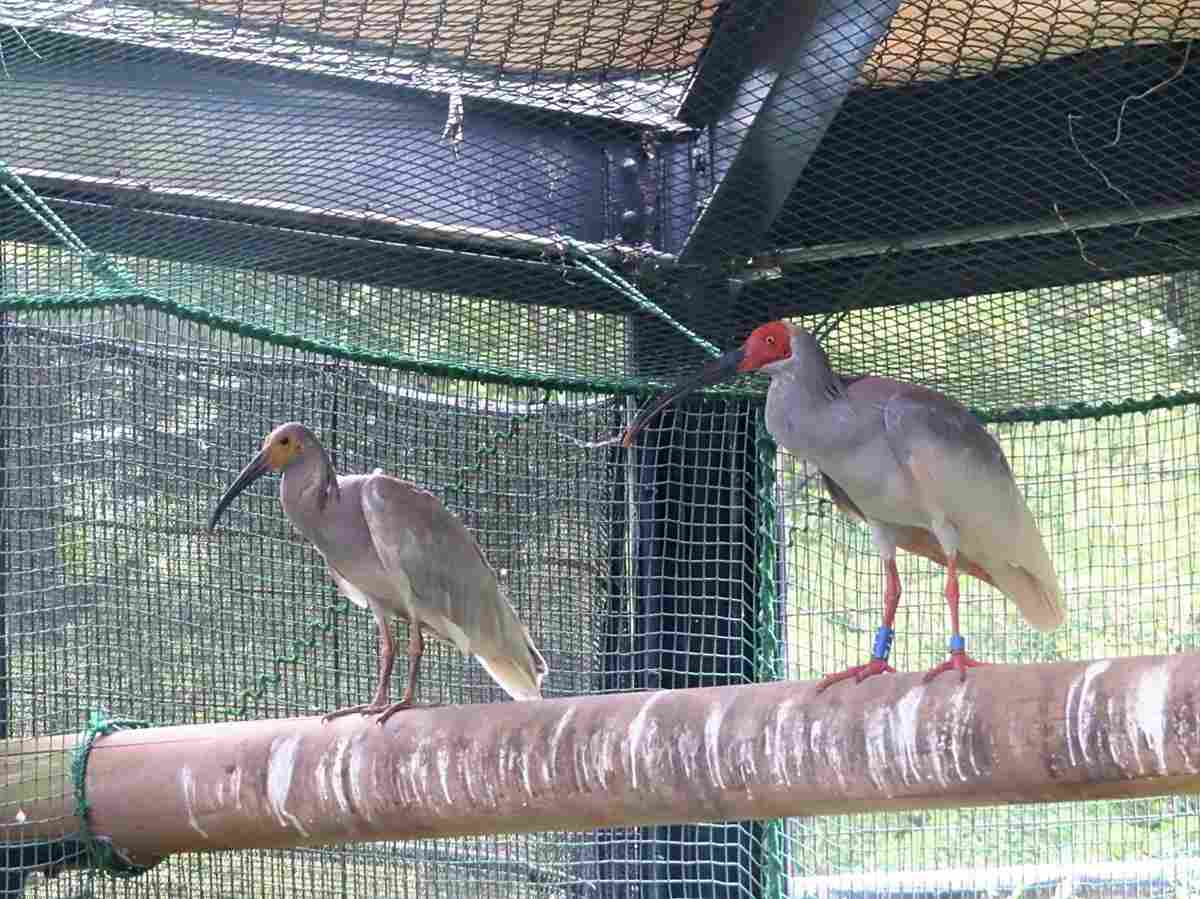
A toki crested Ibis chick born this year, left, and its parent at Tama Zoological Park in Tokyo on July 3.
13:31 JST, December 24, 2025
The number of “Tokyo-born” toki crested ibis passed the 100 mark this year thanks to the success of a program set up to reintroduce the birds into the wild on Sado Island in Niigata Prefecture.
The toki were hatched and raised at the Tama Zoological Park in Hino, Tokyo, as part of the 18-year project, which has been fraught with challenges. One staff member in charge of breeding commented: “The breeding methods have gradually changed. We owe [this achievement] to our predecessors who built up various techniques over time.”
Dispersed breeding
In 2007, the facility began the breeding program with two pairs of toki that came from the Sado Japanese Crested Ibis Conservation Center. The following year, eight chicks were successfully reared, and birds were transferred back to the conservation center for the first time. Since then, the transfer of chicks has continued every year.
This year, six chicks were born and raised, and there are currently seven birds being kept at the park.
When taking into account the six young birds sent at the end of October, the total number of juveniles that have “returned” to Sado has now reached 104.
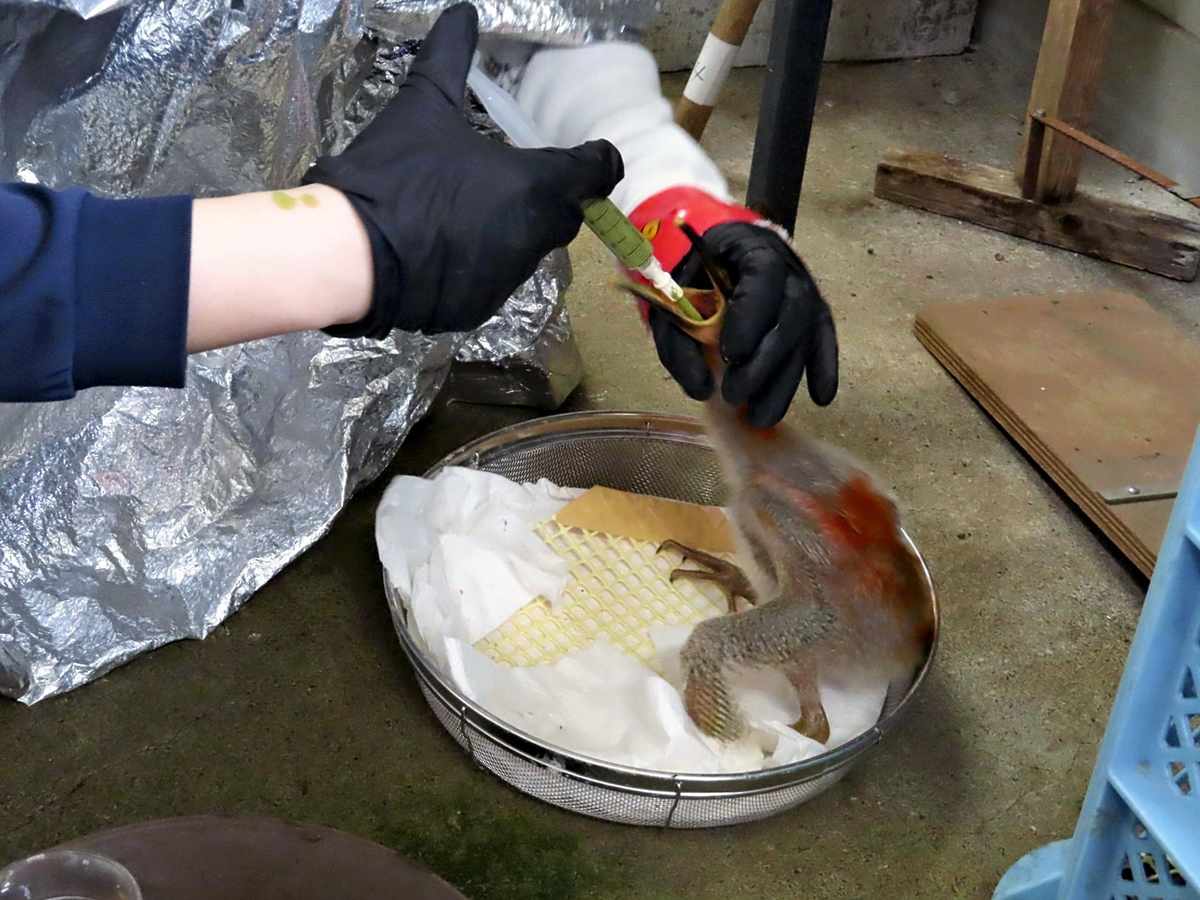
A chick being fed using a glove shaped like a parent’s beak
Government policy mandates the dispersed breeding of toki because raising them exclusively on Sado Island posed a risk of extinction due to infectious diseases, such as avian influenza.
The Tama Zoological Park was initially chosen as the breeding site because it already housed numerous closely related ibis species and employed a veterinarian who regularly traveled to Sado to check on the health of the birds.
Since around 1970, the park has been developing an artificial feed for toki that is made from horse meat mixed with vegetables and grains. The facility currently houses nine species of related birds, including the black-headed ibis, and any new feed is first tested on these birds.
With the total number of “Tokyo-born” toki exceeding 100, the park said, “We are deeply moved that individuals from Tama Zoological Park have been able to contribute to the reintroduction into the wild.”
According to the Environment Ministry, the total number of toki released on Sado Island for reintroduction into the wild since 2008 has reached 530, with 79 of these being born at Tama Zoological Park.
Natural hatching, brooding
The ideal method for breeding toki for reintroduction into the wild is natural hatching and brooding, in which the parent birds lay and raise their young without human intervention.
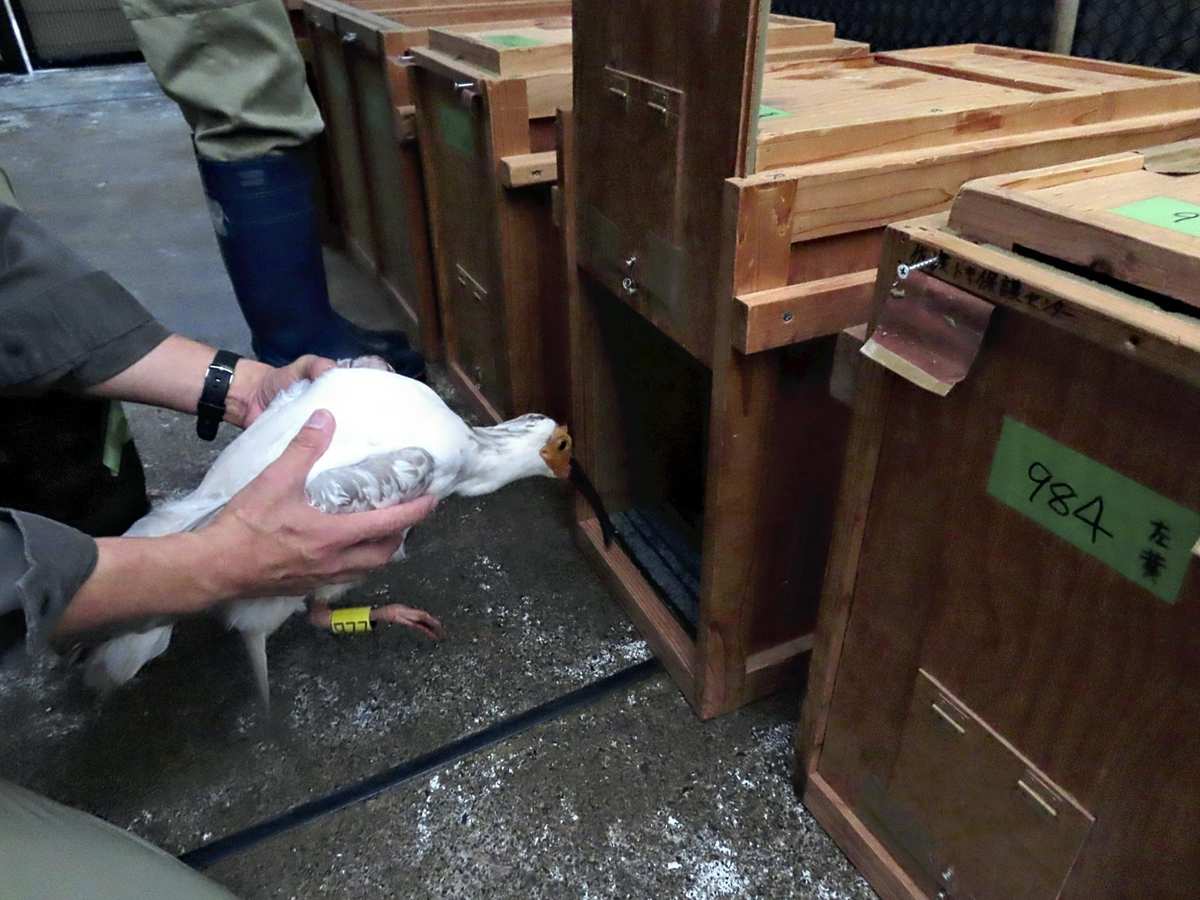
A toki contained in a transport box for transfer on Oct. 27
However, according to Junko Ishii, the 43-year-old in charge of breeding at Tama Zoological Park, it took many years to achieve this.
According to Ishii, parent birds would constantly peck and break eggs just before hatching, or they would fail to provide food for the chicks even after they had been born.
Parent birds also sometimes inadvertently gave the chicks small pebbles while feeding them mouth-to-mouth, blocking their digestive tracts.
Thinking that the birds would stop pecking at their eggs in a spacious area, Ishii placed a young breeding pair in a cage measuring about 100 square meters — roughly twice the usual size — in 2022.
The chicks hatched safely, but this time she worried whether the parents would feed them.
She decided to wait for 48 hours, the time limit for saving them before they starved to death.
She watched them intently, staring at the monitor that captured the inside of the cage.
The parents did not feed the first chick that hatched. However, about half a day later, the parents began feeding the chick that was born the following day.
Crying out, “They did it!” Ishii applauded from behind the monitor.
That year, a total of two chicks were raised solely by their parents, and they were released into the skies of Sado last year.
“Unlike the other animals in the park, the toki will be released into the wild. Our goal is to help them develop the strength and resilience necessary for vigorous survival,” Ishii said.


Related Tags




Most Read
Popular articles in the past 24 hours
-

Business Hotels Expanding into Regional Areas in Japan, Aiming to...
-

6 Injured at Naked Festival in Japan’s Okayama Prefecture; Police...
-

Fiji Defense Minister Hopes Japan Will Support Stabilization of P...
-

Space One Delays Launch of No. 3 Kairos Rocket; Company to Announ...
-

Milano Cortina 2026: Malinin Highlights Dangers of Social Media i...
-

Reciprocal Tariffs Ruled Illegal: Judiciary Would Not Tolerate Pr...
-

Japanese Film, Anymart, Wins Critics’ Award at International Film...
-

3rd Japan Pacific Islands Defense Dialogue to Begin in Tokyo on S...
Popular articles in the past week
-

Japan PM Takaichi’s Cabinet Resigns en Masse
-

Man Infected with Measles Reportedly Dined at Restaurant in Tokyo...
-

Sanae Takaichi Elected Prime Minister of Japan; Keeps All Cabinet...
-

Japan's Govt to Submit Road Map for Growth Strategy in March, PM ...
-

Bus Carrying 40 Passengers Catches Fire on Chuo Expressway; All E...
-

Milano Cortina 2026: Figure Skaters Riku Miura, Ryuichi Kihara Pa...
-

Japan, U.S. Name 3 Inaugural Investment Projects; Reached Agreeme...
-

U.S. Firm to Build Training Hub in Fukushima N-plant for Debris R...
Popular articles in the past month
-
Japan PM Takaichi’s Cabinet Resigns en Masse
-

Japan Institute to Use Domestic Commercial Optical Lattice Clock ...
-

Israeli Ambassador to Japan Speaks about Japan’s Role in the Reco...
-
Man Infected with Measles Reportedly Dined at Restaurant in Tokyo...
-

Videos Plagiarized, Reposted with False Subtitles Claiming ‘Ryuky...
-

Man Infected with Measles May Have Come in Contact with Many Peop...
-

Prudential Life Insurance Plans to Fully Compensate for Damages C...
-

Woman with Measles Visited Hospital in Tokyo Multiple Times Befor...
Top Articles in Science & Nature
-
Japan Institute to Use Domestic Commercial Optical Lattice Clock to Set Japan Standard Time
-

Japan to Face Shortfall of 3.39 Million Workers in AI, Robotics in 2040; Clerical Workers Seen to Be in Surplus
-

Record 700 Startups to Gather at SusHi Tech Tokyo in April; Event Will Center on Themes Like Artificial Intelligence and Robotics
-

iPS Treatments Pass Key Milestone, but Broader Applications Far from Guaranteed
-

iPS Cell Products for Parkinson’s, Heart Disease OK’d for Commercialization by Japan Health Ministry Panel
JN ACCESS RANKING
-
Japan PM Takaichi’s Cabinet Resigns en Masse
-
Japan Institute to Use Domestic Commercial Optical Lattice Clock to Set Japan Standard Time
-
Israeli Ambassador to Japan Speaks about Japan’s Role in the Reconstruction of Gaza
-
Man Infected with Measles Reportedly Dined at Restaurant in Tokyo Station
-
Videos Plagiarized, Reposted with False Subtitles Claiming ‘Ryukyu Belongs to China’; Anti-China False Information Also Posted in Japan