
Firm Executives Participate in Discussion on Effective Supply Chains At Next-Generation Global Supply Chain Forum
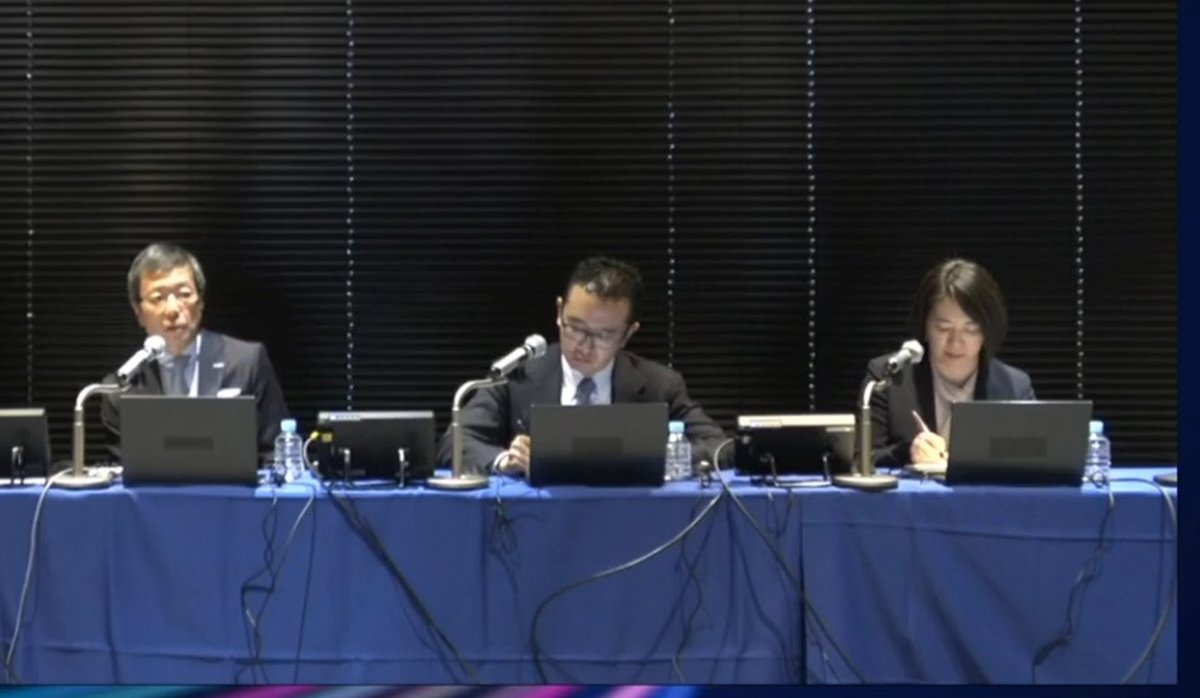
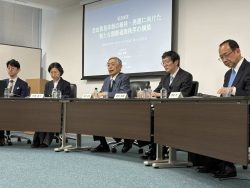
From left: Yasu Higuchi, president of Panasonic Connect Co., Tadatsugu Konoike, director and senior managing executive officer in charge of overseas business of Konoike Transport Co. and Ayako Kawai, professor of the Faculty of Economics of Gakushuin University, are seen in an image captured from video taken at the Next-Generation Global Supply Chain Forum on Friday.
12:35 JST, December 16, 2025
As tensions deepen between economic superpowers China and the United States, and growing concerns over supply chain instability, companies are intensifying efforts to secure stable supply networks. At an online forum held on Friday, corporate representatives and a researcher exchanged views on the challenges they face and discussed possible countermeasures.
While it is often said that securing supply chains is emphasized as preparation for geopolitical risks and emergencies such as large-scale disasters, at the Next-Generation Global Supply Chain Forum, Panasonic Connect Co. President Yasu Higuchi said, “Fundamentally, supply chains being managed effectively even during normal times is far more crucial.”
He pointed out that inadequate supply chain management “leads to operational inefficiencies, significantly impacting business operations,” stressing the need for corporate executives to proactively engage in improvements rather than leaving it solely to the relevant departments.
Tadatsugu Konoike, director and senior managing executive officer in charge of overseas business at Konoike Transport Co., introduced German practices. Currently stationed in Germany to understand how overseas supply chains work, he noted that advanced companies in Germany standardize product-related information such as inventory levels in warehouses and factories and efficiently manage this data using AI and other technologies. He stated, “Supply chain management must be implemented top-down.”
Regarding moves by Japanese companies to shift factories from China to Southeast Asian countries in consideration of geopolitical risks, Ayako Kawai, professor of the Faculty of Economics of Gakushuin University, expressed the view that these actions are a response to short-term challenges without a medium-to-long-term perspective. She said, “It is time to consider the overall architecture [of supply chains].”
Kawai also expressed the view that data held by logistics companies can be useful for improving supply chains, stressing the importance of these firms taking action. Konoike responded that such data also presents business opportunities for logistics companies.





Most Read
Most read in the last 24 hours
-

India’s Arms Indigenization Quest for Self-Reliance / Big Firms, ...
-
Shifts Startup Focus to Nurturing Global Winners
-

Princess Aiko Enjoys Imperial Court Music, Dance; Production, Cos...
-

Bibimbap with Spring Vegetables and Asari Clam Miso a Rich Taste ...
-

Mother Supports My Sister Too Much, Gives Her Kids Much More Than...
-

Umami History: Kyoto Chef Murata Worked to Share Japan’s Scientif...
-

Appeal of Japanese Food: Make Good Use of ‘Discoveries’ by People...
-
Official App to Help Startups Meet Other Participants
Most read in the last 7 days
-
Earthquake Hits Japan's Tohoku Region; 3-meter Tsunami Warning Is...
-
China, South Korea Object to Japanese PM Takaichi's Ritual Offeri...
-

Trump Extends the Ceasefire with Iran but Keeps the Blockade
-

India's Arms Indigenization Quest for Self-Reliance / New Delhi S...
-

¥1,000 Coins to Be Issued to Mark Anniversary of Beginning of Jap...
-

Most Serious Cyberattacks against the UK Now from Russia, Iran an...
-

Trump Opposes United–American Merger, Signals Support for Spirit
-
System Malfunction in Haneda Airport Causes 83 Flight Cancelation...
Most read in the last 30 days
-
Earthquake Hits Japan's Tohoku Region; 3-meter Tsunami Warning Is...
-
Police Find Child's Shoe During Search for Missing Boy in Nantan,...
-

Body Found in Nantan, Kyoto Prefecture, During Search for 11-Year...
-
China, South Korea Object to Japanese PM Takaichi's Ritual Offeri...
-
Cherry Blossoms, Rapeseed Flowers Perform Colorful ‘Duet’ in Niig...
-
Trump Extends the Ceasefire with Iran but Keeps the Blockade
-

Olympic Gold Medal-Winning Figure Skaters Riku-Ryu Announce Retir...
-
Japanese Prime Minister Takaichi Speaks to Pakistani Prime Minist...
Top Articles in Business
-
Foreign Tourists Set New Record in March; 30% Drop in Visitors from Middle East
-

Japan’s ANA to Introduce Fuel Surcharges to Domestic Flights from Fy27, Driven by Rising Fuel Costs, Declining Profits
-
Toyota Motor to Begin Full-Scale Hydrogen Production in May; Mass Production and Sales of Equipment Planned to Start in 2029
-
Middle Powers Should Create Alternative to WTO, Says Research Group
-
Airborne Cellular Stations to Be Tested in Ishikawa, Miyagi; Aim to Ensure Communication During Disasters
JN ACCESS RANKING
-
Earthquake Hits Japan’s Tohoku Region; 3-meter Tsunami Warning Issued (Update 1)
-
Police Find Child’s Shoe During Search for Missing Boy in Nantan, Kyoto Prefecture
-
Body Found in Nantan, Kyoto Prefecture, During Search for 11-Year-Old Boy in Area (Update 1)
-
China, South Korea Object to Japanese PM Takaichi’s Ritual Offering to Yasukuni Shrine
-
Cherry Blossoms, Rapeseed Flowers Perform Colorful ‘Duet’ in Niigata
Most read in the last 24 hours
-
India’s Arms Indigenization Quest for Self-Reliance / Big Firms, ...
-
Shifts Startup Focus to Nurturing Global Winners
-
Princess Aiko Enjoys Imperial Court Music, Dance; Production, Cos...
-
Bibimbap with Spring Vegetables and Asari Clam Miso a Rich Taste ...
-
Mother Supports My Sister Too Much, Gives Her Kids Much More Than...
Most read in the last 7 days
-
Earthquake Hits Japan's Tohoku Region; 3-meter Tsunami Warning Is...
-
China, South Korea Object to Japanese PM Takaichi's Ritual Offeri...
-
Trump Extends the Ceasefire with Iran but Keeps the Blockade
-
India's Arms Indigenization Quest for Self-Reliance / New Delhi S...
-
¥1,000 Coins to Be Issued to Mark Anniversary of Beginning of Jap...
Most read in the last 30 days
-
Earthquake Hits Japan's Tohoku Region; 3-meter Tsunami Warning Is...
-
Police Find Child's Shoe During Search for Missing Boy in Nantan,...
-
Body Found in Nantan, Kyoto Prefecture, During Search for 11-Year...
-
China, South Korea Object to Japanese PM Takaichi's Ritual Offeri...
-
Cherry Blossoms, Rapeseed Flowers Perform Colorful ‘Duet’ in Niig...