
LDP Presidential Race Could Hinge on Rank-and-File Voters, Cutting Odds for Low-Profile Candidates
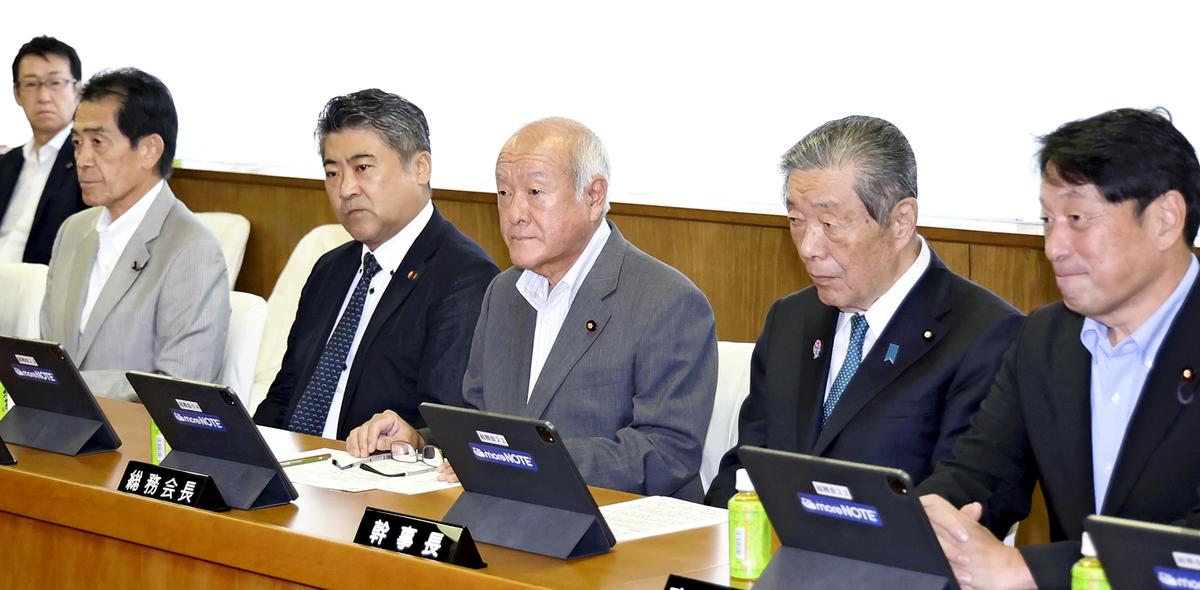
Shunichi Suzuki, chair of the Liberal Democratic Party’s General Council, and other LDP members attend the council’s meeting at the LDP headquarters in Tokyo on Wednesday.
17:18 JST, September 10, 2025
The Liberal Democratic Party’s presidential election will likely be shaped by the votes of rank-and-file party members and members of groups affiliated with the party.
As this will be a full-scale election, with regular members voting nationwide, the 295 votes granted to the rank and file and members of groups affiliated with the party — the same number as those for LDP lawmakers — will be key to determining who wins. This will likely affect candidates’ strategies.
Since this election will be held in the middle of Ishiba’s prescribed term as LDP president, after he announced that he would resign, the LDP could have opted for a “simplified” election with one vote for each Diet member and three votes for each LDP prefectural chapter.
However, amid concerns about politics and money and other issues, the party had shrunk to 1,028,662 members by the end of last year — down by nearly 100,000 from the end of 2022. This led to widespread concern that more members would leave if they could not vote in the election.
At the same time, due to criticism over a political vacuum dragging on, the period for the race was compressed to as few as 12 days, down from 15 days for the last election in September last year.
Little time for breakthrough
As there will be limited time to build support nationwide, many in the party view the full-scale format as a boon for highly visible candidates such as Takaichi and Koizumi.
The last presidential race was a prime example of the full-scale arrangement, and saw a record nine candidates in the running — the most since 1972, when the rule was introduced that those wishing to run would need to secure endorsements.
In the first round of voting, the top three candidates — Takaichi, Ishiba and Koizumi — claimed 278 of the 368 votes from regular party members, accounting for three-quarters of the total.
Ishiba secured only 46 votes from lawmakers but was still able to finish second, with 108 votes from party members, and claim a spot in the runoff.
Like Ishiba, Takaichi lacks a strong base among lawmakers and relies heavily on rank-and-file votes.
Her supporters, including House of Councillors member Hiroshi Yamada, have repeatedly argued that a full-scale leadership election is vital for the party’s renewal.
Koizumi, who received the most votes from lawmakers in the last election, expressed understanding for the approach at a press conference. “From the perspective of party members, their honest wish is for their thoughts to be reflected and for the party to undergo a complete renewal,” he said.
Balancing act
Candidates will have to speak to the concerns of both lawmakers and regular party members, and decide how to balance the policies and political beliefs they stress.
In the last election, Takaichi, who focused on appealing to the party’s conservative members, said that she would continue to visit Yasukuni Shrine even after becoming prime minister. This was one reason that some lawmakers, concerned about the diplomatic repercussions, distanced themselves from her.
Koizumi proposed that regulations on firing workers be reviewed, but this was viewed as a “liberalization of layoffs,” which caused concern among party members favoring stability.
Veterans such as Motegi, who has held a number of important positions and can leverage his wealth of political experience, will likely have to decide whether to go for impactful policies and statements that will appeal to party members or to prioritize a sense of stability.


Related Tags


Most Read
Popular articles in the past 24 hours
-

Japan, U.S. Name 3 Inaugural Investment Projects; Reached Agreeme...
-

3 Brazilians Arrested for Stealing Toyota Land Cruiser; Trio Also...
-
Special Diet Session to Consider Budget, Proposed National Intell...
-

Security Services Law Unconstitutional: Do Not Restrict Career Ch...
-

New Leader of Japan's CRA Opposition Party Faces Challenge of For...
-

Takaichi Expected to Express Desire for Constitutional Revision P...
-

Tokyo Exhibition Featuring VR Walk Through 2025 Osaka-Kansai Expo...
-
Japanese Man Living in Iraq Suspected of Illegally Entering U.S. ...
Popular articles in the past week
-

Japan PM Takaichi’s Cabinet Resigns en Masse
-

Man Infected with Measles Reportedly Dined at Restaurant in Tokyo...
-

Videos Plagiarized, Reposted with False Subtitles Claiming ‘Ryuky...
-

Sanae Takaichi Elected 105th Prime Minister of Japan; Keeps All C...
-

Japan's Govt to Submit Road Map for Growth Strategy in March, PM ...
-

Milano Cortina 2026: Figure Skaters Riku Miura, Ryuichi Kihara Pa...
-

Tokyo’s New Record-Breaking Fountain Named ‘Tokyo Aqua Symphony’
-

Bus Carrying 40 Passengers Catches Fire on Chuo Expressway; All E...
Popular articles in the past month
-
Japan PM Takaichi’s Cabinet Resigns en Masse
-

Japan Institute to Use Domestic Commercial Optical Lattice Clock ...
-

Israeli Ambassador to Japan Speaks about Japan’s Role in the Reco...
-
Man Infected with Measles Reportedly Dined at Restaurant in Tokyo...
-

Man Infected with Measles May Have Come in Contact with Many Peop...
-

Prudential Life Insurance Plans to Fully Compensate for Damages C...
-
Videos Plagiarized, Reposted with False Subtitles Claiming ‘Ryuky...
-

Woman with Measles Visited Hospital in Tokyo Multiple Times Befor...
Top Articles in Politics
-
Japan PM Takaichi’s Cabinet Resigns en Masse
-
Sanae Takaichi Elected 105th Prime Minister of Japan; Keeps All Cabinet Appointees from Previous Term
-
Japan’s Govt to Submit Road Map for Growth Strategy in March, PM Takaichi to Announce in Upcoming Policy Speech
-

LDP Wins Historic Landslide Victory
-

LDP Wins Landslide Victory, Secures Single-party Majority; Ruling Coalition with JIP Poised to Secure Over 300 seats (UPDATE 1)
JN ACCESS RANKING
-
Japan PM Takaichi’s Cabinet Resigns en Masse
-
Japan Institute to Use Domestic Commercial Optical Lattice Clock to Set Japan Standard Time
-
Israeli Ambassador to Japan Speaks about Japan’s Role in the Reconstruction of Gaza
-
Man Infected with Measles Reportedly Dined at Restaurant in Tokyo Station
-
Man Infected with Measles May Have Come in Contact with Many People in Tokyo, Went to Store, Restaurant Around When Symptoms Emerged