
JAXA Reports No Problems in H3 Engine Firing Test; Latest Rocket, Unlike Others, Has No Boosters
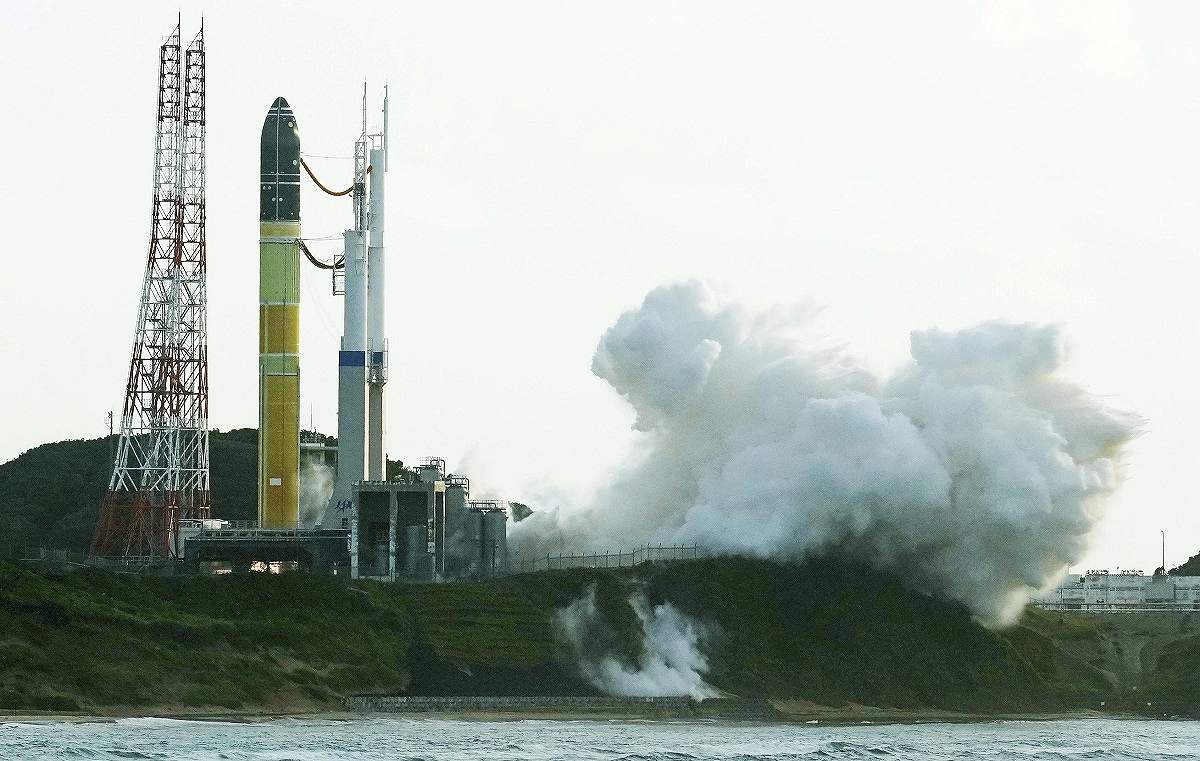
An engine firing test for the new mainstay H3 rocket is conducted at the Tanegashima Space Center in Kagoshima Prefecture on Thursday morning.
16:27 JST, July 24, 2025
An engine firing test for the new mainstay H3 rocket was conducted without any major problems at the Tanegashima Space Center in Kagoshima Prefecture on Thursday, the Japan Aerospace Exploration Agency said.
The test involved a new type of H3 without rocket boosters and is part of a process that aims to reduce the cost of launches to ¥5 billion, half the price of the previous mainstay H2A’s launches. The firing test, which marked the final stage of this process, finished without any significant problems.
JAXA and Mitsubishi Heavy Industries, Ltd. have jointly developed the H3. Thursday’s test involved the sixth H3 rocket, which is a Type 30 test vehicle that has three main engines and no boosters. The three main engines were fired for 25 seconds while the rocket remained attached to the launchpad. JAXA will check acceleration, temperature and other data collected during the test.
Successfully launched H3 rockets have so far had two main engines and two boosters. The H2A rocket that was retired last month had either two or four boosters, but none of the H2A rockets was boosterless.
If JAXA confirms the rocket performed as expected during the firing test, it will be scheduled to blast off carrying dummy satellites and other cargo before the end of fiscal 2025, which runs through March 2026. Later H3 rockets are scheduled to launch satellites including the government’s information-gathering satellites from fiscal 2026 onward.






Most Read
Popular articles in the past 24 hours
-

Japan, U.S. Name 3 Inaugural Investment Projects; Reached Agreeme...
-

Milano Cortina 2026: Japan’s Kaori Sakamoto Wins Silver; Ami Naka...
-
Japan's PM Takaichi Looks to Establish Dominance as She Follows i...
-
Approval of Takaichi Cabinet Stands at 73%; Yomiuri Survey Finds ...
-

Milano Cortina 2026: Kaori Sakamoto Wins Silver, Ami Nakai Takes ...
-

Anonymous Individual Donates Gold Bars Worth ¥566 Mil. to Osaka M...
-

New Japanese Animated Film ‘A New Dawn’ Applauded at Berlin Inter...
-
Early-Blooming Cherry Blossoms Adorn Former Samurai Residences in...
Popular articles in the past week
-

Japan PM Takaichi’s Cabinet Resigns en Masse
-

Man Infected with Measles Reportedly Dined at Restaurant in Tokyo...
-

Videos Plagiarized, Reposted with False Subtitles Claiming ‘Ryuky...
-

Sanae Takaichi Elected 105th Prime Minister of Japan; Keeps All C...
-

Japan's Govt to Submit Road Map for Growth Strategy in March, PM ...
-

Milano Cortina 2026: Figure Skaters Riku Miura, Ryuichi Kihara Pa...
-

Bus Carrying 40 Passengers Catches Fire on Chuo Expressway; All E...
-

Tokyo’s New Record-Breaking Fountain Named ‘Tokyo Aqua Symphony’
Popular articles in the past month
-
Japan PM Takaichi’s Cabinet Resigns en Masse
-

Japan Institute to Use Domestic Commercial Optical Lattice Clock ...
-

Israeli Ambassador to Japan Speaks about Japan’s Role in the Reco...
-
Man Infected with Measles Reportedly Dined at Restaurant in Tokyo...
-

Man Infected with Measles May Have Come in Contact with Many Peop...
-
Videos Plagiarized, Reposted with False Subtitles Claiming ‘Ryuky...
-

Prudential Life Insurance Plans to Fully Compensate for Damages C...
-

Woman with Measles Visited Hospital in Tokyo Multiple Times Befor...
Top Articles in Science & Nature
-
Japan Institute to Use Domestic Commercial Optical Lattice Clock to Set Japan Standard Time
-
Japan to Face Shortfall of 3.39 Million Workers in AI, Robotics in 2040; Clerical Workers Seen to Be in Surplus
-
Record 700 Startups to Gather at SusHi Tech Tokyo in April; Event Will Center on Themes Like Artificial Intelligence and Robotics
-
Japan to Ban Use of Power Banks on Airplanes
-
iPS Cell Products for Parkinson’s, Heart Disease OK’d for Commercialization by Japan Health Ministry Panel
JN ACCESS RANKING
-
Japan PM Takaichi’s Cabinet Resigns en Masse
-
Japan Institute to Use Domestic Commercial Optical Lattice Clock to Set Japan Standard Time
-
Israeli Ambassador to Japan Speaks about Japan’s Role in the Reconstruction of Gaza
-
Man Infected with Measles Reportedly Dined at Restaurant in Tokyo Station
-
Man Infected with Measles May Have Come in Contact with Many People in Tokyo, Went to Store, Restaurant Around When Symptoms Emerged