
Businesses Operators in Japan Feeling More Anxious About U.S. High-Tariff Policy; Some Auto Parts Manufacturers Calling Situation ‘Life and Death’
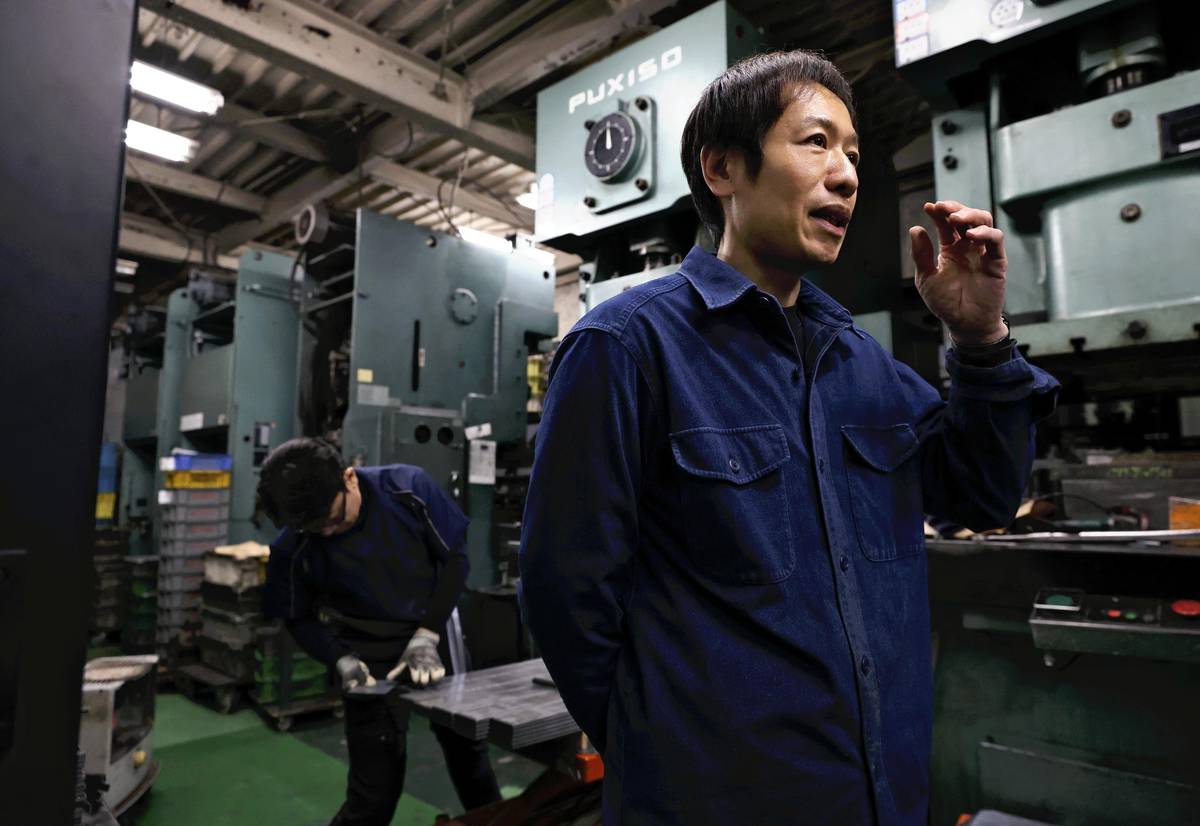
Mitsunari Nomizu, director of Nomizu Seisakusho, speaks about the impact of the U.S. high-tariff policy, in Ota Ward, Tokyo, on Thursday.
1:00 JST, April 5, 2025
Businesses in Japan are feeling increasingly anxious about U.S. President Donald Trump’s high tariff policy.
Additional U.S. tariffs on imported automobiles took effect on Thursday, and parts manufacturers are feeling a sense of crisis, claiming that it is a matter of life and death.
“Prices are high, and costs are rising, so what kind of impact will this have on the future?” said Mitsunari Nomizu, director of Nomizu Seisakusho, a Tokyo-based metal processing manufacturer that makes parts for truck engines.
The price of steel, which is used to make the parts, has seen a 50% increase in the past five years. While the price increases for electricity and oil, which are necessary to operate manufacturing machinery, have also put pressure on businesses, the price per part has remained unchanged.
“It would be fine if we had the strength of big companies, but we are suffering when the tariffs are compounded with bad [business] conditions,” Nomizu said, regarding the tariff policy.
Sakae Industry Co., a metal parts coating and assembly company in Ota, Gunma Prefecture, receives more than 90% of its orders from Subaru Corp., which has a production base in the city.
“If automobile exports decline, and Subaru adjusts its production, our sales could significantly drop,” said Sakae Industry President Yuki Uda.
A 26.4% tariff on beef will be imposed if it exceeds a certain amount, and estimates show that total tariffs could reach 50.4%.
Saga Prefecture began exporting the prefecture’s brand Saga beef to the United States in July last year. As the prefecture promoted the beef in the United States last year to expand sales channels, the prefectural government’s livestock department felt a sense of crisis.
“We have been closely watching President Trump’s moves, but we did not expect this,” said a person in the department.
Steel giant JFE Steel Corp. will suspend the operations of one blast furnace at its West Japan Works in Kurashiki, Okayama Prefecture, in around mid-May. The company’s operations have not only been affected by the decline in domestic demand but also by the U.S. high-tariff policy.
“If local small and medium-sized businesses are heavily impacted, we will consider establishing a consultation service and providing necessary support,” said an official from the prefectural government’s industrial promotion division.



Most Read
Popular articles in the past 24 hours
-

Prudential Life Insurance Plans to Fully Compensate for Damages C...
-
Japan Opposition Party Reiwa Shinsengumi Suffers Steep Loss; Drop...
-

Milano Cortina 2026: Ren Nikaido Wins “Tied” Bronze in Men’s Ski ...
-
Japan’s Miho Takagi’s Hometown in Hokkaido Celebrates Her Bronze ...
-

Takaichi Cabinet Restarts: Self-Discipline Needed in Era of ‘One ...
-
Milano Cortina 2026: Japan’s Miho Takagi Wins Bronze in Women’s S...
-
2 Justices of Japan’s Supreme Court Avoid Dismissal After Nationa...
-
Poaching Cases Uncovered on Japan's Nansei Islands as Experts Cal...
Popular articles in the past week
-

Israeli Ambassador to Japan Speaks about Japan’s Role in the Reco...
-
BTS to Hold Comeback Concert in Seoul on March 21; Popular Boy Ba...
-

LDP Wins Historic Landslide Victory
-
Sapporo Snow Festival Opens with 210 Snow and Ice Sculptures at 3...
-

LDP Wins Landslide Victory, Secures Single-party Majority; Ruling...
-
U.N. Plans to Set Safety Regulation Standards on Automated Drivin...
-
Green Tea Exports Hit Record High in 2025 Amid Growing Demand, Li...
-

SoftBank Launches AI Service for Call Centers That Converts Harsh...
Popular articles in the past month
-

Japan Institute to Use Domestic Commercial Optical Lattice Clock ...
-
JAL, ANA Cancel Flights During 3-day Holiday Weekend due to Blizz...
-

Man Infected with Measles May Have Come in Contact with Many Peop...
-
China Eyes Rare Earth Foothold in Malaysia to Maintain Dominance,...
-
Japan, Qatar Ministers Agree on Need for Stable Energy Supplies; ...
-
Australian Woman Dies After Mishap on Ski Lift in Nagano Prefectu...
-
Israeli Ambassador to Japan Speaks about Japan’s Role in the Reco...
-
Foreign Snowboarder in Serious Condition After Hanging in Midair ...
Top Articles in Business
-

Japan, Italy to Boost LNG Cooperation; Aimed at Diversifying Japan’s LNG Sources
-
Narita Airport, Startup in Japan Demonstrate Machine to Compress Clothes for Tourists to Prevent People from Abandoning Suitcases
-

Asics Opens Factory for Onitsuka Tiger Brand in Western Japan
-
JR Tokai, Shizuoka Pref. Agree on Water Resources for Maglev Train Construction
-
KDDI Opens AI Data Center at Former Sharp Plant in Osaka Prefecture; Facility Will Provide Google’s Gemini AI Model for Domestic Users
JN ACCESS RANKING
-
Japan Institute to Use Domestic Commercial Optical Lattice Clock to Set Japan Standard Time
-
Man Infected with Measles May Have Come in Contact with Many People in Tokyo, Went to Store, Restaurant Around When Symptoms Emerged
-
China Eyes Rare Earth Foothold in Malaysia to Maintain Dominance, Counter Japan, U.S.
-
Japan, Qatar Ministers Agree on Need for Stable Energy Supplies; Motegi, Qatari Prime Minister Al-Thani Affirm Commitment to Cooperation
-
Australian Woman Dies After Mishap on Ski Lift in Nagano Prefecture