
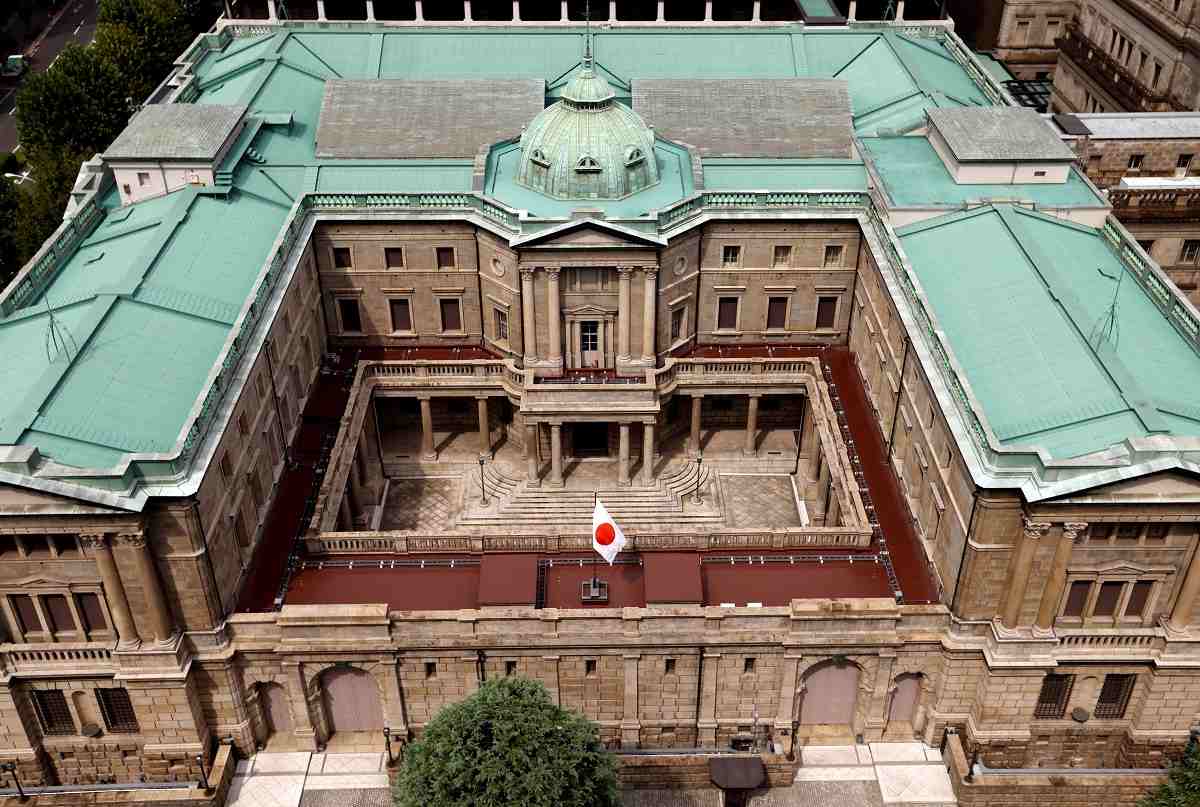
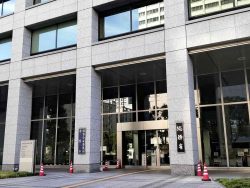
The Bank of Japan is seen in Tokyo
16:55 JST, July 16, 2024
TOKYO (Jiji Press) — Bank of Japan policymakers were largely optimistic in the first half of 2014 about the impact of a consumption tax hike, failing to forecast subsequent economic and price developments accurately, transcripts from BOJ policy meetings showed Tuesday.
The consumption tax rate was raised from 5 pct to 8 pct in April 2014, about a year after the central bank introduced its quantitative and qualitative monetary easing policy featuring a twofold increase in its Japanese government bond buying to achieve its 2 pct inflation target in about two years.
The BOJ Policy Board held seven monetary policy meetings in January-June 2014, for which transcripts of remarks by participants were disclosed this time. At one such meeting, then Governor Haruhiko Kuroda said that the impact of the tax hike was “within expectations.”
At all seven meetings, BOJ policymakers unanimously decided to keep intact the main elements of the monetary policy.
The new policy framework had sent Japanese stocks higher and the yen lower and improved business sentiment. Even the core consumer price index had turned around from its protracted decline, logging a year-on-year rise of 1.5 pct in April 2014 excluding the impact of the tax hike as estimated by the BOJ at that time.
In its Outlook for Economic Activity and Prices report adopted at a policy meeting April 30 that year, the BOJ predicted that the core CPI rate excluding the tax hike impact would move under 1.5 pct and then rise from the latter half of fiscal 2014 to reach 1.9 pct in fiscal 2015 and 2.1 pct in fiscal 2016. The certainty of achieving the inflation target was “increasing,” then Deputy Governor Kikuo Iwata said.
At a meeting June 13, 2014, then Deputy Governor Hiroshi Nakaso said he recognized declines after a demand rush that preceded the tax hike, but that the development was within the expected range.
Many other policymakers including Iwata agreed that prices were moving in line with the BOJ’s main scenario. Showing confidence in achieving the inflation target, Kuroda concluded that there had been “no change in the underlying trend of prices even after the consumption tax hike.”
Meanwhile, some Policy Board member were cautious about the outlook for prices. Member Sayuri Shirai mentioned a risk that a decline in real income would affect the underlying trend of consumption.
At the April 30 meeting, Takahide Kiuchi, another policymaker, said that it was highly likely that the positive effect of the yen’s depreciation on prices would gradually fade away, arguing that the inflation rate would fall below 1 pct in or after summer. Member Takehiro Sato said he saw significant uncertainties about the achievability of the inflation target around fiscal 2015.
Following the tax hike, consumption turned sluggish. The growth in the core CPI rate excluding the tax hike impact also shrank to around 1 pct in August and September 2014, weighed down also by lower crude oil prices and the decreasing effect of the yen’s depreciation.
The BOJ’s scenario collapsed, forcing it to implement additional easing including a boost to its JGB buying in October that year.








Most Read
Most read in the last 24 hours
-

Former Staff Members at Japan's Osaka-Kansai Expo Use Skills from...
-

India’s Arms Indigenization Quest for Self-Reliance / Big Firms, ...
-

Japan Moves Closer to Blocking Illegal Online Casinos as Governme...
-
Shifts Startup Focus to Nurturing Global Winners
-

Bibimbap with Spring Vegetables and Asari Clam Miso a Rich Taste ...
-

Official App to Help Startups Meet Other Participants
-

Princess Aiko Enjoys Imperial Court Music, Dance; Production, Cos...
-

Umami History: Kyoto Chef Murata Worked to Share Japan’s Scientif...
Most read in the last 7 days
-
Earthquake Hits Japan's Tohoku Region; 3-meter Tsunami Warning Is...
-

China, South Korea Object to Japanese PM Takaichi's Ritual Offeri...
-

Trump Extends the Ceasefire with Iran but Keeps the Blockade
-

India's Arms Indigenization Quest for Self-Reliance / New Delhi S...
-

¥1,000 Coins to Be Issued to Mark Anniversary of Beginning of Jap...
-

Most Serious Cyberattacks against the UK Now from Russia, Iran an...
-

Trump Opposes United–American Merger, Signals Support for Spirit
-
System Malfunction in Haneda Airport Causes 83 Flight Cancelation...
Most read in the last 30 days
-
Earthquake Hits Japan's Tohoku Region; 3-meter Tsunami Warning Is...
-

Police Find Child's Shoe During Search for Missing Boy in Nantan,...
-

Body Found in Nantan, Kyoto Prefecture, During Search for 11-Year...
-

Cherry Blossoms, Rapeseed Flowers Perform Colorful ‘Duet’ in Niig...
-
China, South Korea Object to Japanese PM Takaichi's Ritual Offeri...
-
Trump Extends the Ceasefire with Iran but Keeps the Blockade
-

Olympic Gold Medal-Winning Figure Skaters Riku-Ryu Announce Retir...
-
Japanese Prime Minister Takaichi Speaks to Pakistani Prime Minist...
Top Articles in Business
-
Foreign Tourists Set New Record in March; 30% Drop in Visitors from Middle East
-

Japan’s ANA to Introduce Fuel Surcharges to Domestic Flights from Fy27, Driven by Rising Fuel Costs, Declining Profits
-

Middle Powers Should Create Alternative to WTO, Says Research Group
-

Toyota Motor to Begin Full-Scale Hydrogen Production in May; Mass Production and Sales of Equipment Planned to Start in 2029
-
Airborne Cellular Stations to Be Tested in Ishikawa, Miyagi; Aim to Ensure Communication During Disasters
JN ACCESS RANKING
-
Earthquake Hits Japan’s Tohoku Region; 3-meter Tsunami Warning Issued (Update 1)
-
Police Find Child’s Shoe During Search for Missing Boy in Nantan, Kyoto Prefecture
-
Body Found in Nantan, Kyoto Prefecture, During Search for 11-Year-Old Boy in Area (Update 1)
-
Cherry Blossoms, Rapeseed Flowers Perform Colorful ‘Duet’ in Niigata
-
China, South Korea Object to Japanese PM Takaichi’s Ritual Offering to Yasukuni Shrine
Most read in the last 24 hours
-
Former Staff Members at Japan's Osaka-Kansai Expo Use Skills from...
-
India’s Arms Indigenization Quest for Self-Reliance / Big Firms, ...
-
Japan Moves Closer to Blocking Illegal Online Casinos as Governme...
-
Shifts Startup Focus to Nurturing Global Winners
-
Bibimbap with Spring Vegetables and Asari Clam Miso a Rich Taste ...
Most read in the last 7 days
-
Earthquake Hits Japan's Tohoku Region; 3-meter Tsunami Warning Is...
-
China, South Korea Object to Japanese PM Takaichi's Ritual Offeri...
-
Trump Extends the Ceasefire with Iran but Keeps the Blockade
-
India's Arms Indigenization Quest for Self-Reliance / New Delhi S...
-
¥1,000 Coins to Be Issued to Mark Anniversary of Beginning of Jap...
Most read in the last 30 days
-
Earthquake Hits Japan's Tohoku Region; 3-meter Tsunami Warning Is...
-
Police Find Child's Shoe During Search for Missing Boy in Nantan,...
-
Body Found in Nantan, Kyoto Prefecture, During Search for 11-Year...
-
Cherry Blossoms, Rapeseed Flowers Perform Colorful ‘Duet’ in Niig...
-
China, South Korea Object to Japanese PM Takaichi's Ritual Offeri...