
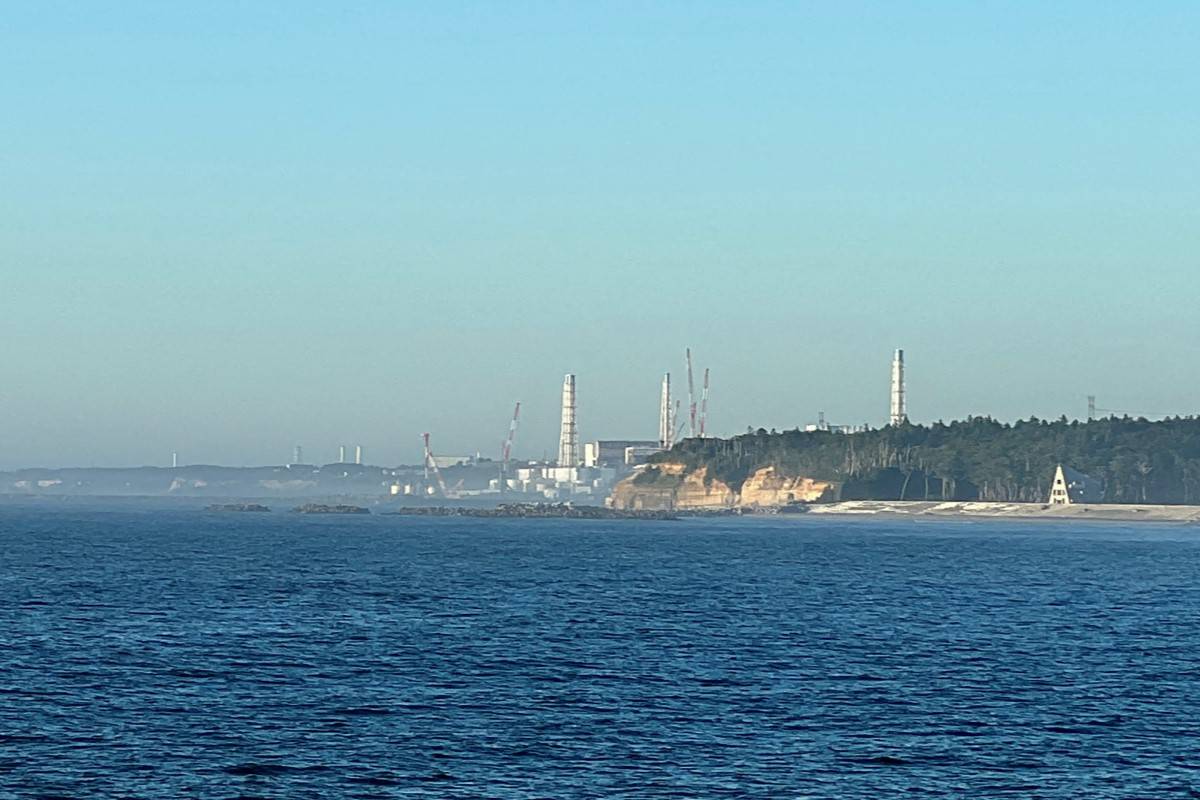
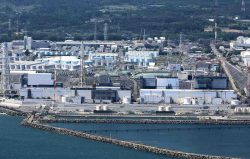
A view of the Fukushima Daiichi nuclear power plant after it started releasing treated radioactive water into the Pacific Ocean, seen from the nearby Ukedo fishing port in Namie town, Fukushima Prefecture, Japan, Aug. 25, 2023.
16:32 JST, September 24, 2023
Tokyo (Jiji Press)—Chinese import restrictions are dealing a heavy blow to Japanese food exports, a month after Japan started releasing treated water from the crippled Fukushima No. 1 nuclear power plant into the ocean.
China imposed a blanket ban on Japanese fishery products immediately after the discharge of the treated water, which contains small amounts of radioactive tritium, began on Aug. 24.
Japan’s food exports to China plunged 41.2 pct in August from a year before, according to data from the Finance Ministry. Still, the full effect of the ban is yet to come.
The action by China, the largest importer of Japanese farm and food products, will inevitably put a brake on the increase of Japan’s food exports.
The Japanese government this month boosted the amount of aid provided to the fisheries industry to cushion the impact of the water discharge by ¥20.7 billion to ¥100.7 billion, part of an effort to help the sector reduce reliance on China.
Scallop exports are heavily affected by Beijing’s ban in particular as more than half of them had been for China in terms of value.
Japanese scallops are often shipped to China to remove shells there before being exported to the United States.
The Japanese government plans to provide subsidies to finance two-thirds of costs for introducing shell removal equipment so that scallops can be delivered directly to the United States.
But fishery operators, suffering from excessive scallop inventories and falling prices, are worried and dissatisfied with the relief measure, accusing the government of failing to act quickly enough.
At a press conference on Friday, fisheries minister Ichiro Miyashita pledged to “respond quickly so that aid will be distributed swiftly.”
No tritium has been detected in samples of flatfish taken by the Fisheries Agency in waters off the coast of Fukushima Prefecture, which hosts the nuclear plant.
Japan has demanded that China immediately remove the ban that Tokyo says was imposed without any scientific basis, but Beijing is unlikely to do so anytime soon.
Miyashita said in an interview, “We’ll consider various options from the viewpoint of what is most effective within the framework of the World Trade Organization.”







Most Read
Popular articles in the past 24 hours
-

Milano Cortina 2026: Miura-Kihara Duo, Other Japanese Figure Skat...
-
6 Injured at Naked Festival in Japan’s Okayama Prefecture; Police...
-

Reciprocal Tariffs Ruled Illegal: Judiciary Would Not Tolerate Pr...
-
‘Storytellers’ Being Dispatched Overseas to Promote Japan; Events...
-

Fiji Defense Minister Hopes Japan Will Support Stabilization of P...
-

Space One Delays Launch of No. 3 Kairos Rocket; Company to Announ...
-
Japan, Pacific Island Nations to Work on Deepening Cooperation
-

Japanese Film, Anymart, Wins Critics’ Award at International Film...
Popular articles in the past week
-

Japan PM Takaichi’s Cabinet Resigns en Masse
-

Man Infected with Measles Reportedly Dined at Restaurant in Tokyo...
-

Sanae Takaichi Elected Prime Minister of Japan; Keeps All Cabinet...
-

Japan's Govt to Submit Road Map for Growth Strategy in March, PM ...
-

Bus Carrying 40 Passengers Catches Fire on Chuo Expressway; All E...
-

Milano Cortina 2026: Figure Skaters Riku Miura, Ryuichi Kihara Pa...
-

Japan, U.S. Name 3 Inaugural Investment Projects; Reached Agreeme...
-
U.S. Firm to Build Training Hub in Fukushima N-plant for Debris R...
Popular articles in the past month
-
Japan PM Takaichi’s Cabinet Resigns en Masse
-

Japan Institute to Use Domestic Commercial Optical Lattice Clock ...
-

Israeli Ambassador to Japan Speaks about Japan’s Role in the Reco...
-
Man Infected with Measles Reportedly Dined at Restaurant in Tokyo...
-

Videos Plagiarized, Reposted with False Subtitles Claiming ‘Ryuky...
-

Man Infected with Measles May Have Come in Contact with Many Peop...
-

Prudential Life Insurance Plans to Fully Compensate for Damages C...
-

Woman with Measles Visited Hospital in Tokyo Multiple Times Befor...
Top Articles in Business
-
Prudential Life Insurance Plans to Fully Compensate for Damages Caused by Fraudulent Actions Without Waiting for Third-Party Committee Review
-
Narita Airport, Startup in Japan Demonstrate Machine to Compress Clothes for Tourists to Prevent People from Abandoning Suitcases
-
Japan, U.S. Name 3 Inaugural Investment Projects; Reached Agreement After Considerable Difficulty
-

Toyota Motor Group Firm to Sell Clean Energy Greenhouses for Strawberries
-

SoftBank Launches AI Service for Call Centers That Converts Harsh Customer Voices into Softer Voices
JN ACCESS RANKING
-
Japan PM Takaichi’s Cabinet Resigns en Masse
-
Japan Institute to Use Domestic Commercial Optical Lattice Clock to Set Japan Standard Time
-
Israeli Ambassador to Japan Speaks about Japan’s Role in the Reconstruction of Gaza
-
Man Infected with Measles Reportedly Dined at Restaurant in Tokyo Station
-
Videos Plagiarized, Reposted with False Subtitles Claiming ‘Ryukyu Belongs to China’; Anti-China False Information Also Posted in Japan