
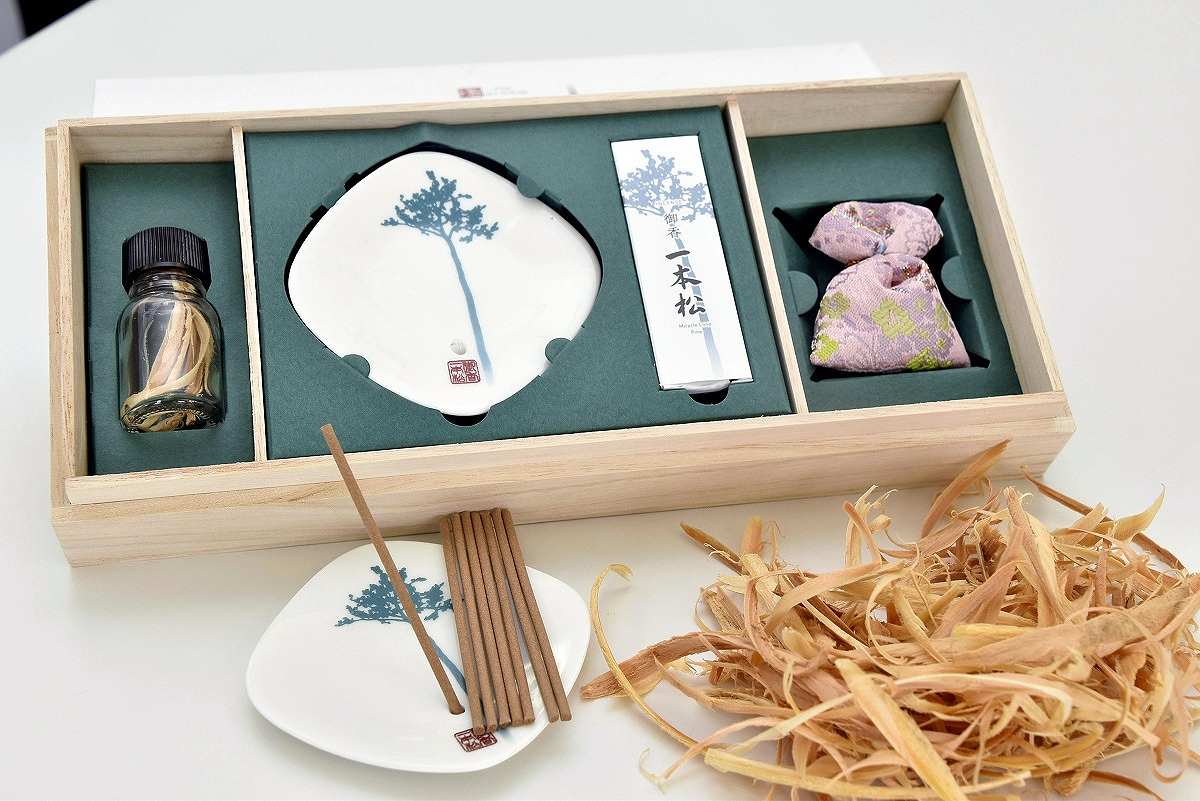
The Nanamanbun no Ichi no Kiseki no Kaori incense set
1:00 JST, July 10, 2023
RIKUZEN-TAKATA, Iwate — Incense made from the “miracle lone pine,” which remained standing after the 2011 Great East Japan Earthquake and tsunami in Rikuzen-Takata, Iwate Prefecture, was unveiled in June.
Of the about 70,000 pine trees that grew in the former Takata Matsubara forest, the “miracle lone pine” was the only tree to survive the disaster. Work to preserve the tree was completed in July 2013, and it is now on display as a monument.
The city of Rikuzen-Takata asked the public last year for ideas of how to use wood waste — about 750 kilograms — generated during the preservation process, in a way that also informs future generations about the disaster. In response, local trading company Rikuzentakata Agency Co. proposed an idea.
The incense set, which was also developed by the company, is given to those who donate ¥200,000 through the furusato nozei system, a tax-deductible donation program.
The incense set, Nanamanbun no Ichi no Kiseki no Kaori (The fragrance of the one-in-70,000 miracle), comprises four items: 24 eight-centimeter-long incense sticks in which wood chips are kneaded; an aromatic bag containing a mixture of wood waste and scented material; a small bottle containing wood chips; and an incense plate.
“For locals who have been struggling after the earthquake, the tree is like a beacon of light for the future,” said Rikuzentakata Agency President Kiyoshi Murakami. “I hope people will feel like they are near the tree as the scent gives them energy.”
The Takata Matsubara forest is said to have originated from trees planted by Matsuzaka Shinemon Sadanobu (1672-1754), a local official, and others to protect the area from the wind and tides during the Edo period (1603-1867).
“I think Shinemon would be pleased if the product could help promote the town with its declining population, as well as lift the spirits of the locals,” said Yasumori Matsuzaka, 78, a descendant of Shinemon Sadanobu and director of the Rikuzentakata City Museum.
Selling the incense set to the general public for ¥55,000 is also being considered.
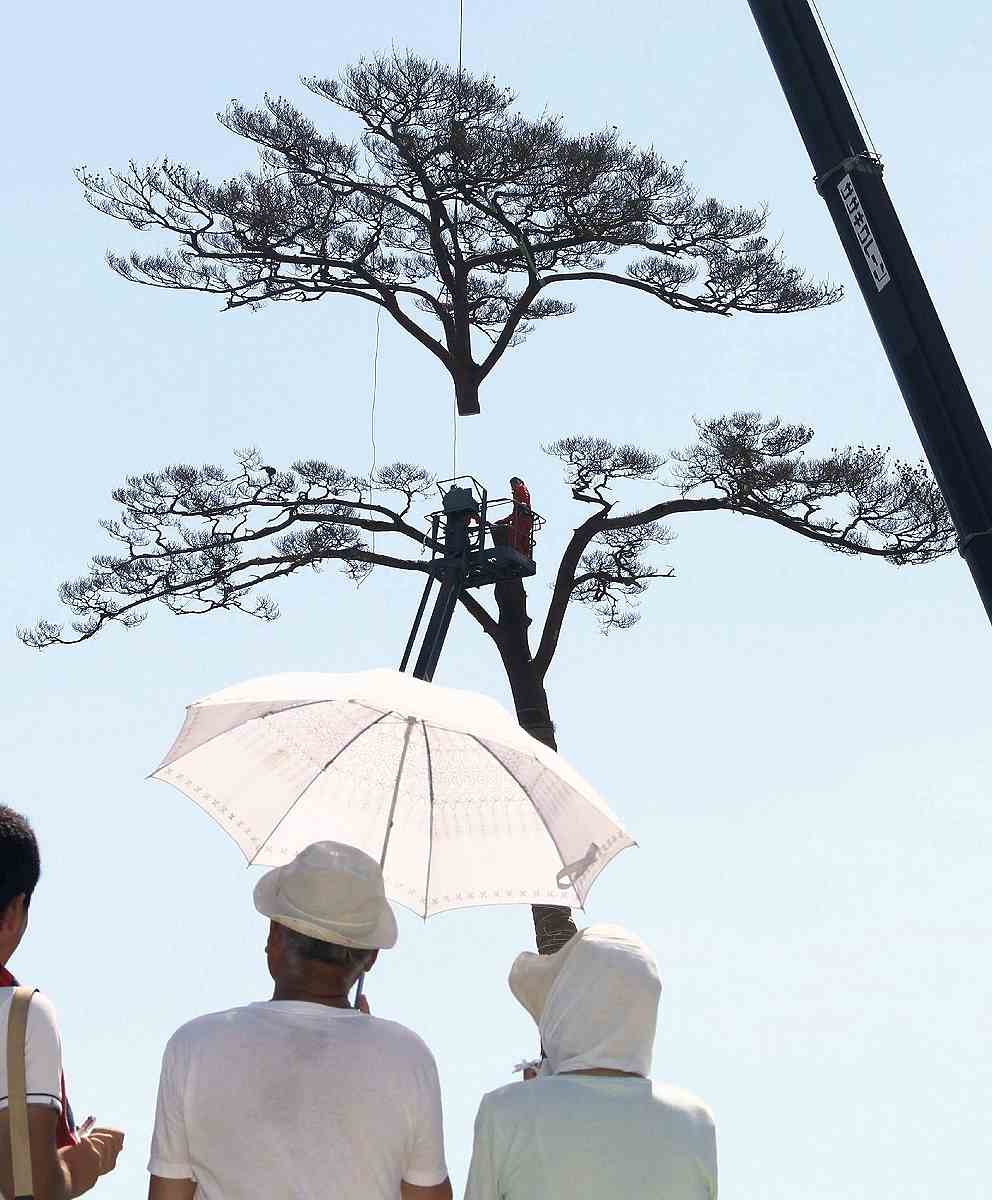
The “miracle lone pine” was cut to undergo a preservation process in Rikuzen-Takata in September 2012.


Related Tags


Most Read
Popular articles in the past 24 hours
-
Tokyo Skytree's Elevator Stops, Trapping 20 People; All Rescued (...
-

Japan’s Major Real Estate Firms Expanding Overseas Businesses to ...
-

China, India Tapping into Promising African Market; Beijing Annou...
-

Ukrainian Ambassador Closely Watching Japan’s Revision of Defense...
-
Emperor Turns 66 Ahead of Disaster Milestones
-

Milano Cortina 2026: Sakamoto Serves as Flag Bearer; Japan Earns ...
-

Milano Cortina 2026: There Were Cheers across the Country, after ...
-

Luna Sea Drummer Shinya Dies at 56; Powerful Drummer Behind ‘Desi...
Popular articles in the past week
-

Japan PM Takaichi’s Cabinet Resigns en Masse
-

Man Infected with Measles Reportedly Dined at Restaurant in Tokyo...
-

Sanae Takaichi Elected Prime Minister of Japan; Keeps All Cabinet...
-

Japan's Govt to Submit Road Map for Growth Strategy in March, PM ...
-

Bus Carrying 40 Passengers Catches Fire on Chuo Expressway; All E...
-

Milano Cortina 2026: Figure Skaters Riku Miura, Ryuichi Kihara Pa...
-

Japan, U.S. Name 3 Inaugural Investment Projects; Reached Agreeme...
-

U.S. Firm to Build Training Hub in Fukushima N-plant for Debris R...
Popular articles in the past month
-
Japan PM Takaichi’s Cabinet Resigns en Masse
-

Japan Institute to Use Domestic Commercial Optical Lattice Clock ...
-

Israeli Ambassador to Japan Speaks about Japan’s Role in the Reco...
-
Man Infected with Measles Reportedly Dined at Restaurant in Tokyo...
-

Videos Plagiarized, Reposted with False Subtitles Claiming ‘Ryuky...
-

Man Infected with Measles May Have Come in Contact with Many Peop...
-

Prudential Life Insurance Plans to Fully Compensate for Damages C...
-

Woman with Measles Visited Hospital in Tokyo Multiple Times Befor...
Top Articles in Features
-
Tokyo’s New Record-Breaking Fountain Named ‘Tokyo Aqua Symphony’
-
Sapporo Snow Festival Opens with 210 Snow and Ice Sculptures at 3 Venues in Hokkaido, Features Huge Dogu
-

Tourists Flock to Ice Dome Lodge at Resort in Hokkaido, Japan; Facility Invites Visitors to Sleep on Beds Made of Ice
-
High-Hydration Bread on the Rise, Seeing Increase in Specialty Shops, Recipe Searches
-
Heirs to Kyoto Talent: Craftsman Works to Keep Tradition of ‘Kinran’ Brocade Alive Through Initiatives, New Creations
JN ACCESS RANKING
-
Japan PM Takaichi’s Cabinet Resigns en Masse
-
Japan Institute to Use Domestic Commercial Optical Lattice Clock to Set Japan Standard Time
-
Israeli Ambassador to Japan Speaks about Japan’s Role in the Reconstruction of Gaza
-
Man Infected with Measles Reportedly Dined at Restaurant in Tokyo Station
-
Videos Plagiarized, Reposted with False Subtitles Claiming ‘Ryukyu Belongs to China’; Anti-China False Information Also Posted in Japan