
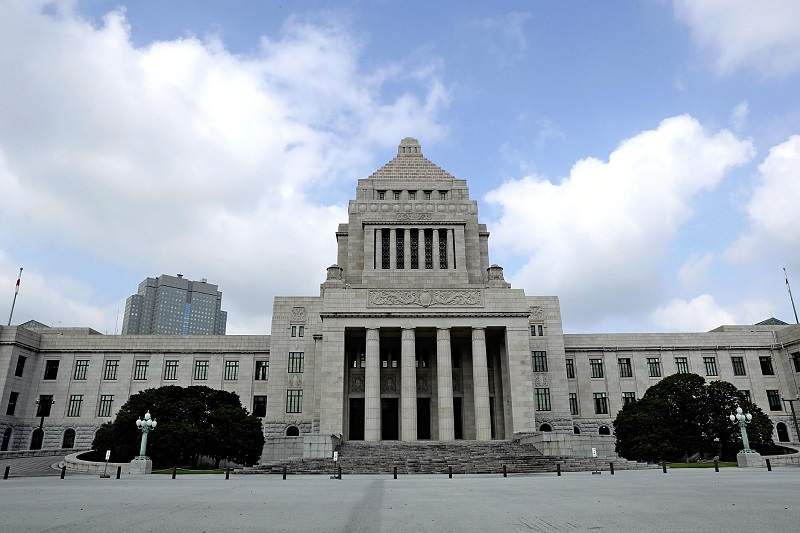
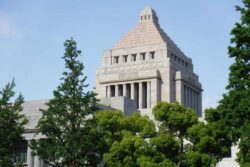
The Diet Building in Chiyoda Ward, Tokyo, Japan.
16:59 JST, May 24, 2023
The government plans to issue special public bonds as a revenue source for implementing its planned “extraordinary level of measures to address the declining birth rate” from fiscal 2024, government sources said.
A type of government bond, tentatively called a “special public bond for children,” is expected to be issued over a period of about two years.
The government also plans to set up a new funding system designed to support child-rearing households by raising social insurance premiums.
The plans will be incorporated into the Basic Policy on Economic and Fiscal Management and Reform, which is expected to be adopted by the Cabinet in June.
Designating three years beginning in fiscal 2024 as a period to accelerate efforts to address the low birthrate, the government will gradually increase the budget for the measures in phases. The amount is expected to increase by about ¥3 trillion from the current figure as early as fiscal 2027.
However, it is likely only in fiscal 2026 that the government will be able to secure a sufficient amount of revenue sources. It plans to make up for shortfalls in the meantime by issuing the special public bonds.
The envisaged special public bonds for children are expected to be so-called bridge bonds, which will be redeemed with revenues secured through increases in social security premiums in the future. The government plans to set up a new special account, tentatively called the “children’s safe,” which will centralize and manage the budget related to children. The special public bonds will also be issued and managed under the special account.
In its measures from fiscal 2027 onward, the government plans to spend a total of ¥3 trillion focusing on three key fields.
Specifically, the government plans to allocate about ¥1.5 trillion for strengthening financial assistance by increasing the allowance for families with children, scrapping medical fees for children and reducing the financial burdens of educational fees.
About ¥800 billion to ¥900 billion will be spent to expand services for child-rearing households, such as establishing a new nursery system.
The government also plans to allocate about ¥700 billion to boost support for families in which both parents work, including an increase in their take-home income during child-care leave.
As revenue sources, the government plans to secure ¥900 billion to ¥1 trillion through the envisaged funding system, ¥1.1 trillion to ¥1.2 trillion by thoroughly reviewing expenditures, and ¥900 billion by making use of the budget that has already been set aside.
The government plans to reach a conclusion on whether to increase social insurance premiums by the end of this year. It will also consider measures to reduce burdens on employees of small- and medium-size companies.



Most Read
Popular articles in the past 24 hours
-

Toronto Blue Jays’ Kazuma Okamoto Blasts 1st HR of Spring
-
20 Trapped in Tokyo Skytree Lift, Rescued 5½ Hours Later
-
Japan Seeks to Counter China's Expanding Influence in Pacific by ...
-

Aggression against Ukraine: Malignant Precedent Must Not Be Set t...
-
Japan's Diet Begins Debate on Takaichi's Budget Plans, ‘Proactive...
-
Japan Asks U.S. Not to Worsen Tariffs; Chief Cabinet Secretary Ki...
-

Milano Cortina 2026: Gold Medal Olympic Figure Skaters Riku Miura...
-

Exhibition Featuring Yoshiharu Tsuge’s Manga World Underway in Ch...
Popular articles in the past week
-

Producer Behind Pop Group XG Arrested for Cocaine Possession
-

Sanae Takaichi Elected Prime Minister of Japan; Keeps All Cabinet...
-

Japan's Govt to Submit Road Map for Growth Strategy in March, PM ...
-

Japan, U.S. Name 3 Inaugural Investment Projects; Reached Agreeme...
-

iPS Treatments Pass Key Milestone, but Broader Applications Far f...
-

Tokyo Skytree's Elevator Stops, Trapping 20 People; All Rescued (...
-
Director Naomi Kawase's New Film Explores Heart Transplants in Ja...
-
LDP Begins Training New Lawmakers to Avoid Scandal, Gaffes; Histo...
Popular articles in the past month
-
Producer Behind Pop Group XG Arrested for Cocaine Possession
-

Japan PM Takaichi’s Cabinet Resigns en Masse
-

Japan Institute to Use Domestic Commercial Optical Lattice Clock ...
-

Man Infected with Measles Reportedly Dined at Restaurant in Tokyo...
-

Israeli Ambassador to Japan Speaks about Japan’s Role in the Reco...
-

Videos Plagiarized, Reposted with False Subtitles Claiming ‘Ryuky...
-

Man Infected with Measles May Have Come in Contact with Many Peop...
-

Prudential Life Insurance Plans to Fully Compensate for Damages C...
Top Articles in Politics
-
Japan PM Takaichi’s Cabinet Resigns en Masse
-
Sanae Takaichi Elected Prime Minister of Japan; Keeps All Cabinet Appointees from Previous Term
-
Japan’s Govt to Submit Road Map for Growth Strategy in March, PM Takaichi to Announce in Upcoming Policy Speech
-

LDP Wins Historic Landslide Victory
-

LDP Wins Landslide Victory, Secures Single-party Majority; Ruling Coalition with JIP Poised to Secure Over 300 seats (UPDATE 1)
JN ACCESS RANKING
-
Producer Behind Pop Group XG Arrested for Cocaine Possession
-
Japan PM Takaichi’s Cabinet Resigns en Masse
-
Man Infected with Measles Reportedly Dined at Restaurant in Tokyo Station
-
Israeli Ambassador to Japan Speaks about Japan’s Role in the Reconstruction of Gaza
-
Videos Plagiarized, Reposted with False Subtitles Claiming ‘Ryukyu Belongs to China’; Anti-China False Information Also Posted in Japan