
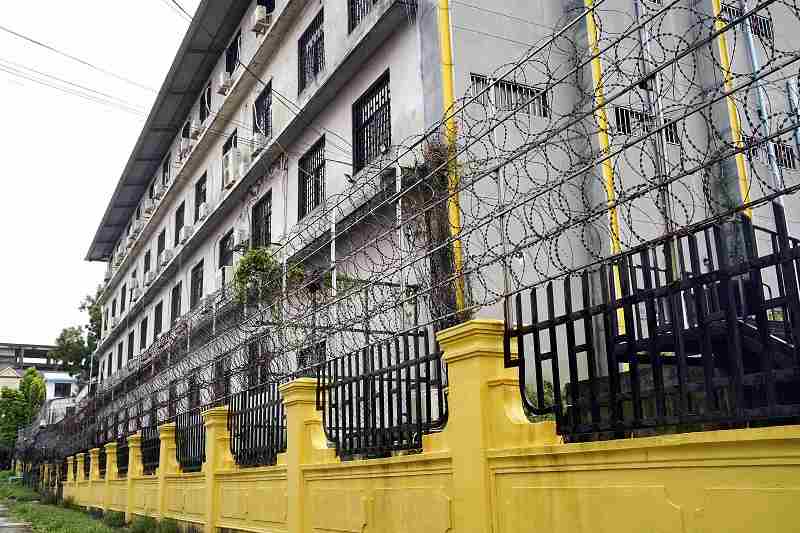
Barbed wire fences are seen outside a compound where Cambodian authorities said they had recovered evidence of human trafficking, kidnapping and torture during raids on suspected cybercrime compounds in the coastal city of Sihanoukville, Cambodia, on September 21.
13:19 JST, December 30, 2022
HANOI /BANGKOK – Thousands of young people from Southeast Asia seeking job opportunities have been sold to gangs of Chinese scammers who force their victims to take part in crimes and physically assault them.
Victims have been found mainly in Cambodia, but also in Myanmar, the Philippines and Laos. Chinese-run casinos in Cambodia are among the sites that have become hotbeds for such human trafficking.
The victims were contacted through social media and offered “high-paying jobs” with daily wages of about ¥20,000. It appears that criminal organizations are behind the offers.
When the victims arrive at their destination, they often get sold to organizations involved in phone and online scams in which they are made to dupe people into transferring money by inviting them to invest in fake stock transactions. Many of the victims claim they were detained against their will and beaten if they did not meet their designated quota.
Efforts are being made to crack down on such human trafficking and to rescue victims of the gangs.
Indonesia had rescued 514 Indonesian nationals from Cambodia as of October. Other victims have hailed from Vietnam, Thailand, India, Hong Kong and mainland China.
Taiwan authorities confirmed that 700 people trafficked from the island had been in Cambodia between March and Dec. 26.
According to figures compiled by The Yomiuri Shimbun, the total number of victims exceeds 2,700, but the real figure is likely to be much bigger.
In August, Cambodian authorities arrested the Chinese manager of a casino operating near the border with Vietnam on suspicion of forcing Vietnamese people to work at the casino.
That same month, Thai authorities arrested a Chinese businessman involved in running a casino in Myanmar and other ventures. The businessman was suspected of using and confining trafficked workers at facilities he operated.
Jason Tower, a Southeast Asia expert at the United States Institute of Peace, said China’s crackdown on online gambling around 2012 caused many operators to move to Cambodia. A growing number of these operators are now setting up gambling dens in Myanmar, according to Tower.





Most Read
Popular articles in the past 24 hours
-

Japan Govt Aims for 10-Fold Increase in Computing Power of Superc...
-

Kesennuma, Miyagi Pref., Locals Raise Carp Streamers as Symbol of...
-

Iran Situation: Significance of Rule of Law Must Be Conveyed
-

Trump Says Iran Had a New Site for Developing Nuclear Weapons
-

Toyota Advancing Plant-Based Biofuel Development in Fukushima Tow...
-

2 People Reportedly Found on Mt. Fuji; Hiking Trail Currently Clo...
-

CARTOON OF THE DAY (March 10)
-

Japan's TEPCO to Raise Electricity Rates for Corporations in Apri...
Popular articles in the past week
-

Ibaraki Pref.'s 1st Foreign Bus Driver Hired in Tsukuba
-

Amid Strait of Hormuz Blockade, Shipping Companies Scramble to Ge...
-
Govt to Utilize ODA for Ensuring Economic Security; Securing Ener...
-
Japan Govt Survey Finds Just 10% of Workers Want Working Hours to...
-

Japan's 2nd Round of U.S. Investments May Be Worth Over $100 Bill...
-

Imperial Family Watches World Baseball Classic Game Against Austr...
-

Nippon Life Insurance's U.S. Arm Sues OpenAI Over Legal Assistanc...
-

Donald Keene’s Drinking Buddy and Translator Yukio Kakuchi Pays T...
Popular articles in the past month
-

Producer Behind Pop Group XG Arrested for Cocaine Possession
-

Japan PM Takaichi’s Cabinet Resigns en Masse
-

Man Infected with Measles Reportedly Dined at Restaurant in Tokyo...
-

Videos Plagiarized, Reposted with False Subtitles Claiming ‘Ryuky...
-

iPS Treatments Pass Key Milestone, but Broader Applications Far f...
-

Sanae Takaichi Elected Prime Minister of Japan; Keeps All Cabinet...
-

Nepal Bus Crash Kills 19 People, Injures 25 Including One Japanes...
-

South Korea Tightens Rules on Foreigners Buying Homes in Seoul Me...
Top Articles in World
-
Videos Plagiarized, Reposted with False Subtitles Claiming ‘Ryukyu Belongs to China’; Anti-China False Information Also Posted in Japan
-
Nepal Bus Crash Kills 19 People, Injures 25 Including One Japanese National
-
South Korea Tightens Rules on Foreigners Buying Homes in Seoul Metro Area
-

Ukrainian Ambassador Closely Watching Japan’s Revision of Defense Export Rules, Hopes for Future Arms Support
-

China, India Tapping into Promising African Market; Beijing Announces Tariff Cuts, Both Countries Aim to Expand Exports
JN ACCESS RANKING
-
Producer Behind Pop Group XG Arrested for Cocaine Possession
-
Japan PM Takaichi’s Cabinet Resigns en Masse
-
Man Infected with Measles Reportedly Dined at Restaurant in Tokyo Station
-
Videos Plagiarized, Reposted with False Subtitles Claiming ‘Ryukyu Belongs to China’; Anti-China False Information Also Posted in Japan
-
iPS Treatments Pass Key Milestone, but Broader Applications Far from Guaranteed