

The palace in Moscow where a Dentsu Gala to support Tokyo’s bid for the 2020 Games was held in 2013
6:00 JST, October 28, 2022
This is the third installment of a series on corruption behind the 2020 Tokyo Olympics and Paralympics.
***
At the height of the bidding process for the 2020 Olympic and Paralympic Games in mid-August 2013, a glittering party was organized by major advertising agency Dentsu Inc. at a palace in Moscow, where the World Athletics Championships were being held.
Special cars were used to transport invited guests to and from the party. There was wine, Champagne and catered food from a sushi restaurant known as the most luxurious in Moscow. Expensive digital cameras were prepared as party gifts.
Attendees at the Dentsu Gala from Japan included a suprapartisan group of lawmakers working on Tokyo’s bid for the 2020 Games and executives of the Japanese Olympic Committee.
“There were hundreds of guests,” a former executive of the suprapartisan group said. “For a Japanese firm to have the power to draw such a large number of people was impressive.”
More than 30 International Olympic Committee commissioners were in Moscow during the World Athletics Championships for which Dentsu had acquired exclusive global marketing and media rights. The Dentsu Gala was in fact a lobbying event for Tokyo’s 2020 Games bid.
Tokyo lost a bid to host the 2016 Summer Games, which went to Rio de Janeiro, so the suprapartisan group and other entities were all impatient, determining that they must strengthen their ties with key figures in the international sporting world.
The IOC general meeting to decide the host of the 2020 Games was held about three weeks after that party. It was unmistakably the power of Dentsu that created the opportunity for the final push in Moscow, far away from Tokyo.
A former executive of the Tokyo 2020 bid committee said he felt that the power of the globally present Dentsu was indeed impressive.
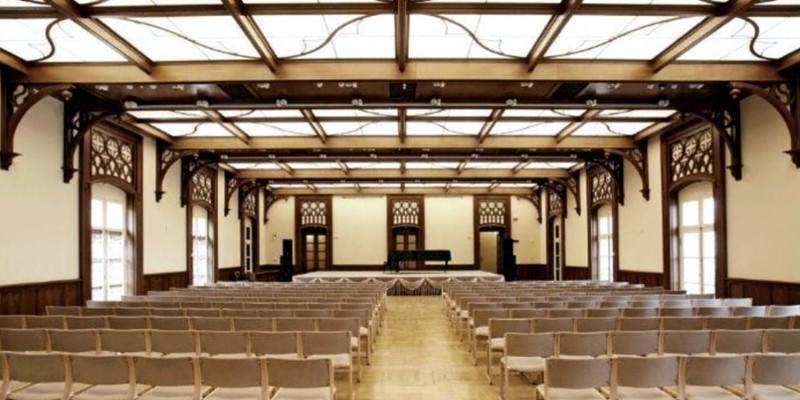
A room at the palace
The relationship between Dentsu and the Olympics dates back to the 1964 Tokyo Games.
Dentsu dispatched employees to the organizing committee of those Tokyo Games and acted as a liaison between the committee and companies that wished to sponsor the Games, which did not yet have a sponsorship system in place.
In 1979, the ad agency organized a “Ganbare, Nippon” (Let’s Go, Japan) campaign that allowed Japan’s Olympic athletes to appear in advertisements.
The firm made its full-fledged entry into the Olympic Games business for the 1984 Los Angeles Summer Games, and since then has been almost exclusively responsible for getting sponsors.
“Dentsu was able to get the results sponsors wanted, so we were able to just farm out the whole project to the firm,” said a former JOC executive from an athletic organization.
The JOC, upon the decision in 1991 that Nagano would host the 1998 Winter Games, established Japan Olympic Marketing (JOM). Although the Nagano Games generated more than ¥35 billion in revenue, JOM played a central role in recruiting sponsors, with Dentsu playing a supporting role. In 1999, JOM allowed companies other than Dentsu to participate in the sponsorship business.
Conflict within the JOC began to develop, however, between a faction that was actively seeking independence from Dentsu and another faction that was close to the agency.
As the struggle between the factions intensified, the government announced a policy prohibiting public interest corporations, including the JOC, from holding shares, which forced the JOM to dissolve in 2001.
“The existence of JOM was all about the fight against Dentsu,” a former JOC executive said. “After losing JOM, the JOC returned to being dependent on Dentsu.”
The JOC then began to use ad agencies again and held bid competitions every four years for the Olympics, but Dentsu prevailed over other companies every time.
For the 2020 Games, the JOC applied to the IOC in August 2011 that Tokyo was bidding to host them. Dentsu took the lead in the bidding process, which began the following month.
Former Dentsu Senior Managing Director Haruyuki Takahashi, now 78, was appointed as a special advisor to the bid committee. He is close to Sepp Blatter, now 86, who at the time of Tokyo’s bid was an IOC member and president of world soccer’s governing body FIFA. Takahashi has recently been charged multiple times over the accepting of bribes related to sponsorship of the 2020 Tokyo Games.
On Sept. 7, 2013, Tokyo won the bid to host the 2020 Games during the IOC general assembly in Argentina. Among those who rejoiced over Tokyo’s bid were then JOC President Tsunekazu Takeda, now 74, and then Tokyo Gov. Naoki Inose, now 75, and Takahashi.
“I was the key to the success of the bid because I have known important people from abroad for a long time,” Takahashi said in an interview in July this year. “Had I not done it, the bid for the Tokyo Games would not have been realized.”
The organizing committee of the Tokyo Games was established in January 2014, but it was Dentsu that took control of sponsor selection as the exclusive marketing agency.
With the JOC’s dependence on Dentsu being strengthened by the success of the bid, Takahashi, who was appointed an executive board member of the organizing committee, continued his business as an intermediary.
“We also bear responsibility for causing this incident by relying too much on Dentsu,” another former JOC official said.








Most Read
Popular articles in the past 24 hours
-
Milano Cortina 2026: Japanese Gold Medalist Figure Skater Miura S...
-
Japan’s Takaichi Speaks on New U.S. Tariff in Upper House, Says P...
-

Takeshima Day: Persistently Demanding Resolution from South Korea...
-

Japanese Watermelon Shipments Starts in Leading Production Distri...
-
Milano Cortina 2026: Team Japan Disbands at Ceremony in Tokyo as ...
-

Impact on Japanese Economy Unclear with Trump’s New Tariffs, Shif...
-
Japan Authorities Begin On-site Inspection of Japanese Microsoft ...
-

Nikkei Average Rewrites All-Time Closing High
Popular articles in the past week
-

Producer Behind Pop Group XG Arrested for Cocaine Possession
-

iPS Treatments Pass Key Milestone, but Broader Applications Far f...
-

Japan, U.S. Name 3 Inaugural Investment Projects; Reached Agreeme...
-

Tokyo Skytree's Elevator Stops, Trapping 20 People; All Rescued (...
-

Japan’s Major Real Estate Firms Expanding Overseas Businesses to ...
-

Baby Monkey Punch Captures Hearts at Chiba Pref. Zoo, on Social M...
-
Milano Cortina 2026: Japanese Gold Medalist Figure Skater Miura S...
-
Milano Cortina 2026: Japanese Figure Skater Kaori Sakamoto’...
Popular articles in the past month
-
Producer Behind Pop Group XG Arrested for Cocaine Possession
-

Japan PM Takaichi’s Cabinet Resigns en Masse
-

Japan Institute to Use Domestic Commercial Optical Lattice Clock ...
-

Man Infected with Measles Reportedly Dined at Restaurant in Tokyo...
-

Israeli Ambassador to Japan Speaks about Japan’s Role in the Reco...
-

Videos Plagiarized, Reposted with False Subtitles Claiming ‘Ryuky...
-

Man Infected with Measles May Have Come in Contact with Many Peop...
-

Prudential Life Insurance Plans to Fully Compensate for Damages C...
Top Articles in Society
-
Producer Behind Pop Group XG Arrested for Cocaine Possession
-
Man Infected with Measles Reportedly Dined at Restaurant in Tokyo Station
-
Man Infected with Measles May Have Come in Contact with Many People in Tokyo, Went to Store, Restaurant Around When Symptoms Emerged
-

Woman with Measles Visited Hospital in Tokyo Multiple Times Before Being Diagnosed with Disease
-
Australian Woman Dies After Mishap on Ski Lift in Nagano Prefecture
JN ACCESS RANKING
-
Producer Behind Pop Group XG Arrested for Cocaine Possession
-
Japan PM Takaichi’s Cabinet Resigns en Masse
-
Man Infected with Measles Reportedly Dined at Restaurant in Tokyo Station
-
Israeli Ambassador to Japan Speaks about Japan’s Role in the Reconstruction of Gaza
-
Videos Plagiarized, Reposted with False Subtitles Claiming ‘Ryukyu Belongs to China’; Anti-China False Information Also Posted in Japan