
In search of lost time 20 years after Pyongyang summit / Japanese nationals abducted by North Korea embrace 20 years of freedom, fight for return of others
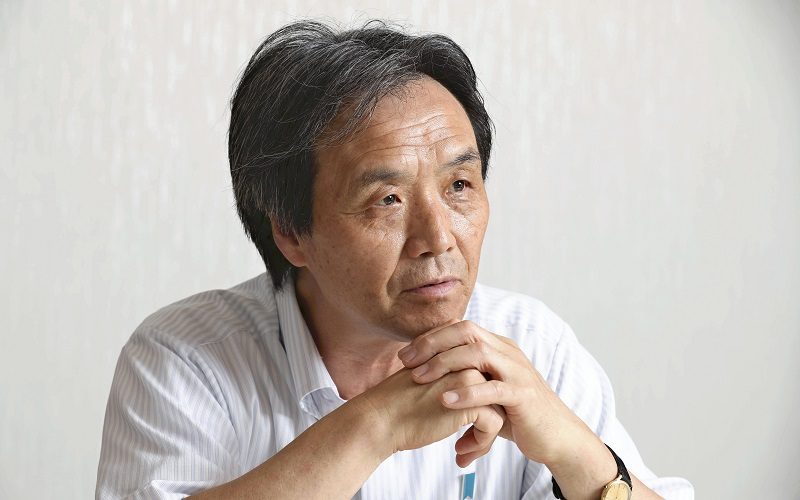
Kaoru Hasuike**
6:00 JST, September 22, 2022
At the first Japan-North Korea summit held on Sept. 17, 2002, Pyongyang admitted to abducting Japanese nationals in the past. This is the first installment of a five-part series reflecting on the experiences of the abductees, some of whom have returned to Japan, and their families over the past 20 years.
***
When he gets behind the wheel of a car, Kaoru Hasuike still thinks to himself, “I can go wherever I want to go, can’t I?”
Hasuike, 64, is an abductee who returned to Japan in the autumn of 2002 after 24 years in North Korea. He has lived his life in Japan valuing the freedom he regained.
His life took a dark turn on July 31, 1978, during a summer vacation when he was 20 and a Chuo University student in Tokyo. While returning to his hometown of Kashiwazaki, Niigata Prefecture, he and his girlfriend, Yukiko Okudo, who is now 66, went to the seaside to watch the sunset.
A man approached them asking if they had a light for his cigarette, but just as Hasuike was about to offer him his lighter, he was attacked from behind by an agent who had been hiding.
Hasuike and Okudo were both put in sacks. After sunset, they were loaded onto a spy ship disguised as a fishing boat. When Hasuike could look out from his sack, he saw the lights of Kashiwazaki fading into the distance.
“Welcome to the Democratic People’s Republic of Korea,” a man said to him coldly in the unfamiliar port he reached after two nights of travel. In fear and confusion, all Hasuike could do was shout, “Return me to Japan!”
He was taken to a so-called guest house on the outskirts of Pyongyang, surrounded by guards and barbed wire. He was not allowed to leave and had no way of informing his family in Japan of his whereabouts.
“I was deprived of everything but my life,” he said.
Having given up hope of returning home, he learned Korean in order to survive.
Two years after his abduction, he was reunited with Okudo in North Korea and they married. They later had a daughter and a son. The couple discussed the issue of language, and instead of teaching their children Japanese, they raised them as if they were “children of Zainichi Korean residents in Japan.” They did not want their children to be discriminated against or used as agents by North Korea.
“Returning home will never happen,” Hasuike remembered saying to himself. “The only purpose of my life is to protect my family.”
Half a year before the September 2002 Japan-North Korea summit, he and his wife were suddenly told by a senior official of the Korean Workers’ Party: “Our party has made a decision. We will now improve relations with Japan.”
In June that year, the couple was removed from the guest house deep in the mountains to an apartment in Pyongyang. After the summit ended, they were instructed to “temporarily” return to Japan.
Hasuike can never forget the emotion he felt when the Japanese government-chartered plane took off from Pyongyang on Oct. 15, 2002: “I escaped from the North.”
At Haneda Airport, his elderly parents waited at the bottom of the airstairs with tears in their eyes. He and his wife were anxious about their children in North Korea, but decided to stay in Japan permanently and wait for them to come.
He received a lot of support, but he woke up before dawn every day and studied hard.
“I did not return to live a life of bliss,” he said. “Hard work is the proof of life.”
In May 2004, his children arrived in Japan. He began his studies at his alma mater and then went on to earn a master’s degree from Niigata University. He was more than happy to be able to “work hard like everyone else and live a normal life.”
His language skills became his livelihood. He taught Korean at a university and became a translator of a best-selling Korean book.
The greater the sense of freedom and fulfillment he has regained, the more his thoughts turn to the abductees who are still in North Korea. Of the 17 abductees recognized by the Japanese government, only five have returned to Japan, including Hasuike and his wife. In North Korea, he temporarily spent time at a guest house with other abductees including Megumi Yokota, who was 13 and in her first year of junior high school at the time of her abduction.
For Hasuike, the abduction issue is not over.
“The fear, anxiety and impatience of those left behind are extreme,” he said. “In order for true liberation to be achieved, they must all be returned home.”
He travels around the country appealing for their return: “They are still living in fear and in severe and painful conditions. They need to return home as soon as possible.”
Waiting for her mother
Hitomi Soga, 63, who was abducted 44 years ago in her hometown of Sado, Niigata Prefecture, returned to Japan on the same flight as Hasuike. Her 90-year-old mother, Miyoshi, however, who was abducted along with Soga, is still a captive of North Korea.
“Too much time has passed, and it’s getting difficult for me to recall my memories of my mother anymore,” Soga started telling people around her recently.
On Aug. 12, 1978, Soga and her mother had gone shopping and were abducted on their way home. They were forced to get on a spy ship heading back to North Korea, and Soga found her mother was not with her upon arrival.
Soga got married in 1980 and had two daughters. In winter the temperatures dropped to minus 30 C and heating was sometimes cut off. There were times when Soga and her family could not get enough rice. But she was still “happy that I wasn’t alone.”
Whenever she had problems raising her daughters, she imagined how her mother would have handled the situation.
After returning to Japan, Soga began working at a local elderly care facility in 2007, where she often superimposed the image of her mother onto elderly women in the facility.
Her husband in North Korea, Charles Robert Jenkins, who had deserted the U.S. military, came to Sado in 2004. He died in December 2017 at the age of 77. Their 39-year-old daughter became a nursery school teacher and lives apart from her. Her younger daughter, 37, married and left Sado Island. Soga now lives alone waiting for her mother’s return.
At a lecture in late August in Sado, Soga spoke to the audience in a tearful voice: “Mom, where are you and what are you doing now? I’ll keep collecting petition signatures and giving lectures to do my best to bring you back as soon as possible. Please hang in there a little longer. I’ll definitely bring you back.”
Suspicious claims
At the summit between Japan and North Korea on Sept. 17, 2002, North Korea said of the 13 abductees that Pyongyang admitted to taking, “Five survived and eight died.”
The survivors were Yasushi Chimura and his wife Fukie, Kaoru Hasuike and his wife Yukiko, and Hitomi Soga. The Japanese government had not been aware that Soga was an abductee, but North Korea revealed her existence. The five returned home on Oct. 15, 2002.
Shuichi Ichikawa, Rumiko Masumoto, Yaeko Taguchi and Megumi Yokota were said to be among those who died. North Korea explained that the eight people died of illness or accidents between 1979 and 1996. However, the documents presented as evidence such as death certificates had many strange points, and the “remains” submitted as Yokota’s were found to be those of someone else according to DNA tests conducted by the Japanese government. None of North Korea’s “proof” served as objective evidence.
North Korea has said that Yutaka Kume and Soga’s mother, Miyoshi, have not entered the country. Japan identified Minoru Tanaka in 2005 and Kyoko Matsumoto in 2006, but North Korea also denied they had entered the country.
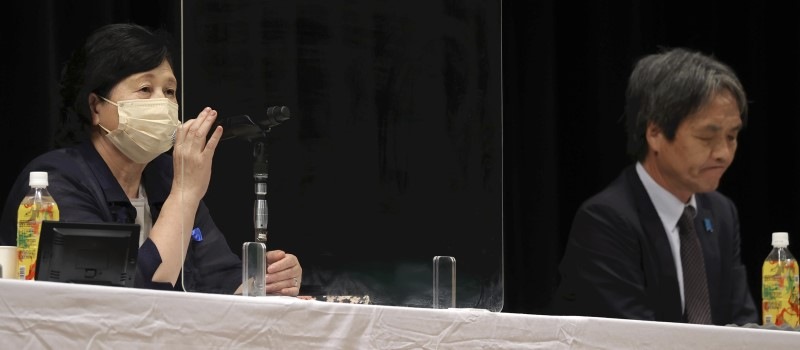
Hitomi Soga, left, and Kaoru Hasuike** give a lecture in Sado, Niigata Prefecture, on Aug. 28.



Most Read
Popular articles in the past 24 hours
-

Ukrainian Ambassador Closely Watching Japan’s Revision of Defense...
-

Milano Cortina 2026: Sakamoto Serves as Flag Bearer; Japan Earns ...
-
Emperor Turns 66 Ahead of Disaster Milestones
-

Milano Cortina 2026: There Were Cheers across the Country, after ...
-
Luna Sea Drummer Shinya Dies at 56; Powerful Drummer Behind ‘Desi...
-

Milano Cortina 2026: ‘Magical’ Italian Games Close wi...
-

Milano Cortina 2026: Riku-Ryu Duo Stick Together During Closing C...
-

1.2 Mil. Rapeseed Flowers Attract Cute Birds, People in Aichi Pre...
Popular articles in the past week
-

Japan PM Takaichi’s Cabinet Resigns en Masse
-

Man Infected with Measles Reportedly Dined at Restaurant in Tokyo...
-

Sanae Takaichi Elected Prime Minister of Japan; Keeps All Cabinet...
-

Japan's Govt to Submit Road Map for Growth Strategy in March, PM ...
-

Bus Carrying 40 Passengers Catches Fire on Chuo Expressway; All E...
-

Milano Cortina 2026: Figure Skaters Riku Miura, Ryuichi Kihara Pa...
-

U.S. Firm to Build Training Hub in Fukushima N-plant for Debris R...
-

Japan, U.S. Name 3 Inaugural Investment Projects; Reached Agreeme...
Popular articles in the past month
-
Japan PM Takaichi’s Cabinet Resigns en Masse
-

Japan Institute to Use Domestic Commercial Optical Lattice Clock ...
-

Israeli Ambassador to Japan Speaks about Japan’s Role in the Reco...
-
Man Infected with Measles Reportedly Dined at Restaurant in Tokyo...
-

Videos Plagiarized, Reposted with False Subtitles Claiming ‘Ryuky...
-

Man Infected with Measles May Have Come in Contact with Many Peop...
-

Prudential Life Insurance Plans to Fully Compensate for Damages C...
-

Woman with Measles Visited Hospital in Tokyo Multiple Times Befor...
Top Articles in Society
-

Producer Behind Girls Group XG Arrested for Cocaine Possession
-
Man Infected with Measles Reportedly Dined at Restaurant in Tokyo Station
-
Man Infected with Measles May Have Come in Contact with Many People in Tokyo, Went to Store, Restaurant Around When Symptoms Emerged
-
Woman with Measles Visited Hospital in Tokyo Multiple Times Before Being Diagnosed with Disease
-
Australian Woman Dies After Mishap on Ski Lift in Nagano Prefecture
JN ACCESS RANKING
-
Japan PM Takaichi’s Cabinet Resigns en Masse
-
Japan Institute to Use Domestic Commercial Optical Lattice Clock to Set Japan Standard Time
-
Israeli Ambassador to Japan Speaks about Japan’s Role in the Reconstruction of Gaza
-
Man Infected with Measles Reportedly Dined at Restaurant in Tokyo Station
-
Videos Plagiarized, Reposted with False Subtitles Claiming ‘Ryukyu Belongs to China’; Anti-China False Information Also Posted in Japan