
University of Tsukuba Hospital to Introduce Working Dog Next Year, Plans to Seek Contributions from Public
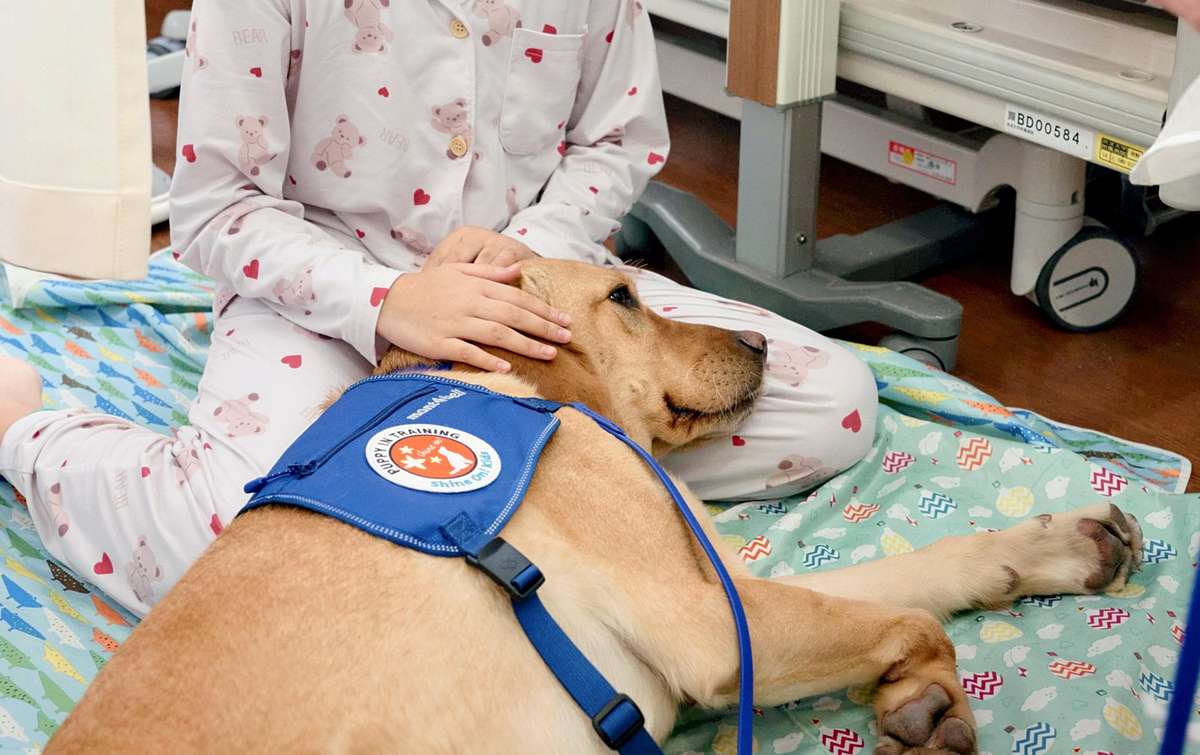
A working dog is seen at the University of Tsukuba Hospital.
2:00 JST, February 27, 2026
MITO — The University of Tsukuba Hospital in Tsukuba, Ibaraki Prefecture, plans in April next year to employ a working dog to keep hospitalized children company during treatment and examinations so that they feel less anxious.
It will be the first time in Japan for a national university-affiliated hospital to utilize a working dog. The dog is expected to be a member of the medical team.
“We have decided to hire a new, capable staff member,” said hospital Director Yuji Hiramatsu at a regular news conference at the University of Tsukuba in late January.
Hiramatsu introduced the dog, which sat upright alongside the university president and others. It demonstrated its skills by resting its face on someone’s lap, a sight that immediately put everybody in the room at ease.
Such dogs are stationed at specific facilities. According to Shine On! Kids, a Tokyo-based nonprofit organization that trains and promotes the dogs in Japan, the animals were first introduced in U.S. courtrooms and elsewhere around 2000. They have since spread worldwide to courtrooms, hospitals and special needs schools.
In Japanese hospitals, the dogs began to be used at Shizuoka Children’s Hospital in 2010. There are also working dogs at hospitals in Tokyo and Kanagawa Prefecture.
The University of Tsukuba Hospital is designated as a hospital providing advanced medical care. It has a pediatric ward with about 50 beds and a neonatal intensive care unit, where children with serious illnesses, such as cancer and other intractable diseases, come from across the country.
“If a facility dog joins the medical team to provide emotional support, I believe children at the hospital will surely have the increased strength needed to overcome their illnesses,” said Hiramatsu, who works with children going through tough treatments. “[Dogs] possess a mysterious power that words cannot express.”
The hospital plans to have one dog — either a Labrador Retriever, a Golden Retriever, or a mix of both breeds, which are known to be calm and intelligent. A candidate dog is currently undergoing training at a hospital where another dog is already on staff.
However, significant financial challenges remain. Initial costs of about ¥7 million will be needed to prepare spaces for the dogs and to train nurses to work as handlers. In addition, annual costs of about ¥12 million will be needed to cover personnel expenses, vaccinations and training.
Today, many hospitals affiliated with national universities are operating at a loss. To help solve this problem, the University of Tsukuba Hospital decided to raise ¥22 million through crowdfunding, which will be accepted via the hospital’s dedicated website from March 4 to May 1. It also receives support from locally based Sekisho Corp. and others.
“We must not forget the importance of being warm when providing healthcare, as that’s what heals children’s hearts,” said Hiramatsu. “We would sincerely like to ask for your support and cooperation.”


Related Tags




Most Read
Popular articles in the past 24 hours
-

Ishinomaki Man Plush Toy Offers Hope to Children in Times of Disa...
-

Microsoft Japan Raided by Antitrust Watchdog for Allegedly Blocki...
-

Japan Eyes Introducing Prescreening System for Foreign Travelers,...
-

Party Representatives’ Questions in Diet: Takaichi Says Consumpti...
-

Milano Cortina 2026: News in Pictures / Feats of Japanese Athlete...
-

Pokémon Celebrates 30 Years with Japanese Pro Baseball Collab
-

Nikkei Tops 59,000 for First Time
-

New U.S. Tariff Unlikely to Significantly Impact Japan, BOJ Gov. ...
Popular articles in the past week
-

Producer Behind Pop Group XG Arrested for Cocaine Possession
-

iPS Treatments Pass Key Milestone, but Broader Applications Far f...
-

Tokyo Skytree's Elevator Stops, Trapping 20 People; All Rescued (...
-

Milano Cortina 2026: Japanese Gold Medalist Figure Skater Miura S...
-

Japan’s Major Real Estate Firms Expanding Overseas Businesses to ...
-

Nepal Bus Crash Kills 19 People, Injures 25 Including One Japanes...
-

Baby Monkey Punch Captures Hearts at Chiba Pref. Zoo, on Social M...
-

Milano Cortina 2026: Japanese Figure Skater Kaori Sakamoto’...
Popular articles in the past month
-
Producer Behind Pop Group XG Arrested for Cocaine Possession
-

Japan PM Takaichi’s Cabinet Resigns en Masse
-

Japan Institute to Use Domestic Commercial Optical Lattice Clock ...
-

Man Infected with Measles Reportedly Dined at Restaurant in Tokyo...
-

Israeli Ambassador to Japan Speaks about Japan’s Role in the Reco...
-

Videos Plagiarized, Reposted with False Subtitles Claiming ‘Ryuky...
-

Man Infected with Measles May Have Come in Contact with Many Peop...
-

Prudential Life Insurance Plans to Fully Compensate for Damages C...
Top Articles in Society
-
Producer Behind Pop Group XG Arrested for Cocaine Possession
-
Man Infected with Measles Reportedly Dined at Restaurant in Tokyo Station
-
Man Infected with Measles May Have Come in Contact with Many People in Tokyo, Went to Store, Restaurant Around When Symptoms Emerged
-

Woman with Measles Visited Hospital in Tokyo Multiple Times Before Being Diagnosed with Disease
-

Australian Woman Dies After Mishap on Ski Lift in Nagano Prefecture
JN ACCESS RANKING
-
Producer Behind Pop Group XG Arrested for Cocaine Possession
-
Japan PM Takaichi’s Cabinet Resigns en Masse
-
Man Infected with Measles Reportedly Dined at Restaurant in Tokyo Station
-
Israeli Ambassador to Japan Speaks about Japan’s Role in the Reconstruction of Gaza
-
Videos Plagiarized, Reposted with False Subtitles Claiming ‘Ryukyu Belongs to China’; Anti-China False Information Also Posted in Japan