
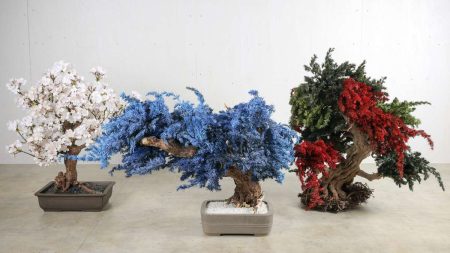
A Japanese black pine Dry Bonsai, center, features blue leaves, while an azalea Dry Bonsai, left, bears cherry blossoms. The combination of green and red leaves on the azalea on the right shows how the leaves change colors with the seasons.
7:00 JST, February 24, 2026
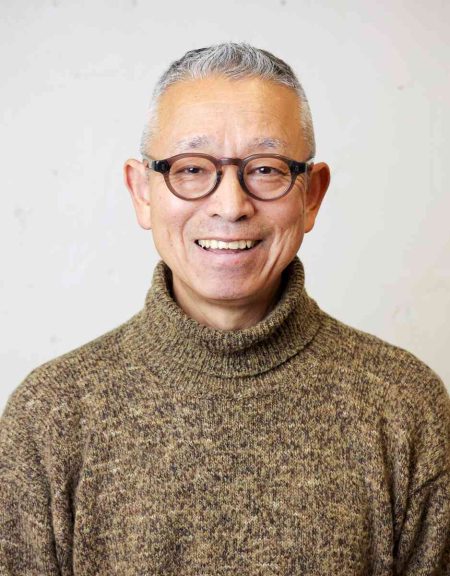
Shigeo Fujita
Bonsai reward their owners for the meticulous, affectionate care they receive by growing over many years. If they wither, they can be reborn as “Dry Bonsai,” a new type of bonsai that is gaining attention for its marvelous blend of bonsai’s traditional beauty with modern sensibilities, such as through the addition of vibrant colors.
Bonsai has long been a cherished Japanese hobby, with quite a few pieces reaching the level of art. However, even with devoted care, they can wither and die.
Bonsai artist Shigeo Fujita, 60, accepts such bonsai and gives them new life.
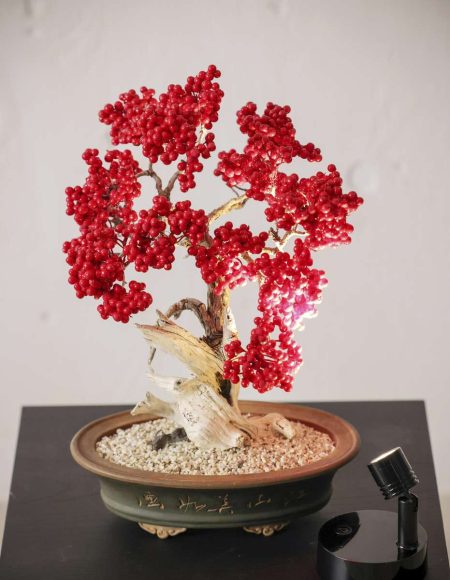
A shimpaku juniper Dry Bonsai adorned with oriental bittersweet berries in vivid red
Fujita says that he came up with the idea for Dry Bonsai as he wanted to preserve their beauty forever.
A Japanese black pine with browned foliage and a shimpaku juniper tree reduced to a bare trunk and branches are among the withered bonsai trees that have made their way across Japan to Fujita’s atelier in Chiba.
When working with these bonsai trees, Fujita first removes the soil, and then sterilizes, cleans and thoroughly dries the trees. He also prunes the branches and refines the shape of the roots. Finally, he attaches things like preserved conifer needles and high-quality artificial cherry blossoms one by one to the tips of the branches.
The entire process takes about one to three months, depending on the size of the piece.
“Since no two pieces are in the same condition, I handle each one carefully,” Fujita said.
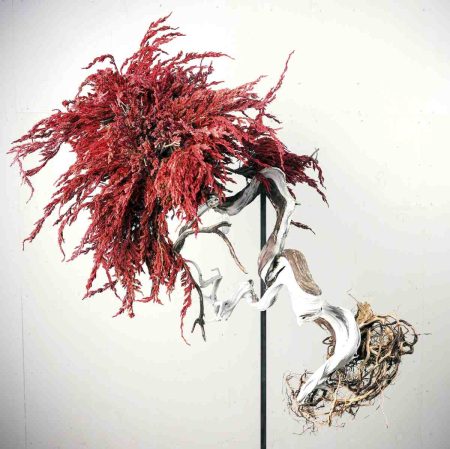
This Dry Bonsai piece features a curved trunk painted white to emphasize its beauty.
Fujita is creative and freethinking. For example, he gives a Japanese black pine that seems to have lived for 40 years blue leaves, not green. He adorns a satsuki azalea with cherry blossoms in full bloom. Some of his pieces are designed to be exposed down to their roots.
His Dry Bonsai pieces are a fusion of traditional Japanese aesthetics with contemporary sensibilities, never boring viewers.
Fujita was born in Chiba Prefecture in 1965 and began working as a bonsai artist in 1992. He presented his first Dry Bonsai in 2016 and trademarked the term in 2018. He has promoted the art form through exhibitions at his gallery in Tokyo’s Ginza district and elsewhere.
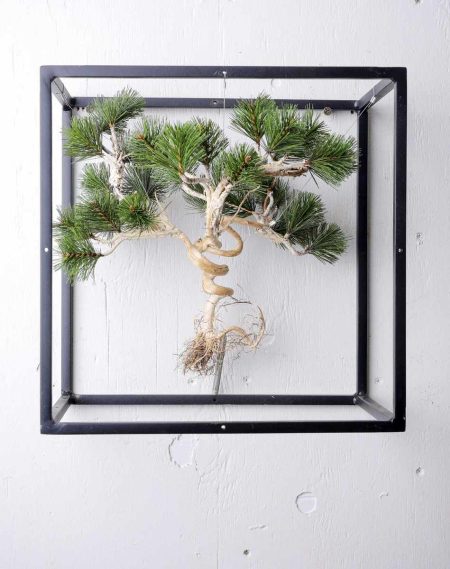
A framed, wall-mounted Dry Bonsai
Once Dry Bonsai was launched, it gained popularity not only as an ornament for the home but also as shop and office decor, mainly because it is easy to handle and does not require watering or pruning.
Fujita has received more and more requests to accept withered bonsai trees that can be used for Dry Bonsai. He now works on 300 to 400 pieces monthly.
“Even if they are given new life, they each retain the unique dignity created by nature. I want people to fully appreciate their beauty,” Fujita said.
Well-received overseas
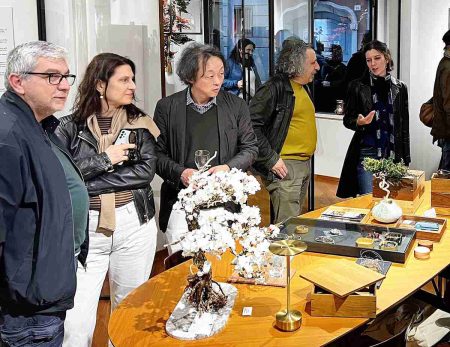
Dry Bonsai pieces displayed at Milan Design Week
Fujita’s Dry Bonsai were featured at the Milan Design Week in Italy in April last year. About 20 colorful pieces were displayed and they were well received by ordinary visitors and interior design professionals alike.
As interest in Japanese culture grows, his atelier receives more and more inquiries from overseas customers.“I think the Dry Bonsai’s high design quality is being recognized,” Fujita said. “Going forward, I want to actively promote its appeal overseas, as well as in Japan.”



Most Read
Popular articles in the past 24 hours
-

3,000 Accounts Posting, Spreading Content Critical of Japan on X;...
-

Milano Cortina 2026: Sakamoto Serves as Flag Bearer; Japan Earns ...
-

Milano Cortina 2026: There Were Cheers across the Country, after ...
-

A Packed Bus Plunges off a Nepal Highway, Killing 19 and Injuring...
-

Luna Sea Drummer Shinya Dies at 56; Powerful Drummer Behind ‘Desi...
-

Milano Cortina 2026: ‘Magical’ Italian Games Close wi...
-

Milano Cortina 2026: Riku-Ryu Duo Stick Together During Closing C...
-
Emperor Receives Well-Wishes from Public on His 66th Birthday
Popular articles in the past week
-

Japan PM Takaichi’s Cabinet Resigns en Masse
-

Man Infected with Measles Reportedly Dined at Restaurant in Tokyo...
-

Sanae Takaichi Elected Prime Minister of Japan; Keeps All Cabinet...
-

Japan's Govt to Submit Road Map for Growth Strategy in March, PM ...
-

Bus Carrying 40 Passengers Catches Fire on Chuo Expressway; All E...
-

U.S. Firm to Build Training Hub in Fukushima N-plant for Debris R...
-

Japan, U.S. Name 3 Inaugural Investment Projects; Reached Agreeme...
-

Riku-Ryu Pair Wins Gold Medal: Their Strong Bond Leads to Major C...
Popular articles in the past month
-
Japan PM Takaichi’s Cabinet Resigns en Masse
-

Japan Institute to Use Domestic Commercial Optical Lattice Clock ...
-

Israeli Ambassador to Japan Speaks about Japan’s Role in the Reco...
-
Man Infected with Measles Reportedly Dined at Restaurant in Tokyo...
-

Videos Plagiarized, Reposted with False Subtitles Claiming ‘Ryuky...
-

Man Infected with Measles May Have Come in Contact with Many Peop...
-

Prudential Life Insurance Plans to Fully Compensate for Damages C...
-

Woman with Measles Visited Hospital in Tokyo Multiple Times Befor...
Top Articles in Society
-

Producer Behind Girls Group XG Arrested for Cocaine Possession
-
Man Infected with Measles Reportedly Dined at Restaurant in Tokyo Station
-
Man Infected with Measles May Have Come in Contact with Many People in Tokyo, Went to Store, Restaurant Around When Symptoms Emerged
-
Woman with Measles Visited Hospital in Tokyo Multiple Times Before Being Diagnosed with Disease
-
Australian Woman Dies After Mishap on Ski Lift in Nagano Prefecture
JN ACCESS RANKING
-
Japan PM Takaichi’s Cabinet Resigns en Masse
-
Japan Institute to Use Domestic Commercial Optical Lattice Clock to Set Japan Standard Time
-
Israeli Ambassador to Japan Speaks about Japan’s Role in the Reconstruction of Gaza
-
Man Infected with Measles Reportedly Dined at Restaurant in Tokyo Station
-
Videos Plagiarized, Reposted with False Subtitles Claiming ‘Ryukyu Belongs to China’; Anti-China False Information Also Posted in Japan