
Genichiro Inokuma’s Mural in Ueno Station That Gave Hope in Postwar Years Almost Ready to Shine Again
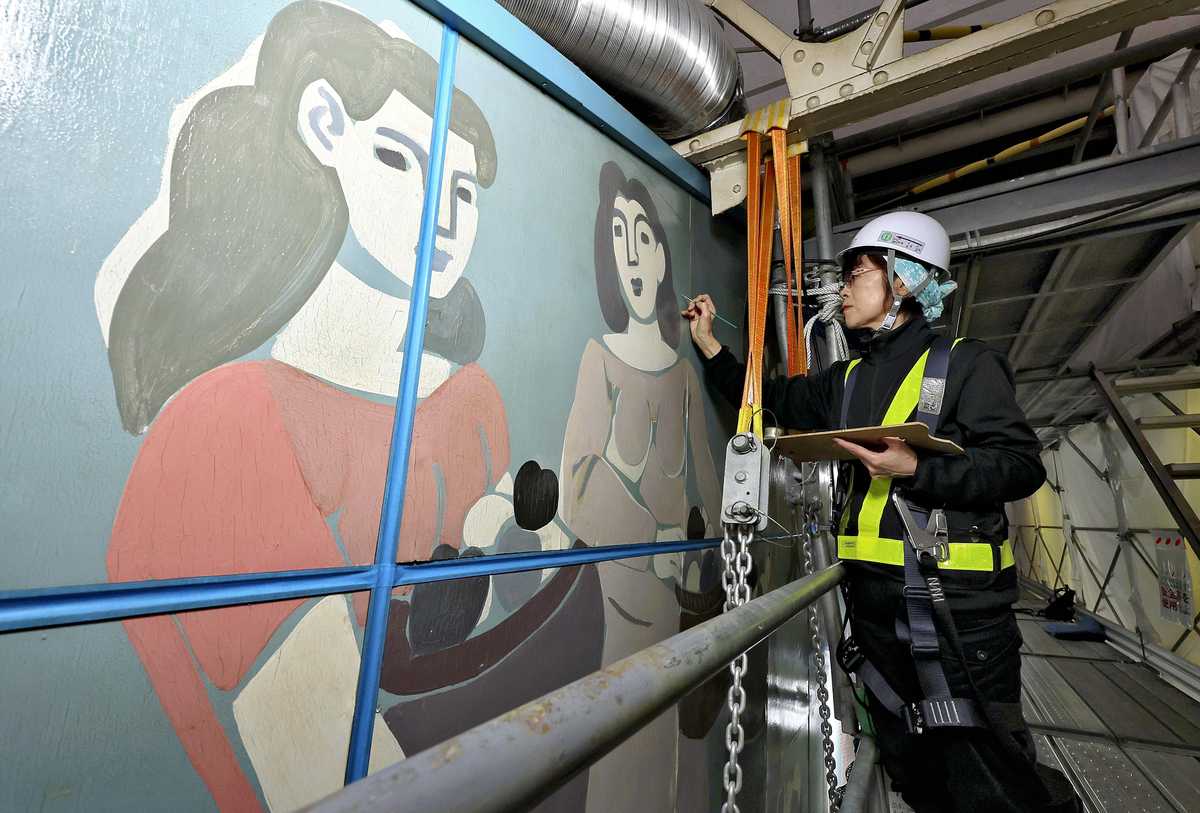
An official restores the mural at Ueno Station in Taito Ward, Tokyo, in November.
7:00 JST, February 3, 2026
Restoration of a huge mural that Modernist painting master Genichiro Inokuma created inside JR Ueno Station in Tokyo in 1951 is on track to be completed before the end of March.
Inokuma (1902-1993) painted the mural, called “Jiyu” (Freedom), to give hope and happiness to people struggling to get by in the years after World War II ended.
“We hope this signature artwork adorning Ueno Station will be preserved for future generations to enjoy,” an East Japan Railway Co. official said.
The mural, which is about 27 meters wide and about 5 meters high, was painted in soft pastel colors on a pentagonal wall above the station’s central ticket gate. The station is known as the “gateway from the north” because many people heading to Tokyo from the Tohoku and Hokuriku regions pass through Ueno on their journeys, so Inokuma painted a mural featuring apples, people holding skis and other images that reminded people of their northern hometowns.
Over the years, humidity, sunlight shining through a skylight and other factors damaged and discolored the mural. Some consideration was given to removing the mural in the 1980s, but this provoked a chorus of calls to preserve the artwork. The mural was repaired in 1984 and again in 2002, and has long been fondly viewed by station users.
The third restoration of the mural started in June 2025. About 20 people, including officials from Tokyo University of the Arts — which inked a comprehensive partnership agreement with East Japan Railway Co. (JR East) — have been carefully working on this project and restoring the mural by attaching and repairing parts where the paint has lifted, filling in parts that have flaked off with putty and repainting areas in need of touchups.
Ueno’s gloomy postwar image
In the period immediately after the war, Ueno Station became a gathering point for homeless war orphans and Japanese people who had returned from overseas battlefields. The gloom of defeat in the war enveloped the area.
In a bid to shake off that image, Toshio Kobayashi, who worked at an advertising company, suggested that a mural should be painted inside the station. According to an article about Kobayashi printed in The Yomiuri Shimbun in June 1993, Kobayashi pitched his idea to then Japanese Narional Railways in 1948. Kobayashi visited Inokuma at his home in Tokyo’s Den-en-chofu area several times, and finally got Inokuma to go along with his plan on the fourth visit.
Inokuma had traveled to France in 1938 and studied under Henri Mattise, a master of modern painting. Inokuma was sent to several combat areas as a war artist, and he is also known for designing the pattern used on the Mitsukoshi department store’s wrapping paper in 1950.
His Ueno Station mural was completed in 1951. In an article Inokuma contributed to a magazine the following year, he outlined his thoughts behind the mural. “I undertook this project because I wanted to give hope and happiness to the many people who pass through this station every day by drawing a striking mural featuring fresh, bright colors and simple shapes,” Inokuma wrote.
“Through Inokuma’s artwork, you can feel that he wanted to make people’s lives more beautiful and enriched,” explained a senior curator at the Marugame Genichiro-Inokuma Museum of Contemporary Art in Marugame, Kagawa Prefecture, which is Inokuma’s home prefecture.
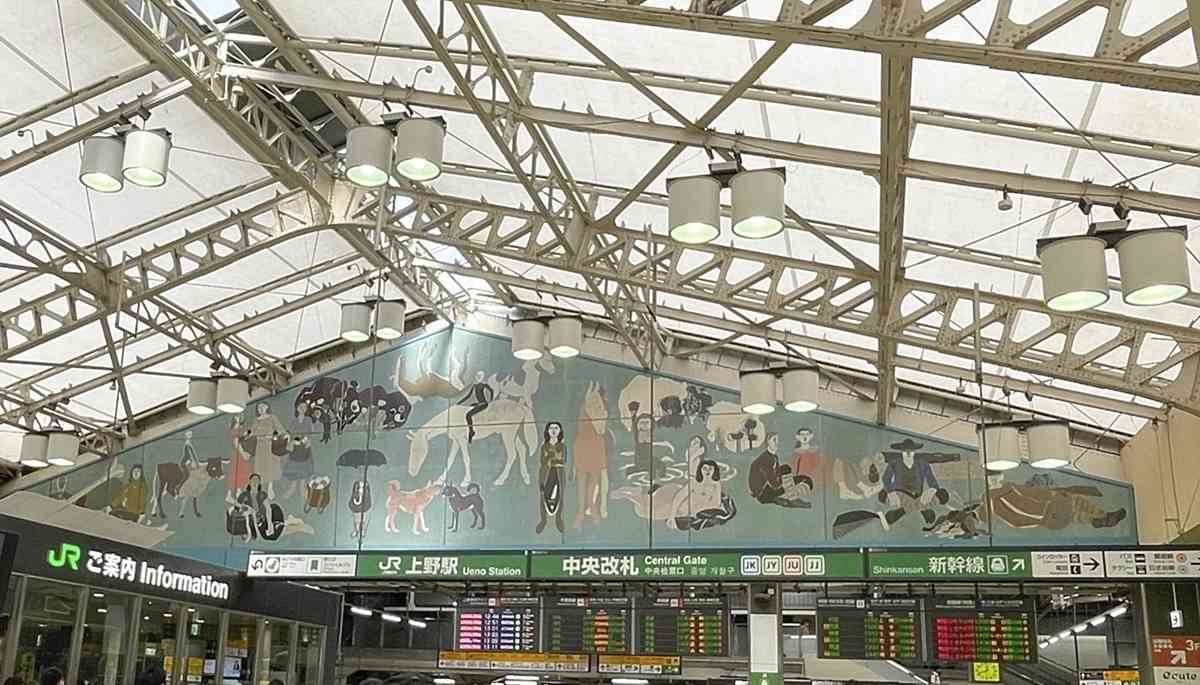
Genichiro Inokuma’s mural “Jiyu” (Freedom), before the restoration project started
Mural to be easier to see
In parallel with the mural restoration project, JR East has been renovating the station building, such as by widening the grand concourse in front of the central ticket gate that has been used since 1932. After these renovations are completed, equipment currently positioned in front of the mural will be removed and the entire artwork will become easier to view.
“‘Jiyu’ has looked down over the many people who have passed through the station from soon after the war up until right now,” said an official at JR East. “I hope people feel hope and joy when they see the restored mural.”


Related Tags
Most Read
Popular articles in the past 24 hours
-

Japan Train Company to Increase Fares, Including in Tokyo Metropo...
-
Japan Govt to Tighten Requirements to Receive Permanent Residency...
-
Tail of ANA Plane Struck Runway During Landing in Houston; No Inj...
-
Samurai Japan Holds First Practice in Miami; Team Will Play again...
-

Medical Care at Home and Disasters: Ensure Systems to Provide Con...
-

Iran Targets Busiest International Airport as Top UN Body Demands...
-

Japan to Face Venezuela in World Baseball Classic Quarterfinals
-

North Korean Leader Kim and His Daughter Try out New Pistols at S...
Popular articles in the past week
-

Japan Figure Skating Legend Yuzuru Hanyu Is Proud Disaster Surviv...
-

Nippon Life Insurance's U.S. Arm Sues OpenAI Over Legal Assistanc...
-

Ibaraki Pref.'s 1st Foreign Bus Driver Hired in Tsukuba
-
Govt to Utilize ODA for Ensuring Economic Security; Securing Ener...
-
Massive Sewer Pipe Found Jutting Out of Highway in Osaka
-
Beckoning Cats Get Makeover to Fit Modern Lifestyles with Sleek D...
-
Japan Govt Survey Finds Just 10% of Workers Want Working Hours to...
-
Japan's 2nd Round of U.S. Investments May Be Worth Over $100 Bill...
Popular articles in the past month
-

Producer Behind Pop Group XG Arrested for Cocaine Possession
-

Japan PM Takaichi’s Cabinet Resigns en Masse
-

Man Infected with Measles Reportedly Dined at Restaurant in Tokyo...
-

Videos Plagiarized, Reposted with False Subtitles Claiming ‘Ryuky...
-

iPS Treatments Pass Key Milestone, but Broader Applications Far f...
-
Japan Figure Skating Legend Yuzuru Hanyu Is Proud Disaster Surviv...
-

Sanae Takaichi Elected Prime Minister of Japan; Keeps All Cabinet...
-

Nepal Bus Crash Kills 19 People, Injures 25 Including One Japanes...
Top Articles in Society
-
Producer Behind Pop Group XG Arrested for Cocaine Possession
-
Man Infected with Measles Reportedly Dined at Restaurant in Tokyo Station
-

Bus Carrying 40 Passengers Catches Fire on Chuo Expressway; All Evacuate Safely
-
Ibaraki Pref.’s 1st Foreign Bus Driver Hired in Tsukuba
-
Tokyo Skytree’s Elevator Stops, Trapping 20 People; All Rescued (Update 1)
JN ACCESS RANKING
-
Producer Behind Pop Group XG Arrested for Cocaine Possession
-
Japan PM Takaichi’s Cabinet Resigns en Masse
-
Man Infected with Measles Reportedly Dined at Restaurant in Tokyo Station
-
Videos Plagiarized, Reposted with False Subtitles Claiming ‘Ryukyu Belongs to China’; Anti-China False Information Also Posted in Japan
-
iPS Treatments Pass Key Milestone, but Broader Applications Far from Guaranteed