
Tokyo Metropolitan Govt to Set Up System for Certifying High-Quality Data Centers in Effort to Appeal to Local Communities
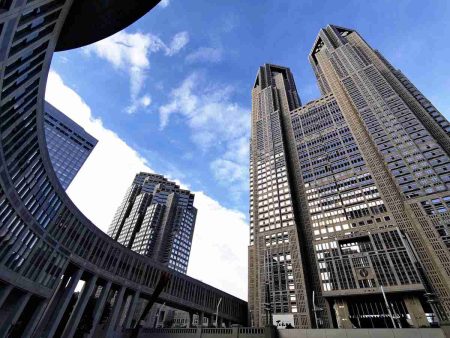
The Tokyo metropolitan government
15:11 JST, December 29, 2025
The Tokyo metropolitan government will establish as early as next year a system to certify privately operated data centers based on their environmental performance and contribution to the local community, The Yomiuri Shimbun has learned.
With the development of high-speed data communication and generative artificial intelligence, more data centers are being built across Japan. However, there have been increasing cases where nearby residents oppose the construction of such facilities, calling them a nuisance. The metropolitan government hopes the envisaged system will help both residents and data center operators coexist by certifying high-quality facilities. According to the metropolitan government, it is the first local government to do so.
Under the planned system, data centers are first required to meet the conditions of adopting renewable energy sources, such as solar power generation, and supplying electricity to the local area in the event of disaster. The system will then certify facilities that meet energy efficiency standards.
The metropolitan government will make applications by operators voluntary, not mandatory. It is also considering soliciting the opinions of both operators and residents to expedite outlining the system.
The market for data centers is estimated to grow from ¥2.7 trillion in 2023 to ¥5.1 trillion in 2028, with new facilities planned mainly in urban areas such as the Tokyo metropolitan area, Osaka and Fukuoka.
However, data centers consume large amounts of electricity, and emit heat and carbon dioxide. Buildings typically look like warehouses with few windows, and businesses create few jobs. As a result, protests against the construction have emerged among residents in some cities, including Akishima in Tokyo and Inzai, Chiba Prefecture.
In Seika, Kyoto Prefecture, where several data centers have been built, the Seika town government said it will refrain from accepting new facilities, citing “potential environmental impacts” among other concerns.
The metropolitan government will also launch an experimental project to reuse waste heat locally as part of measures to return benefits to local communities.
It is considering reviewing regulations that mandate renewable energy utilization plans for buildings and will advance efforts to understand the actual operational status of data centers.


Related Tags

Most Read
Popular articles in the past 24 hours
-

Japan's Govt to Submit Road Map for Growth Strategy in March, PM ...
-

Bus Carrying 40 Passengers Catches Fire on Chuo Expressway; All E...
-

Riku-Ryu Pair Wins Gold Medal: Their Strong Bond Leads to Major C...
-
Survey Shows False Election Info Perceived as True
-

Japan’s Plan for Investment in U.S.: Aim for Mutual Development b...
-
Sanae Takaichi Elected Japan's 105th Prime Minister (UPDATE 1)
-

Milano Cortina 2026: Japan Sets Winter Olympics Medal Record at 1...
-
Fair in Northern Japan Exhibits Local Specialty Food from Village...
Popular articles in the past week
-

Japan PM Takaichi’s Cabinet Resigns en Masse
-

Man Infected with Measles Reportedly Dined at Restaurant in Tokyo...
-

Videos Plagiarized, Reposted with False Subtitles Claiming ‘Ryuky...
-
Japan's Govt to Submit Road Map for Growth Strategy in March, PM ...
-

Milano Cortina 2026: Figure Skaters Riku Miura, Ryuichi Kihara Pa...
-
Tokyo’s New Record-Breaking Fountain Named ‘Tokyo Aqua Symphony’
-
CRA Leadership Election Will Center on Party Rebuilding; Lower Ho...
-
Bus Carrying 40 Passengers Catches Fire on Chuo Expressway; All E...
Popular articles in the past month
-
Japan PM Takaichi’s Cabinet Resigns en Masse
-

Japan Institute to Use Domestic Commercial Optical Lattice Clock ...
-

Israeli Ambassador to Japan Speaks about Japan’s Role in the Reco...
-

Man Infected with Measles May Have Come in Contact with Many Peop...
-

Prudential Life Insurance Plans to Fully Compensate for Damages C...
-
China Eyes Rare Earth Foothold in Malaysia to Maintain Dominance,...
-
Man Infected with Measles Reportedly Dined at Restaurant in Tokyo...
-

Woman with Measles Visited Hospital in Tokyo Multiple Times Befor...
Top Articles in Society
-
Man Infected with Measles May Have Come in Contact with Many People in Tokyo, Went to Store, Restaurant Around When Symptoms Emerged
-
Man Infected with Measles Reportedly Dined at Restaurant in Tokyo Station
-
Woman with Measles Visited Hospital in Tokyo Multiple Times Before Being Diagnosed with Disease
-
Australian Woman Dies After Mishap on Ski Lift in Nagano Prefecture
-
Foreign Snowboarder in Serious Condition After Hanging in Midair from Chairlift in Nagano Prefecture
JN ACCESS RANKING
-
Japan PM Takaichi’s Cabinet Resigns en Masse
-
Japan Institute to Use Domestic Commercial Optical Lattice Clock to Set Japan Standard Time
-
Israeli Ambassador to Japan Speaks about Japan’s Role in the Reconstruction of Gaza
-
Man Infected with Measles May Have Come in Contact with Many People in Tokyo, Went to Store, Restaurant Around When Symptoms Emerged
-
Prudential Life Insurance Plans to Fully Compensate for Damages Caused by Fraudulent Actions Without Waiting for Third-Party Committee Review