
15:12 JST, December 5, 2025
Rising construction costs due to inflation have caused delays and cost spikes in urban redevelopment projects nationwide.
A Yomiuri Shimbun survey found 60% of such projects approved in the last five years experienced construction delays or cost overruns. Some projects have been forced to scale back plans or have been withdrawn before they were approved, raising concerns about the overall impact on city development.
Redevelopment projects consolidate fragmented urban land to develop condominiums, office buildings and other structures and eliminate areas of densely packed wooden housing or establish new public facilities. They are based on the Urban Redevelopment Law that took effect in 1969.
The projects are approved by prefectures or government-designated cities and carried out by associations formed by landowners and real estate companies. The central and local governments provide subsidies.
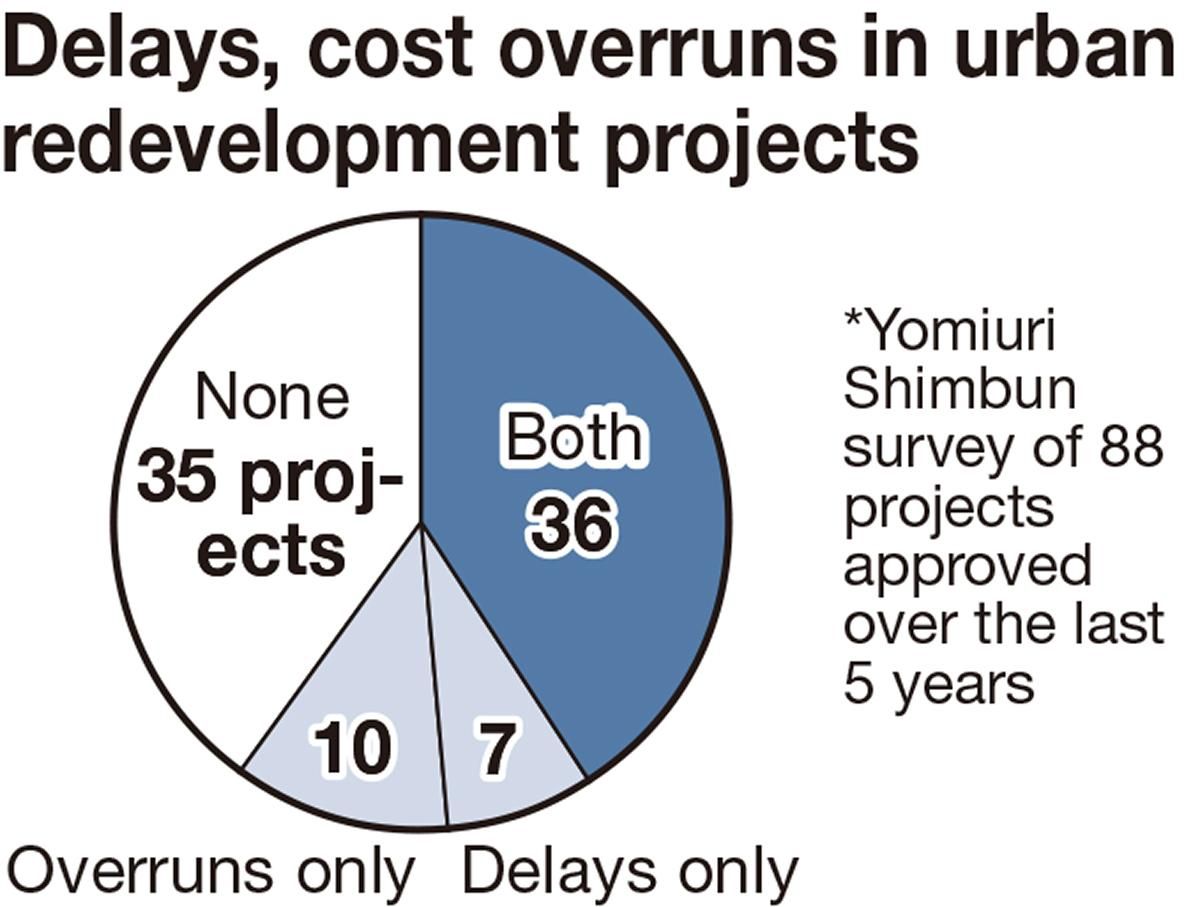
The Yomiuri Shimbun sent questionnaires in October to developers, such as redevelopment associations, and to municipalities about 141 projects underway in 27 prefectures as of the end of September, asking about construction times and costs. It received responses for 126 projects, or 89% of the total. Among these, the Yomiuri analyzed 88 projects approved between October 2020 and this September, a period marked by a significant rise in construction costs.
According to the survey, construction times for 43 projects, or 49% of the total, were extended for about 1½ years on average from when they were approved. Notable delays include a redevelopment for offices and apartments at the Tokyo’s Nihombashi district that was 46 months behind schedule; Itabashi Station’s west exit, Fukushima Station’s east exit and Minami-dori street in front of Fukui Station, with each delayed by three years; and the Suehiromachi 1-chome district in Oita, which was two years behind schedule.
Cost overruns triggered by rising construction expenses were the primary cause of the delays, with respondents saying, “Construction costs increased significantly due to high prices” or “We revised funding plans due to soaring labor costs.” This applied to at least 17 projects, including the Nihombashi, Itabashi and Fukushima projects.
According to the Land, Infrastructure, Transport and Tourism Ministry, city redevelopment projects since the 2000s have taken around five years from approval to completion on average, but in the survey, projects averaged seven years and two months for completion.
The survey also found that 46 projects, or 52%, faced a cost increase from when they were approved, with the increase averaging ¥11.4 billion. The Nihombashi project ballooned by ¥63.5 billion to ¥158.5 billion. Fifty-three projects, or 60%, faced at least a delay or a cost hike, while 36 projects, or 41%, experienced both.
Rising costs have also caused projects to be abandoned before they were even started. Tokyo’s Nakano Ward terminated a basic agreement for a redevelopment plan around the Nakano Sunplaza complex.
“Many projects are being forced to scale back plans due to the sharp rise in construction costs, which could impact urban planning as a whole,” said Hiroo Ichikawa, a professor emeritus at Meiji University. “Local governments need to be more proactive in engaging with and supporting these plans, rather than leaving everything to the developers.”





Most Read
Popular articles in the past 24 hours
-
Rising Kabuki Star Works to Ensure Deaf Audience's Enjoyment of P...
-

Lady Bess: Iroha Okuda, Mayuko Kominami Discuss Performing Elizab...
-

Japan Considering Taking Part in U.S. ‘Golden Dome’ Defense Syste...
-
Japan's TEPCO Releases Footage from Fukushima N-Plant Reactor
-

Oil Reserve Releases: G7 Members Unite against Growing Threat
-

46 Evacuated from UAE, Oman on Japanese Govt-chartered Flight
-

Japan's Sanyo Shinkansen Suspended Again; Between Okayama, Aioi S...
-
Driver Dies in Collision with Express Train at Crossing in Mito; ...
Popular articles in the past week
-

Japan Figure Skating Legend Yuzuru Hanyu Is Proud Disaster Surviv...
-

Nippon Life Insurance's U.S. Arm Sues OpenAI Over Legal Assistanc...
-
Govt to Utilize ODA for Ensuring Economic Security; Securing Ener...
-
15 Measles Patients Confirmed in Tokyo in Past 6 Days; 1 May Have...
-
Massive Sewer Pipe Found Jutting Out of Highway in Osaka
-

Japan Govt to Tighten Requirements to Receive Permanent Residency...
-

Beckoning Cats Get Makeover to Fit Modern Lifestyles with Sleek D...
-
Japan Govt Survey Finds Just 10% of Workers Want Working Hours to...
Popular articles in the past month
-

Producer Behind Pop Group XG Arrested for Cocaine Possession
-

Japan PM Takaichi’s Cabinet Resigns en Masse
-

Man Infected with Measles Reportedly Dined at Restaurant in Tokyo...
-

Videos Plagiarized, Reposted with False Subtitles Claiming ‘Ryuky...
-
Japan Figure Skating Legend Yuzuru Hanyu Is Proud Disaster Surviv...
-

iPS Treatments Pass Key Milestone, but Broader Applications Far f...
-

Sanae Takaichi Elected Prime Minister of Japan; Keeps All Cabinet...
-

Nepal Bus Crash Kills 19 People, Injures 25 Including One Japanes...
Top Articles in Society
-
Producer Behind Pop Group XG Arrested for Cocaine Possession
-
Man Infected with Measles Reportedly Dined at Restaurant in Tokyo Station
-

Bus Carrying 40 Passengers Catches Fire on Chuo Expressway; All Evacuate Safely
-

Ibaraki Pref.’s 1st Foreign Bus Driver Hired in Tsukuba
-
15 Measles Patients Confirmed in Tokyo in Past 6 Days; 1 May Have Come into Contact with Many in Shibuya
JN ACCESS RANKING
-
Producer Behind Pop Group XG Arrested for Cocaine Possession
-
Japan PM Takaichi’s Cabinet Resigns en Masse
-
Man Infected with Measles Reportedly Dined at Restaurant in Tokyo Station
-
Videos Plagiarized, Reposted with False Subtitles Claiming ‘Ryukyu Belongs to China’; Anti-China False Information Also Posted in Japan
-
Japan Figure Skating Legend Yuzuru Hanyu Is Proud Disaster Survivor and Gold Medalist, Vows to Continue Support Efforts