
WAIZU Club International Organizes Hiroshima Peace Study Tour for Residents with Foreign Roots Living in Japan; Participants Learn from Atomic Bomb Survivor about Victims’ Experiences
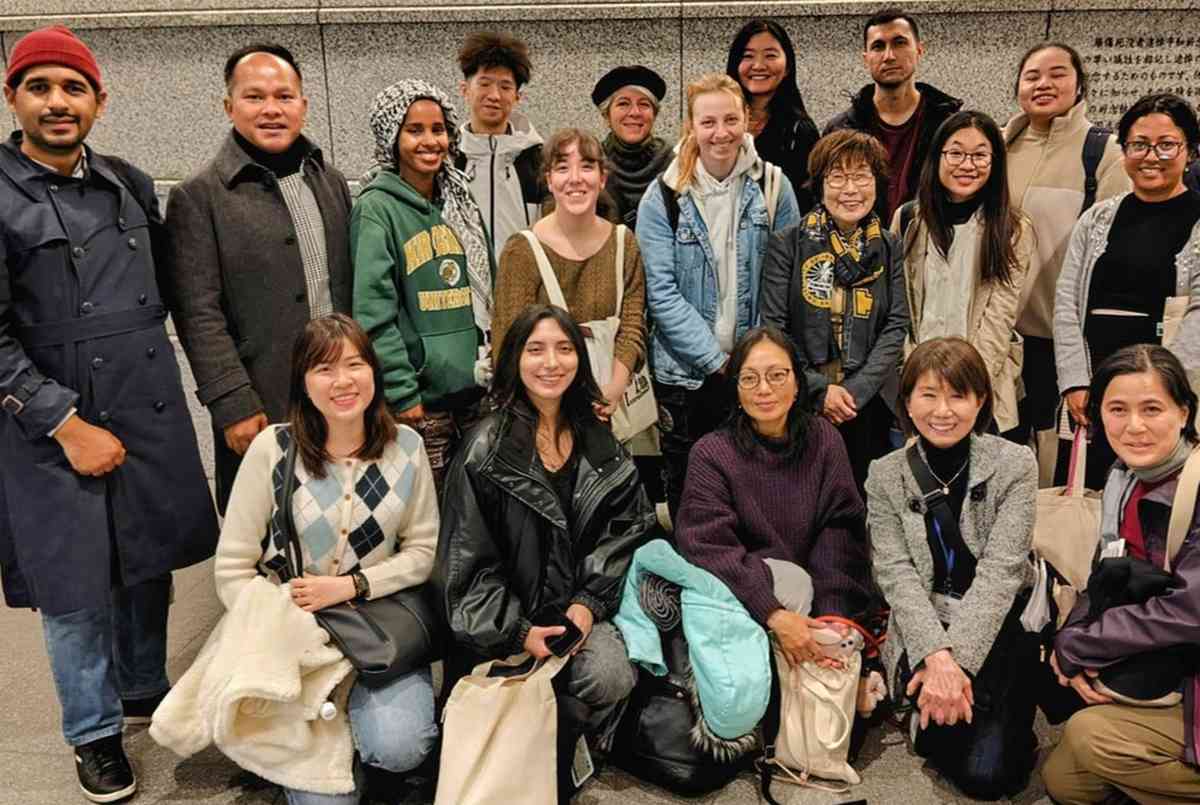
Hiroshima Peace Study Tour participants gather for a group photo with atomic bomb survivor Keiko Ogura, third from right in the second row, in Hiroshima on Nov. 22.
13:29 JST, December 5, 2025
HIROSHIMA — WAIZU Club International (WCI), an organization for people with foreign roots living in Japan, operated by The Yomiuri Shimbun Osaka, held a special tour for members to learn about peace in Hiroshima on Nov. 22, part of activities to mark the passage of 80 years since the atomic bombing of the city.
Fifteen WCI members from 11 countries participated in the Hiroshima Peace Study Tour, during which they learned about the lives of atomic bomb victims and the importance of passing down their stories to posterity.
The participants rode Hiroshima Electric Railway Co.’s Hibaku Densha (A-bombed tram), which is still in service despite having been struck by the atomic bomb blast. On the tram, Miyako Oguni, a storyteller who relates people’s experiences from the atomic bombing, told them about her activities to pass down to future generations what hibakusha atomic bomb survivors went through and their desire for peace.
At The Yomiuri Shimbun’s regional headquarters in Hiroshima, participants listened to Jiro Kamiya, the newspaper’s Hiroshima bureau chief, who explained to them the newspaper’s work on special reports as part of “Aug. 6 coverage” — Aug. 6 being the day when the atomic bomb was dropped on Hiroshima in 1945 — including surveys of hibakusha and related series of stories.
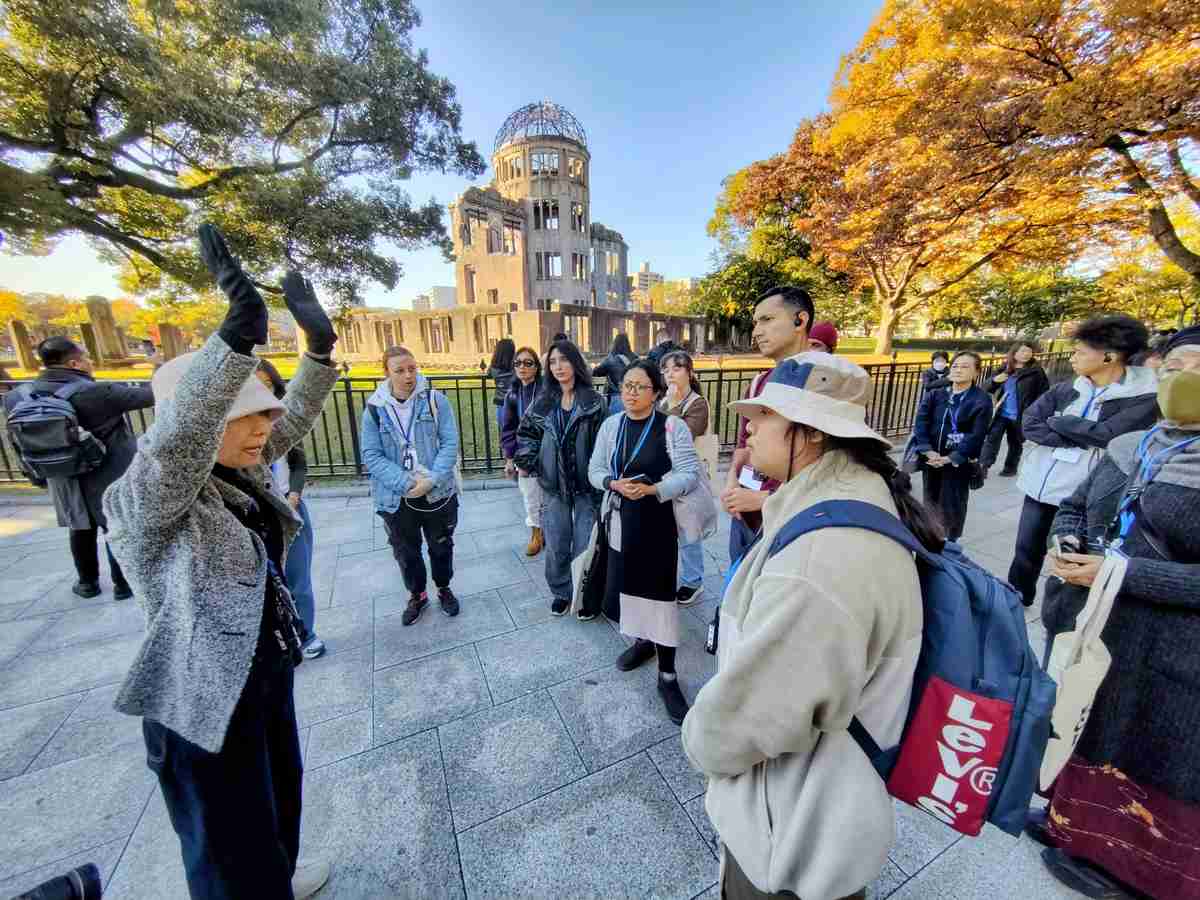
Hibakusha Keiko Ogura, who has spoken about her A-bomb experiences not only in Japan but also abroad, told the participants that if there are 10 hibakusha, there are 10 different stories, and that their trauma, which they cannot express in words, will never appear in data or documents. That is why she has continued to talk about the atomic bombing, she said.
Ogura also told participants that learning about history is necessary, but that imagination and empathy are more important. Now that she had passed the baton to the participants, who are very capable, she told them, it is their turn to pass it along to others.
The participating WCI members and others also looked at atomic bombing-related sites from the observation deck of the HIROSHIMA ORIZURU TOWER, such as the nearby Atomic Bomb Dome. They also toured one of those sites, the Hiroshima Peace Memorial Park, where they viewed the Cenotaph for the Victims of the Atomic Bomb and other monuments.
“If children from all over the world come to Hiroshima and listen to what hibakusha have to say, then the world will change for the better,” said participant Jill Friemark. “You must see with your own eyes, and you must feel and think on your own, which should be the point of origin for using your imagination.”





Most Read
Popular articles in the past 24 hours
-
Rising Kabuki Star Works to Ensure Deaf Audience's Enjoyment of P...
-

Lady Bess: Iroha Okuda, Mayuko Kominami Discuss Performing Elizab...
-

Japan Considering Taking Part in U.S. ‘Golden Dome’ Defense Syste...
-
Japan's TEPCO Releases Footage from Fukushima N-Plant Reactor
-

Oil Reserve Releases: G7 Members Unite against Growing Threat
-

46 Evacuated from UAE, Oman on Japanese Govt-chartered Flight
-

Japan's Sanyo Shinkansen Suspended Again; Between Okayama, Aioi S...
-

Driver Dies in Collision with Express Train at Crossing in Mito; ...
Popular articles in the past week
-

Japan Figure Skating Legend Yuzuru Hanyu Is Proud Disaster Surviv...
-

Nippon Life Insurance's U.S. Arm Sues OpenAI Over Legal Assistanc...
-
Govt to Utilize ODA for Ensuring Economic Security; Securing Ener...
-
15 Measles Patients Confirmed in Tokyo in Past 6 Days; 1 May Have...
-
Massive Sewer Pipe Found Jutting Out of Highway in Osaka
-

Japan Govt to Tighten Requirements to Receive Permanent Residency...
-

Beckoning Cats Get Makeover to Fit Modern Lifestyles with Sleek D...
-
Japan Govt Survey Finds Just 10% of Workers Want Working Hours to...
Popular articles in the past month
-

Producer Behind Pop Group XG Arrested for Cocaine Possession
-

Japan PM Takaichi’s Cabinet Resigns en Masse
-

Man Infected with Measles Reportedly Dined at Restaurant in Tokyo...
-

Videos Plagiarized, Reposted with False Subtitles Claiming ‘Ryuky...
-
Japan Figure Skating Legend Yuzuru Hanyu Is Proud Disaster Surviv...
-

iPS Treatments Pass Key Milestone, but Broader Applications Far f...
-

Sanae Takaichi Elected Prime Minister of Japan; Keeps All Cabinet...
-

Nepal Bus Crash Kills 19 People, Injures 25 Including One Japanes...
Top Articles in Society
-
Producer Behind Pop Group XG Arrested for Cocaine Possession
-
Man Infected with Measles Reportedly Dined at Restaurant in Tokyo Station
-

Bus Carrying 40 Passengers Catches Fire on Chuo Expressway; All Evacuate Safely
-

Ibaraki Pref.’s 1st Foreign Bus Driver Hired in Tsukuba
-
15 Measles Patients Confirmed in Tokyo in Past 6 Days; 1 May Have Come into Contact with Many in Shibuya
JN ACCESS RANKING
-
Producer Behind Pop Group XG Arrested for Cocaine Possession
-
Japan PM Takaichi’s Cabinet Resigns en Masse
-
Man Infected with Measles Reportedly Dined at Restaurant in Tokyo Station
-
Videos Plagiarized, Reposted with False Subtitles Claiming ‘Ryukyu Belongs to China’; Anti-China False Information Also Posted in Japan
-
Japan Figure Skating Legend Yuzuru Hanyu Is Proud Disaster Survivor and Gold Medalist, Vows to Continue Support Efforts