
Japanese Literature Professor Robert Campbell Reflects on Experience Interpreting Hibakusha’s Testimonies
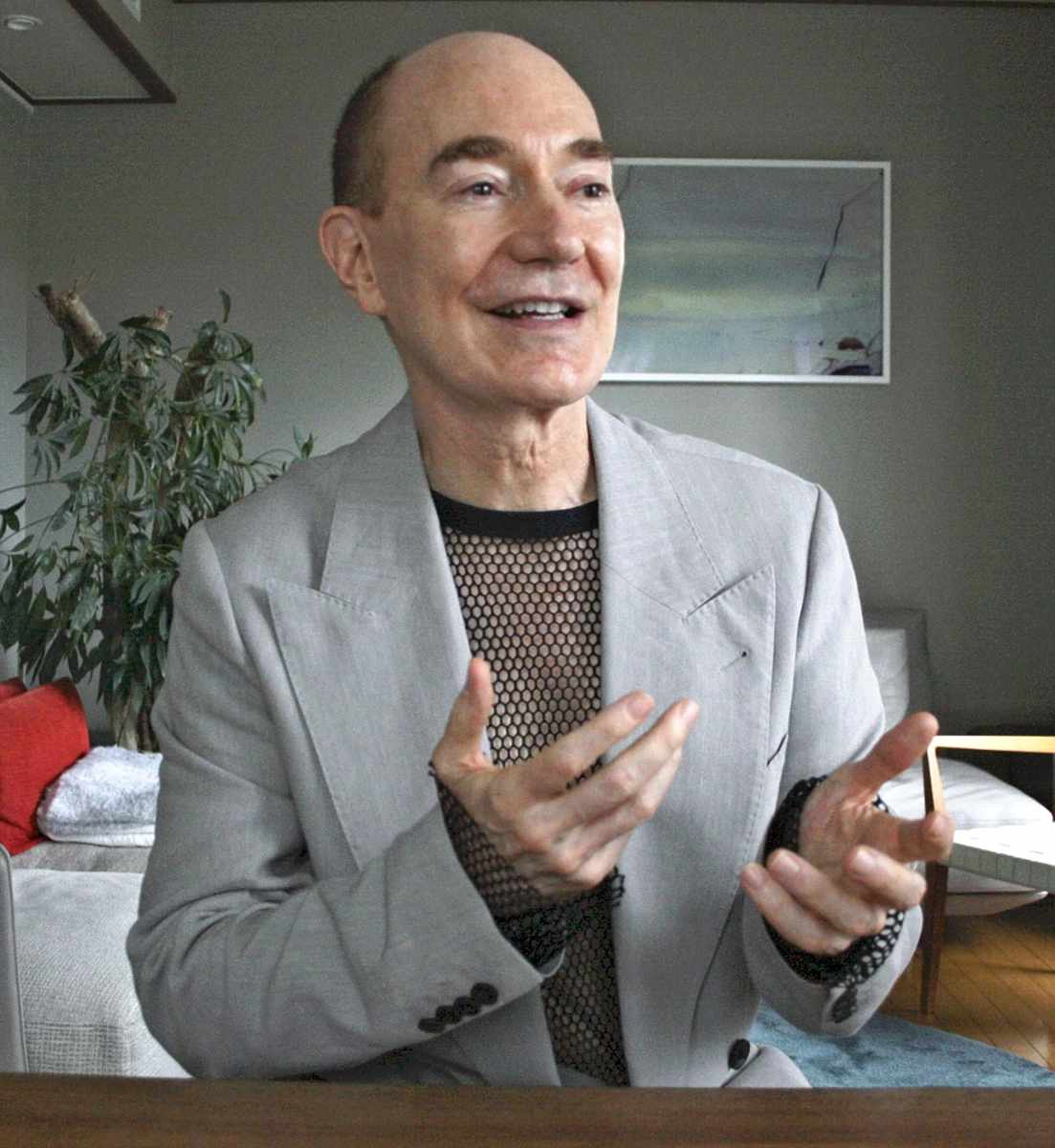
Robert Campbell is interviewed.
13:14 JST, October 15, 2025
Robert Campbell, a scholar of Japanese literature, interpreted testimonies of Hiroshima and Nagasaki hibakusha atomic bomb survivors who toured the United States when he was a graduate student at Harvard University. The following is excerpted from an interview conducted in Japanese by Yomiuri Shimbun staff writer Daiki Komatsu about that experience.
***
I first met hibakusha in 1982. I was a graduate student at Harvard University when my Japanese literature professor asked me to interpret hibakusha’s testimonies. Survivors from Hiroshima and Nagasaki were touring various U.S. states ahead of the U.N. General Assembly’s Second Special Session on Disarmament held at the United Nations headquarters in New York in June that year.
I had studied Japan and knew about hibakusha, but I had never met nor spoken with any. I accepted the proposal as I was determined not to miss the opportunity to hear the hibakusha’s experiences.
I accompanied a group of seven or eight hibakusha for about 10 days. They gave their testimonies many times a day to newspapers, on radio programs and at various gatherings. I was determined not to miss a single word they said.
One gathering left a strong impression to me. It was held at a stadium in Colorado, drawing thousands of people. I interpreted for a man in his 60s. He recounted his experiences, such as losing many close relatives in the bombing and living as an orphan. He also said that his daughter’s planned marriage fell through when it became known that she was the child of a hibakusha. “I stole my daughter’s happiness as I was exposed to the atomic bombing,” the man said.
About 10 minutes after he started speaking, I suddenly lost my voice. Another interpreter immediately took over and we managed to get through it. This had never happened to me before or since. In that moment, my heart ached for his deep love for his daughter and for the sheer injustice of the atomic bombings, which had an impact even on hibakusha’s children. His testimony, which I had heard so many times, must have seeped into my heart and soul. I keenly felt the power of the words of a hibakusha.
Last year, when I heard that Nihon Hidankyo (the Japan Confederation of A- and H-Bomb Sufferers Organizations) had won the Nobel Peace Prize, I recalled that moment and I was so deeply moved that my head grew hot.
At the Second Special Session on Disarmament of the U.N. General Assembly, Senji Yamaguchi, a survivor of the Nagasaki bombing and Nihon Hidankyo cochairperson who died in 2013 at age 82, appealed for peace using the English phrase, “No more hibakusha,” and the English term “hibakusha” is said to have taken root.
As a scholar of Japanese literature, a job that deals with language, I feel that it is very significant that the term hibakusha entered the English language. It has acquired a unique and universal quality that can convey the message that “nuclear weapons must never be used again.” For the past 80 years, nuclear weapons have not been used in war, and the term has been used for no other meaning than atomic bomb survivors. I sincerely hope that similar words will not be created in the future.
Two years ago, I visited Ukraine for the purpose of translating into Japanese “A Ukrainian Dictionary of War,” which contains the words of war survivors that had been compiled by poet Ostap Slyvynsky. I stayed there for about two weeks and met some of the people who had recounted their experiences.
The book was published in Japanese as “Senso Goi Shu” and includes everyday words such as “number plate” and “bathtub.” “Number plates” refer to grave markers for bodies, and “bathtubs” function as makeshift shelters that protect people from missiles. I felt the horror of how war infiltrates daily life. These words have something in common with the word hibakusha, who were robbed of their ordinary lives.
Hibakusha’s experiences have been carefully collected and recorded in books, videos and written personal accounts to share their tragic experiences. I hope this vocabulary book will also contribute to passing on war experiences. I will continue to convey the cruelty of war and the value of peace from a literary perspective.
Robert Campbell
Robert Campbell was born in New York. He received his doctorate from Harvard University. He came to Japan in 1985 as a research student at Kyushu University’s School of Letters. He became a professor at Waseda University in 2021 and specializes in early modern and modern Japanese literature. Campbell is also active in a wide range of other roles, including as a TV commentator.



Most Read
Popular articles in the past 24 hours
-

Chinese Satellites Pass Over Japan Every 10 Minutes, Monitoring U...
-

Japanese Modernist Artist Koiso’s ‘Long-Lost Masterpiece’ Returns...
-
Espresso Shots, Pricier Wine and an Unbeaten Italy Now Bound for ...
-

M4.4 Earthquake Hits Central Japan’s Gunma Pref.; No Tsunami Expe...
-

Japanese Expert on Arab Cuisine Presents Dish with Whole Fish, Cr...
-

Zelenskiy Says Ukraine Wants Money, Technology in Return for Midd...
-

World Baseball Classic: Venezuela Beats Japan in Nail-biting Back...
-
Rapid Services Resume on JR Chuo Line; Suspension Caused by Accid...
Popular articles in the past week
-
Japan Figure Skating Legend Yuzuru Hanyu Is Proud Disaster Surviv...
-
15 Measles Patients Confirmed in Tokyo in Past 6 Days; 1 May Have...
-
Massive Sewer Pipe Found Jutting Out of Highway in Osaka
-
Japan Govt to Tighten Requirements to Receive Permanent Residency...
-
Power Outage Forces About 980 Passengers in Yokohama to Walk to T...
-
JR Tokai Breaks Ground on Yamanashi Maglev Station; Will Be Part ...
-
Parents in Japan to Get Instagram Notifications When Teens Repeat...
-
Metal Pipe That Protruded 13 Meters Above Ground in Osaka Sinks B...
Popular articles in the past month
-

Producer Behind Pop Group XG Arrested for Cocaine Possession
-

Japan PM Takaichi’s Cabinet Resigns en Masse
-

Man Infected with Measles Reportedly Dined at Restaurant in Tokyo...
-
Japan Figure Skating Legend Yuzuru Hanyu Is Proud Disaster Surviv...
-

iPS Treatments Pass Key Milestone, but Broader Applications Far f...
-

Sanae Takaichi Elected Prime Minister of Japan; Keeps All Cabinet...
-

South Korea Tightens Rules on Foreigners Buying Homes in Seoul Me...
-

Nepal Bus Crash Kills 19 People, Injures 25 Including One Japanes...
Top Articles in Society
-
Producer Behind Pop Group XG Arrested for Cocaine Possession
-
Man Infected with Measles Reportedly Dined at Restaurant in Tokyo Station
-
15 Measles Patients Confirmed in Tokyo in Past 6 Days; 1 May Have Come into Contact with Many in Shibuya
-

Bus Carrying 40 Passengers Catches Fire on Chuo Expressway; All Evacuate Safely
-

Ibaraki Pref.’s 1st Foreign Bus Driver Hired in Tsukuba
JN ACCESS RANKING
-
Producer Behind Pop Group XG Arrested for Cocaine Possession
-
Japan PM Takaichi’s Cabinet Resigns en Masse
-
Man Infected with Measles Reportedly Dined at Restaurant in Tokyo Station
-
Japan Figure Skating Legend Yuzuru Hanyu Is Proud Disaster Survivor and Gold Medalist, Vows to Continue Support Efforts
-
iPS Treatments Pass Key Milestone, but Broader Applications Far from Guaranteed