
Pictograms Help Visitors Glean What’s in Their Meals at a Glance

The 16 basic ingredients depicted by Foodpict’s pictograms. Boiled-off alcohol is represented with a white background.
16:10 JST, August 31, 2025
Pictograms designed by a Kobe-based company are helping visitors to the 2025 Osaka-Kansai Expo see at a glance what ingredients are used in meals served there, giving peace of mind to those who have allergies or cannot eat certain foods for religious reasons.
Shrimp, crab and wheat are among the common food allergens. Muslims do not eat pork or drink alcohol, and Hindus abstain from eating beef. In addition, a growing number of people are becoming vegetarians. Foodpict Inc.’s pictograms of 32 specific food ingredients that can trigger allergies or are avoided by certain people have become a common sight at the Expo.
Thirty-five of the about 45 restaurants at the Expo display the pictograms. They also have been used at a total of about 80 other Expo locations, such as pavilions that sell food and limited-time special events.
More than 90% of 1,500 people from Japan and abroad who were surveyed about the pictograms said they understood what ingredients were being depicted. This confirmed the pictograms’ simple design was effective.
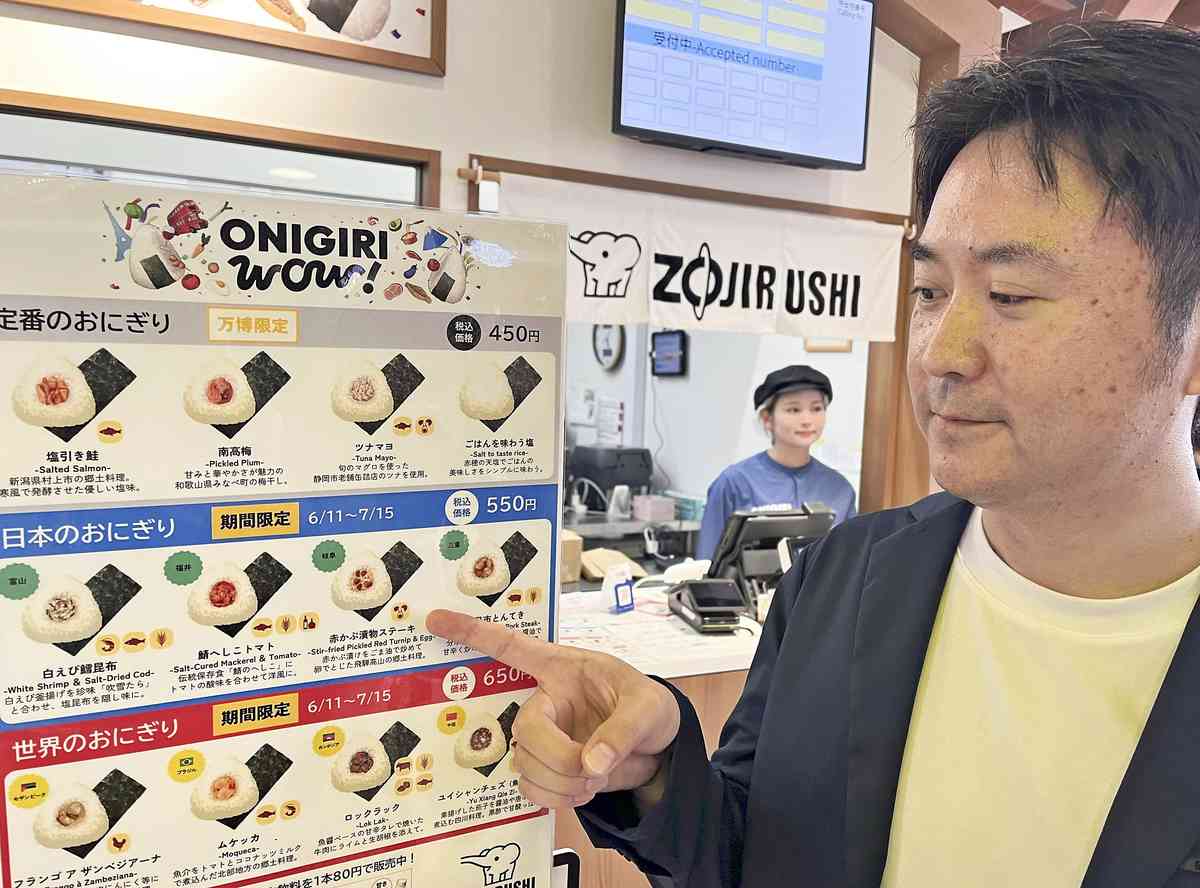
Foodpict Inc. President Nobutaka Kikuchi points to his company’s pictograms used in the Osaka Restaurant Management Association’s pavilion at the Osaka Expo in Osaka.
“I hope we help lift the level of hospitality shown to visitors by catering to their diverse food preferences,” Foodpict President Nobutaka Kikuchi, 39, said.
Development of the pictograms has its origins back in 2005, when Kikuchi was a university student and was showing Muslims around Osaka as a volunteer. When lunchtime arrived, Kikuchi tried several Japanese-style restaurants but was unable to confirm which ingredients each dish contained. In the end, he had to take his guests to a fast-food restaurant also well-known overseas.
“More people from overseas will come to Japan in the years ahead,” Kikuchi recalled thinking. “I think many people would be happy if ingredients were clearly shown with illustrations.”
While still a student, Kikuchi completed an original version of the pictograms with the help of a designer he knew and then pitched his product to restaurants and local governments. Awareness of the pictograms received a major boost when they were used at the venue of the 2010 Asia-Pacific Economic Cooperation forum summit meeting in Yokohama. The pictograms are now being used in more than 1,600 restaurants across Japan.
A major restaurant chain is also using the pictograms at the Expo, and Kikuchi has high hopes the event will expand sales channels further.
“Many foreign residents work in Kansai, which is home to many manufacturing industries,” Kikuchi said. “I hope the Expo will be an opportunity for consideration of diverse food preferences to become more standard in daily life.”


Related Tags

Most Read
Popular articles in the past 24 hours
-

Japan Train Company to Increase Fares, Including in Tokyo Metropo...
-
Japan Govt to Tighten Requirements to Receive Permanent Residency...
-

Tail of ANA Plane Struck Runway During Landing in Houston; No Inj...
-

Samurai Japan Holds First Practice in Miami; Team Will Play again...
-

Medical Care at Home and Disasters: Ensure Systems to Provide Con...
-

Iran Targets Busiest International Airport as Top UN Body Demands...
-

Japan to Face Venezuela in World Baseball Classic Quarterfinals
-

North Korean Leader Kim and His Daughter Try out New Pistols at S...
Popular articles in the past week
-

Japan Figure Skating Legend Yuzuru Hanyu Is Proud Disaster Surviv...
-

Nippon Life Insurance's U.S. Arm Sues OpenAI Over Legal Assistanc...
-

Ibaraki Pref.'s 1st Foreign Bus Driver Hired in Tsukuba
-
Govt to Utilize ODA for Ensuring Economic Security; Securing Ener...
-

Massive Sewer Pipe Found Jutting Out of Highway in Osaka
-
Beckoning Cats Get Makeover to Fit Modern Lifestyles with Sleek D...
-
Japan Govt Survey Finds Just 10% of Workers Want Working Hours to...
-
Japan's 2nd Round of U.S. Investments May Be Worth Over $100 Bill...
Popular articles in the past month
-

Producer Behind Pop Group XG Arrested for Cocaine Possession
-

Japan PM Takaichi’s Cabinet Resigns en Masse
-

Man Infected with Measles Reportedly Dined at Restaurant in Tokyo...
-

Videos Plagiarized, Reposted with False Subtitles Claiming ‘Ryuky...
-

iPS Treatments Pass Key Milestone, but Broader Applications Far f...
-
Japan Figure Skating Legend Yuzuru Hanyu Is Proud Disaster Surviv...
-

Sanae Takaichi Elected Prime Minister of Japan; Keeps All Cabinet...
-

Nepal Bus Crash Kills 19 People, Injures 25 Including One Japanes...
Top Articles in Society
-
Producer Behind Pop Group XG Arrested for Cocaine Possession
-
Man Infected with Measles Reportedly Dined at Restaurant in Tokyo Station
-

Bus Carrying 40 Passengers Catches Fire on Chuo Expressway; All Evacuate Safely
-
Ibaraki Pref.’s 1st Foreign Bus Driver Hired in Tsukuba
-
Tokyo Skytree’s Elevator Stops, Trapping 20 People; All Rescued (Update 1)
JN ACCESS RANKING
-
Producer Behind Pop Group XG Arrested for Cocaine Possession
-
Japan PM Takaichi’s Cabinet Resigns en Masse
-
Man Infected with Measles Reportedly Dined at Restaurant in Tokyo Station
-
Videos Plagiarized, Reposted with False Subtitles Claiming ‘Ryukyu Belongs to China’; Anti-China False Information Also Posted in Japan
-
iPS Treatments Pass Key Milestone, but Broader Applications Far from Guaranteed