
.jpg)
People gather on the rooftop of a building near the coast of Shirasoto, Chiba Prefecture, after a tsunami warning was issued following an earthquake near Russia’ Kamchatka Peninsula on July 30.
1:00 JST, August 30, 2025
More than 80,000 people evacuated to shelters or evacuation sites in coastal municipalities from Hokkaido to Ibaraki Prefecture after local governments issued tsunami evacuation directives following an earthquake near Russia’s Kamchatka Peninsula on July 30, according to a survey conducted by The Yomiuri Shimbun.
That number is about 10% of the total number of people who were subject to evacuation directives. While some headed to nearby higher ground, the overall number of evacuees appears to have been low.
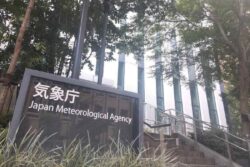
The earthquake struck around 8:25 a.m. The Japan Meteorological Agency initially issued a tsunami advisory for Pacific coastal areas but upgraded it to a tsunami warning at 9:40 a.m. extending from Hokkaido to Wakayama Prefecture. According to the Fire and Disaster Management Agency, evacuation directives were issued for about 2.01 million people across 229 municipalities in 21 prefectures from Hokkaido to Okinawa.
Yomiuri conducted the survey this month on local governments, focusing on 90 municipalities in six prefectures —Hokkaido, Aomori, Iwate, Miyagi, Fukushima and Ibaraki — where relatively high waves were observed, and the first wave arrived early. The survey asked for the “number of residents subject to evacuation directives” and the “number of people accounted for by municipalities at evacuation shelters or sites.” All the local governments responded.
The results showed that a total of 81,634 people evacuated to designated shelters or other locations. As for the 77 municipalities that tracked the number of residents subject to evacuation directives, their evacuation rate was 9.3%. By prefecture, Hokkaido had 11.8%, Aomori 7.1%, Iwate 13.2%, Miyagi 8.5%, Fukushima 4.6% and Ibaraki 1.5%.
By municipality, Sendai City had the highest rate at 111.9%, followed by Kushiro City in Hokkaido at 97.1% and Mukawa Town at 96.2%. In Sendai and Kushiro, the number of evacuees swelled due to the presence of tourists and commuters.
Conversely, Hokota City and Hitachi City in Ibaraki Prefecture recorded rates below 1%. A Hitachi city government official said that the rate was low “because evacuation directives were issued to a wide area as a precaution, resulting in a large number of residents subject to the directives.”





Most Read
Popular articles in the past 24 hours
-

Milano Cortina 2026: Sakamoto Serves as Flag Bearer; Japan Earns ...
-

Milano Cortina 2026: There Were Cheers across the Country, after ...
-

Emperor Turns 66 Ahead of Disaster Milestones
-

Luna Sea Drummer Shinya Dies at 56; Powerful Drummer Behind ‘Desi...
-

Milano Cortina 2026: ‘Magical’ Italian Games Close wi...
-

Milano Cortina 2026: Riku-Ryu Duo Stick Together During Closing C...
-

1.2 Mil. Rapeseed Flowers Attract Cute Birds, People in Aichi Pre...
-
Mexican Army Kills Leader of Powerful Jalisco New Generation Cart...
Popular articles in the past week
-

Japan PM Takaichi’s Cabinet Resigns en Masse
-

Man Infected with Measles Reportedly Dined at Restaurant in Tokyo...
-

Sanae Takaichi Elected Prime Minister of Japan; Keeps All Cabinet...
-
Japan's Govt to Submit Road Map for Growth Strategy in March, PM ...
-

Bus Carrying 40 Passengers Catches Fire on Chuo Expressway; All E...
-

Milano Cortina 2026: Figure Skaters Riku Miura, Ryuichi Kihara Pa...
-

U.S. Firm to Build Training Hub in Fukushima N-plant for Debris R...
-

Japan, U.S. Name 3 Inaugural Investment Projects; Reached Agreeme...
Popular articles in the past month
-
Japan PM Takaichi’s Cabinet Resigns en Masse
-

Japan Institute to Use Domestic Commercial Optical Lattice Clock ...
-

Israeli Ambassador to Japan Speaks about Japan’s Role in the Reco...
-
Man Infected with Measles Reportedly Dined at Restaurant in Tokyo...
-

Videos Plagiarized, Reposted with False Subtitles Claiming ‘Ryuky...
-

Man Infected with Measles May Have Come in Contact with Many Peop...
-

Prudential Life Insurance Plans to Fully Compensate for Damages C...
-
Woman with Measles Visited Hospital in Tokyo Multiple Times Befor...
Top Articles in Society
-

Producer Behind Girls Group XG Arrested for Cocaine Possession
-
Man Infected with Measles Reportedly Dined at Restaurant in Tokyo Station
-
Man Infected with Measles May Have Come in Contact with Many People in Tokyo, Went to Store, Restaurant Around When Symptoms Emerged
-
Woman with Measles Visited Hospital in Tokyo Multiple Times Before Being Diagnosed with Disease
-
Australian Woman Dies After Mishap on Ski Lift in Nagano Prefecture
JN ACCESS RANKING
-
Japan PM Takaichi’s Cabinet Resigns en Masse
-
Japan Institute to Use Domestic Commercial Optical Lattice Clock to Set Japan Standard Time
-
Israeli Ambassador to Japan Speaks about Japan’s Role in the Reconstruction of Gaza
-
Man Infected with Measles Reportedly Dined at Restaurant in Tokyo Station
-
Videos Plagiarized, Reposted with False Subtitles Claiming ‘Ryukyu Belongs to China’; Anti-China False Information Also Posted in Japan