
Expo Pavilion Materials to Be Reused for 3rd Time at Yokohama Horticultural Expo
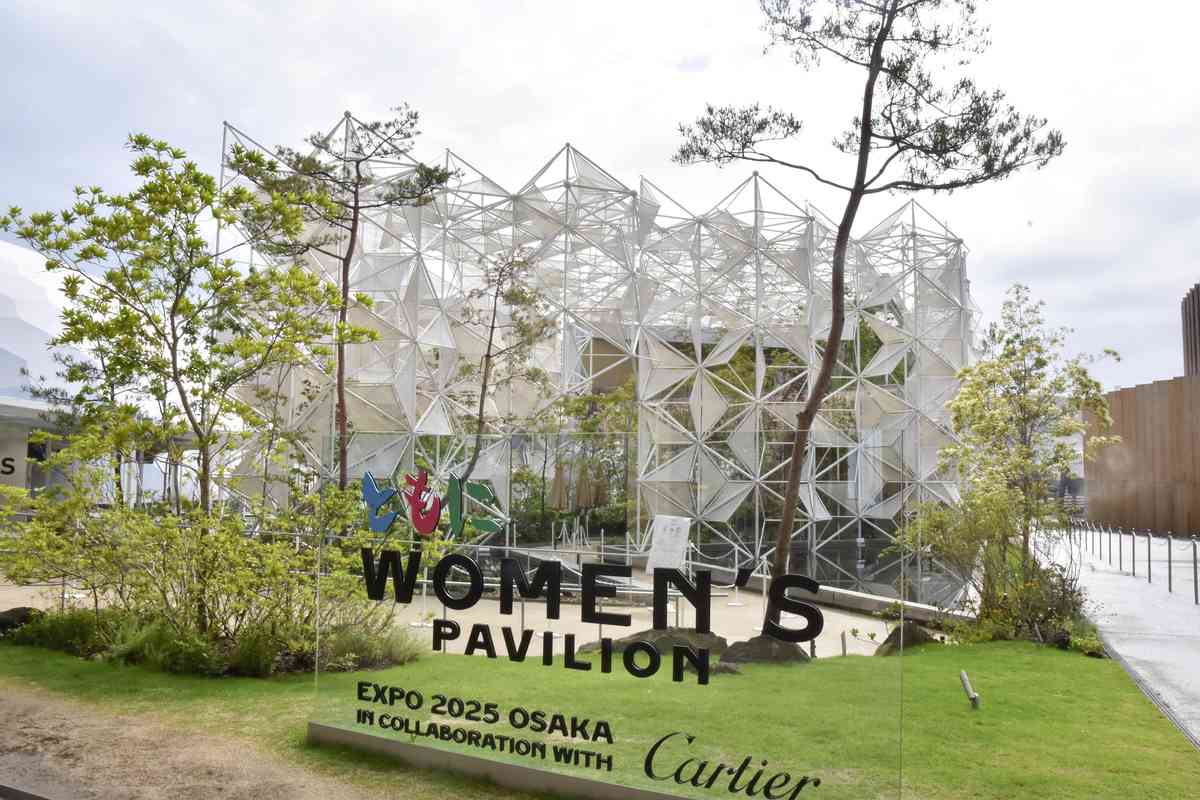
The Women’s Pavilion at the Osaka-Kansai Expo. The white hemp leaf-patterned exterior is expected to be reused for the International Horticultural Expo 2027.
11:43 JST, August 4, 2025
YOKOHAMA — In a striking move for sustainable architecture, building materials from the 2025 Osaka-Kansai Expo’s Women’s Pavilion are set to be used in a third major international event — the International Horticultural Expo 2027 in Yokohama.
This will mark the third use of the materials, a rarity in the construction industry, having previously been utilized at Expo 2020 Dubai.
Yuko Nagayama, 49, the architect who designed the pavilion, expressed her hope that “people will consider architectural reuse, especially at the Horticultural Expo, which has the environment as its theme.”
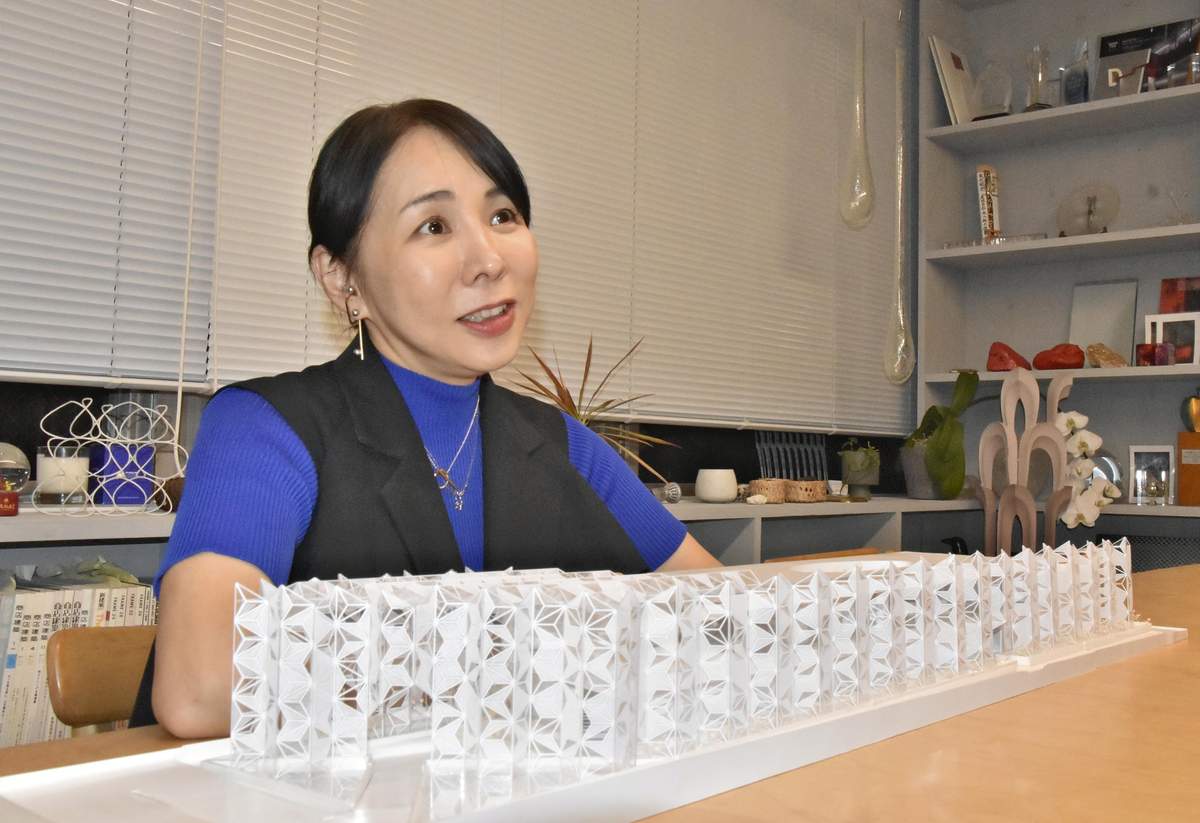
Yuko Nagayama speaks about architectural reuse in front of a model of the Women’s Pavilion in Shinjuku Ward, Tokyo.
The Women’s Pavilion, a joint exhibition by world-renowned brand Cartier, the Cabinet Office and the Economy, Trade and Industry Ministry, aims to promote women’s empowerment both domestically and internationally. The exhibition showcases prominent figures, including poets, environmental activists and writers, and its immersive video experiences have received significant attention.
The reusable components include the white, hemp leaf-patterned exterior, referred to as the facade. The facade is made up of rod-shaped tubes that form the framework, spherical nodes into which the tubes are inserted and noncombustible membrane materials made of fluororesin.
After the Osaka-Kansai Expo closes, the facade — made up of about 7,000 parts in total — will be dismantled and then inspected by a contractor in Higashi-Matsuyama, Saitama Prefecture. The parts will be repaired and later transported to the Horticultural Expo venue.
The aim to reuse the materials stemmed from Nagayama’s desire that “while conventional buildings are tied to their locations, temporary architecture should be usable elsewhere.”
Because the reused sections are disassembled, they will not require a large storage space. This allows for efficiency in environmental considerations and cost.
At the Horticultural Expo, the materials are expected to be used for an indoor exhibition venue in the central symbol zone. This venue is expected to host exhibits from local governments and foreign countries, and the pavilion’s exterior is expected to look similar to that of the Women’s Pavilion.
New materials will also be incorporated, with the total floor space of the pavilion at the Horticultural Expo area projected to be about 2.5 times larger than the Women’s Pavilion. The white building is expected to stand out against the green of the overall venue, creating a space resembling a large forest. Construction is anticipated to begin around winter, with completion by autumn next year.
“It’s gratifying that this will be the third location for the building as movable architecture,” Nagayama said. “I hope people will consider environmental issues and appreciate the reuse of architecture.”
After the Horticultural Expo concludes, there are plans to consider its use at the Riyadh Expo in Saudi Arabia in 2030.


Related Tags





Most Read
Popular articles in the past 24 hours
-

Japan Train Company to Increase Fares, Including in Tokyo Metropo...
-

Japan Govt to Tighten Requirements to Receive Permanent Residency...
-

Tail of ANA Plane Struck Runway During Landing in Houston; No Inj...
-

Samurai Japan Holds First Practice in Miami; Team Will Play again...
-

Medical Care at Home and Disasters: Ensure Systems to Provide Con...
-

Iran Targets Busiest International Airport as Top UN Body Demands...
-

Japan to Face Venezuela in World Baseball Classic Quarterfinals
-

North Korean Leader Kim and His Daughter Try out New Pistols at S...
Popular articles in the past week
-

Japan Figure Skating Legend Yuzuru Hanyu Is Proud Disaster Surviv...
-

Nippon Life Insurance's U.S. Arm Sues OpenAI Over Legal Assistanc...
-

Ibaraki Pref.'s 1st Foreign Bus Driver Hired in Tsukuba
-

Govt to Utilize ODA for Ensuring Economic Security; Securing Ener...
-

Massive Sewer Pipe Found Jutting Out of Highway in Osaka
-

Beckoning Cats Get Makeover to Fit Modern Lifestyles with Sleek D...
-
Japan Govt Survey Finds Just 10% of Workers Want Working Hours to...
-

Japan's 2nd Round of U.S. Investments May Be Worth Over $100 Bill...
Popular articles in the past month
-

Producer Behind Pop Group XG Arrested for Cocaine Possession
-

Japan PM Takaichi’s Cabinet Resigns en Masse
-

Man Infected with Measles Reportedly Dined at Restaurant in Tokyo...
-

Videos Plagiarized, Reposted with False Subtitles Claiming ‘Ryuky...
-

iPS Treatments Pass Key Milestone, but Broader Applications Far f...
-
Japan Figure Skating Legend Yuzuru Hanyu Is Proud Disaster Surviv...
-

Sanae Takaichi Elected Prime Minister of Japan; Keeps All Cabinet...
-

Nepal Bus Crash Kills 19 People, Injures 25 Including One Japanes...
Top Articles in Society
-
Producer Behind Pop Group XG Arrested for Cocaine Possession
-
Man Infected with Measles Reportedly Dined at Restaurant in Tokyo Station
-

Bus Carrying 40 Passengers Catches Fire on Chuo Expressway; All Evacuate Safely
-
Ibaraki Pref.’s 1st Foreign Bus Driver Hired in Tsukuba
-
Tokyo Skytree’s Elevator Stops, Trapping 20 People; All Rescued (Update 1)
JN ACCESS RANKING
-
Producer Behind Pop Group XG Arrested for Cocaine Possession
-
Japan PM Takaichi’s Cabinet Resigns en Masse
-
Man Infected with Measles Reportedly Dined at Restaurant in Tokyo Station
-
Videos Plagiarized, Reposted with False Subtitles Claiming ‘Ryukyu Belongs to China’; Anti-China False Information Also Posted in Japan
-
iPS Treatments Pass Key Milestone, but Broader Applications Far from Guaranteed