
Health Ministry to Start Testing AI in Safety Checks on Meat; Hoping to Ease Safety Inspection Workload
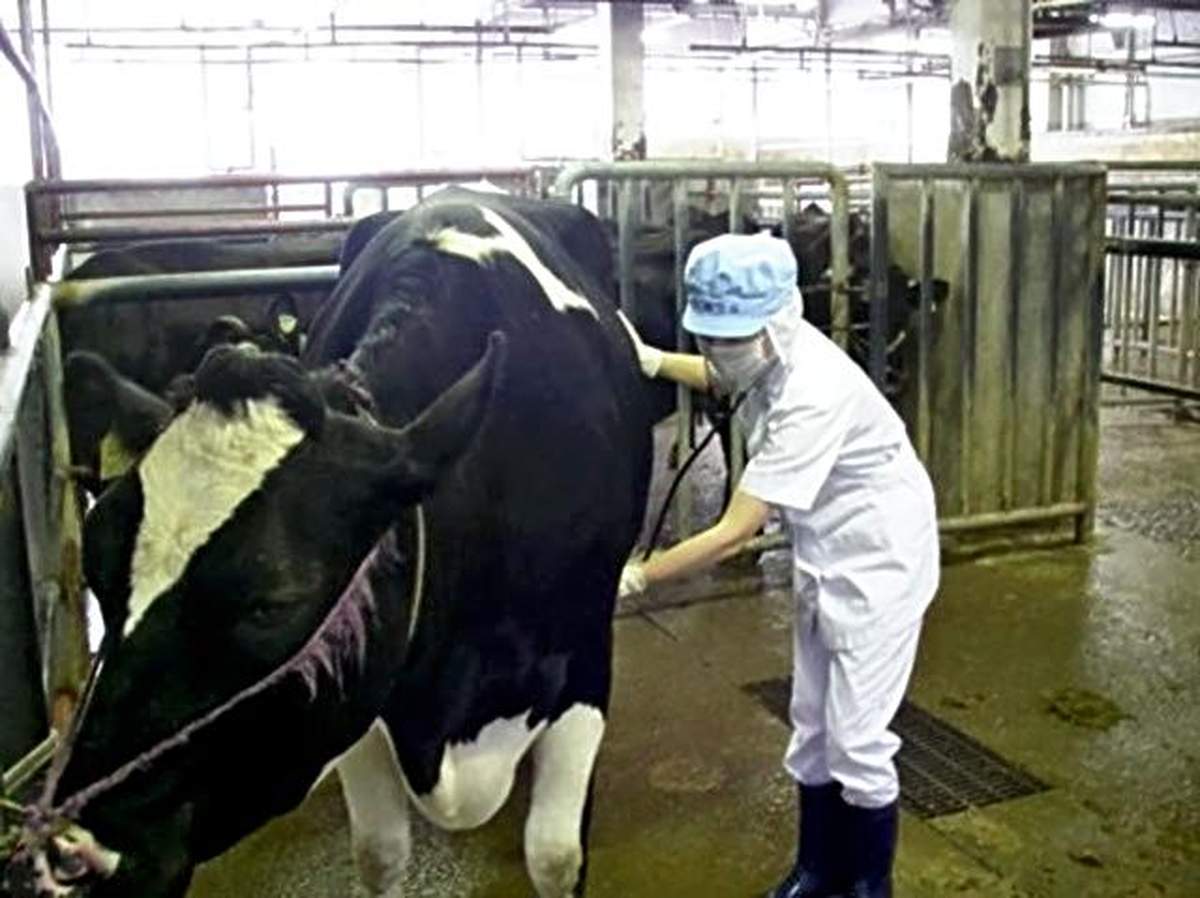
A veterinarian checks a cow as part of the meat checking process before shipment.
15:15 JST, April 28, 2025
The Health, Labor and Welfare Ministry plans to start research this fiscal year on artificial intelligence programs for checking whether meat is safe for consumption before being shipped out.
The checks will be conducted by prefectural governments. The research aims to confirm whether the checked meat has abnormalities through AI analysis of photographs.
The goal is to reduce the workload in meat inspection facilities, as there is a shortage of licensed veterinarians serving as local government officials, who are needed to conduct the checks.
If the effectiveness of the method is confirmed, the ministry plans to introduce it nationwide.
Meat is shipped out after local governments or private meat-processing facilities check whether it is safe to consume.
Laws require that local government officials with veterinarian licenses conduct the checks in most cases. The veterinarians examine livestock, dressed carcasses and organs both visually and through touch.
If the animals or meat are found to have signs of diseases or other abnormalities, they are removed from shipment lines.
However, there is a nationwide shortage of officials with veterinarian licenses. Many who have obtained a veterinarian license aim to work in animal hospitals where pets are treated.
When The Yomiuri Shimbun conducted a survey on veterinarian employment in local governments in fiscal 2023, about 90% of prefectural governments were unable to employ the expected numbers.
Japan’s export of meat, mainly of the wagyu variety of cattle, has been increasing thanks to government support.
In fiscal 2023, a total of about 2,200 local government officials with veterinarian licenses conducted checks on at least 1 million cows and about 16 million pigs, and roughly 1,100 licensed officials checked about 830 million poultry.
Many local governments have narrowly been able to conduct checks by reemploying veterinarians who had retired.
If the shortage of veterinarians worsens, local governments may be unable to assign veterinarians to other duties, such as public health sanitation work.
The ministry has therefore decided to utilize AI for the checks.
In the research, AI-assisted image analysis systems will help veterinarians visually check meat.
The research will take place in Hokkaido, Ibaraki Prefecture and Miyazaki Prefecture across three years through fiscal 2027.
Prof. Yasukazu Muramatsu of Rakuno Gakuen University, an expert of veterinary public health who heads the research team, said: “Depending on the outcome of the research, it can be expected that the workplace burden on veterinarians will be drastically reduced. Because the checks affect food safety, we aim to raise the accuracy of AI to match the level of checks by veterinarians.”






Most Read
Popular articles in the past 24 hours
-

Toronto Blue Jays’ Kazuma Okamoto Blasts 1st HR of Spring
-
20 Trapped in Tokyo Skytree Lift, Rescued 5½ Hours Later
-
Japan Seeks to Counter China's Expanding Influence in Pacific by ...
-
Japan's Diet Begins Debate on Takaichi's Budget Plans, ‘Proactive...
-
Japan Asks U.S. Not to Worsen Tariffs; Chief Cabinet Secretary Ki...
-

Milano Cortina 2026: Gold Medal Olympic Figure Skaters Riku Miura...
-

Exhibition Featuring Yoshiharu Tsuge’s Manga World Underway in Ch...
-

CARTOON OF THE DAY (February 24)
Popular articles in the past week
-

Producer Behind Pop Group XG Arrested for Cocaine Possession
-

Sanae Takaichi Elected Prime Minister of Japan; Keeps All Cabinet...
-

Japan's Govt to Submit Road Map for Growth Strategy in March, PM ...
-

Japan, U.S. Name 3 Inaugural Investment Projects; Reached Agreeme...
-

iPS Treatments Pass Key Milestone, but Broader Applications Far f...
-

Tokyo Skytree's Elevator Stops, Trapping 20 People; All Rescued (...
-

Director Naomi Kawase's New Film Explores Heart Transplants in Ja...
-
LDP Begins Training New Lawmakers to Avoid Scandal, Gaffes; Histo...
Popular articles in the past month
-
Producer Behind Pop Group XG Arrested for Cocaine Possession
-

Japan PM Takaichi’s Cabinet Resigns en Masse
-

Japan Institute to Use Domestic Commercial Optical Lattice Clock ...
-

Man Infected with Measles Reportedly Dined at Restaurant in Tokyo...
-

Israeli Ambassador to Japan Speaks about Japan’s Role in the Reco...
-

Videos Plagiarized, Reposted with False Subtitles Claiming ‘Ryuky...
-

Man Infected with Measles May Have Come in Contact with Many Peop...
-

Prudential Life Insurance Plans to Fully Compensate for Damages C...
Top Articles in Society
-
Producer Behind Pop Group XG Arrested for Cocaine Possession
-
Man Infected with Measles Reportedly Dined at Restaurant in Tokyo Station
-
Man Infected with Measles May Have Come in Contact with Many People in Tokyo, Went to Store, Restaurant Around When Symptoms Emerged
-

Woman with Measles Visited Hospital in Tokyo Multiple Times Before Being Diagnosed with Disease
-

Australian Woman Dies After Mishap on Ski Lift in Nagano Prefecture
JN ACCESS RANKING
-
Producer Behind Pop Group XG Arrested for Cocaine Possession
-
Japan PM Takaichi’s Cabinet Resigns en Masse
-
Man Infected with Measles Reportedly Dined at Restaurant in Tokyo Station
-
Israeli Ambassador to Japan Speaks about Japan’s Role in the Reconstruction of Gaza
-
Videos Plagiarized, Reposted with False Subtitles Claiming ‘Ryukyu Belongs to China’; Anti-China False Information Also Posted in Japan