
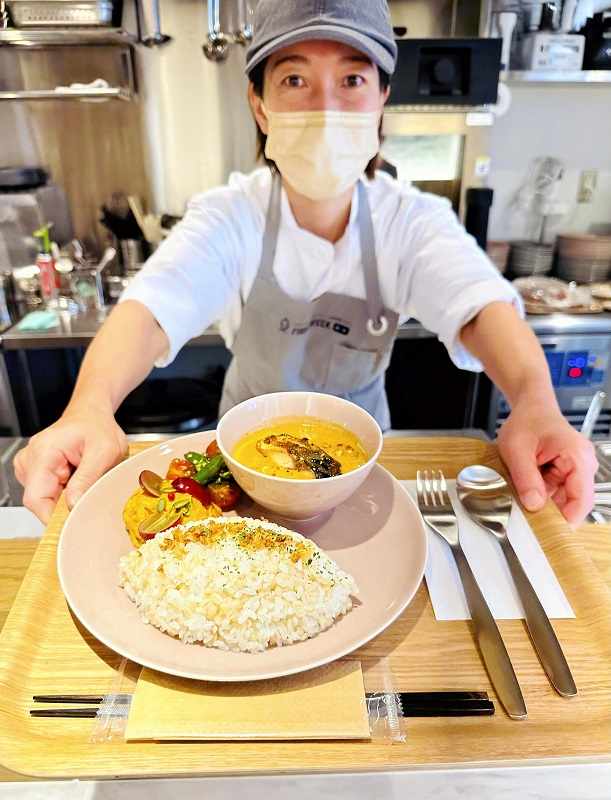
A fish dish served at the Fish a Week eatery operated by Kikkoman Corp. in Shinjuku Ward, Tokyo.
7:00 JST, November 13, 2022
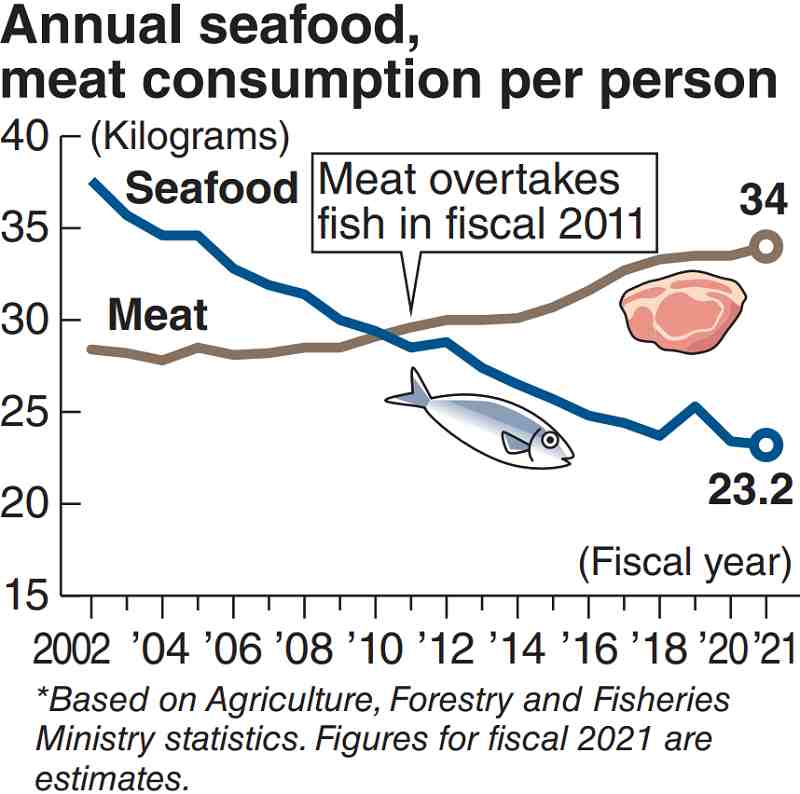
As changing dietary habits see people eating less fish, the government has teamed up with food manufacturers and retailers to boost seafood consumption. To promote public and private initiatives, the Fisheries Agency has designated the third to the seventh of each month as “Fish Days.”
In a drive to boost seafood consumption, companies plan to create more opportunities for people to eat fish in various ways, such as releasing new products and opening fish restaurants.
On Nov. 1, Kikkoman Corp. launched an eatery called Fish a Week in Shinjuku Ward, Tokyo, that mainly offers fish dishes. It is the company’s first eatery centered on fish.
Kikkoman hopes that people eating more fish when they go out will help them have a healthy diet, so its eatery offers a wide range of such dishes in Japanese, Western and Chinese styles by taking advantage of such ingredients as soy sauce, soy milk and tomato products manufactured by the company itself. It also plans to sell bento box lunches featuring fish from a food truck.
Food manufacturers that use fish meat have also launched new initiatives.
In September, Suzuhiro Kamaboko, a long-established producer of kamaboko fish cakes in Odawara, Kanagawa Prefecture, released a product called the Fish Protein Bar. Fish meat is processed in the form of a bar to allow people to eat fish easily, with the aim of boosting fish consumption from a health perspective.
Maruha Nichiro Corp. collaborates with DeNA Co., whose businesses include those in the sports and health fields, to provide dietary support for athletes and nutrition education for children.
Such efforts have been backed by the government.
Under the “Fish Days” campaign, the Fisheries Agency has teamed up with more than 600 companies and organizations to increase seafood consumption as well as to promote the proper management of marine resources.
Aeon Retail Co. has stepped up sales of cooking sets using fish that are hard to sell due to their small size and a lack of demand. The company has also expanded by 50% its sales floor for seafood products derived from environmentally friendly fisheries and aquaculture.
Convenience store operator FamilyMart Co. also plans to increase the number of side dishes with fish, such as grilled sablefish marinated with miso paste.
While meat consumption has risen, fish consumption has continued to decline. The amount of seafood consumed in fiscal 2021 per person was 23.2 kilograms, which was less than 60% of the peak in fiscal 2001, when the figure was 40.2 kilograms. It remains to be seen to what extent these initiatives can restore a culture of eating fish.
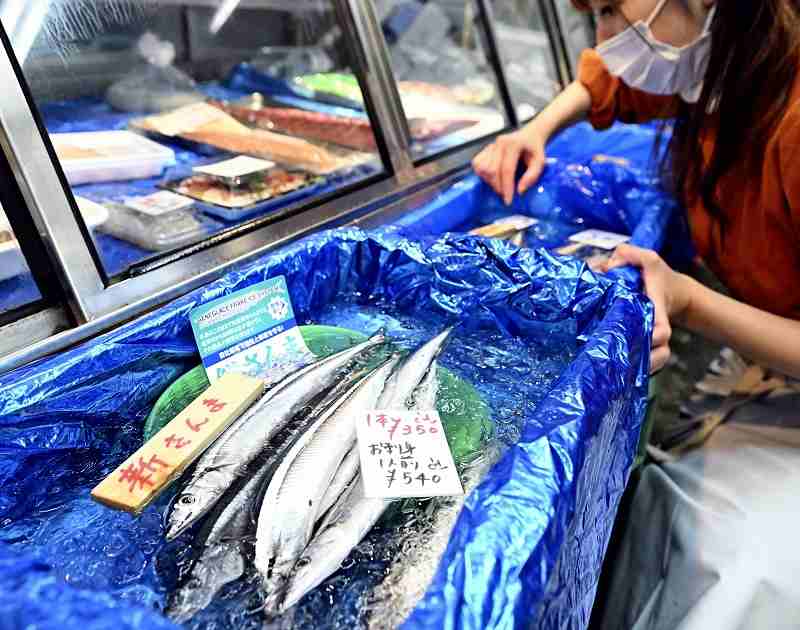
Saury is sold at a fish store in Toshima Ward, Tokyo, on Oct. 21.




Most Read
Popular articles in the past 24 hours
-

Japanese Watermelon Shipments Starts in Leading Production Distri...
-

Takeshima Day: Persistently Demanding Resolution from South Korea...
-
Tokyo Skytree Observation Deck Remains Closed for Inspection afte...
-

Impact on Japanese Economy Unclear with Trump’s New Tariffs, Shif...
-

CARTOON OF THE DAY (February 25)
-

Hanzomon Line Service Suspended between Kudanshita, Oshiage Stati...
-
Hanzomon Line Service Resumes
-

Japan GSDF, Indian Army Begin Joint Antiterror Drills
Popular articles in the past week
-

Producer Behind Pop Group XG Arrested for Cocaine Possession
-

iPS Treatments Pass Key Milestone, but Broader Applications Far f...
-

Japan, U.S. Name 3 Inaugural Investment Projects; Reached Agreeme...
-

Tokyo Skytree's Elevator Stops, Trapping 20 People; All Rescued (...
-

Japan’s Major Real Estate Firms Expanding Overseas Businesses to ...
-

Baby Monkey Punch Captures Hearts at Chiba Pref. Zoo, on Social M...
-

Milano Cortina 2026: Japanese Figure Skater Kaori Sakamoto’...
-
Reciprocal Tariffs Ruled Illegal: Judiciary Would Not Tolerate Pr...
Popular articles in the past month
-
Producer Behind Pop Group XG Arrested for Cocaine Possession
-

Japan PM Takaichi’s Cabinet Resigns en Masse
-

Japan Institute to Use Domestic Commercial Optical Lattice Clock ...
-

Man Infected with Measles Reportedly Dined at Restaurant in Tokyo...
-

Israeli Ambassador to Japan Speaks about Japan’s Role in the Reco...
-

Videos Plagiarized, Reposted with False Subtitles Claiming ‘Ryuky...
-

Man Infected with Measles May Have Come in Contact with Many Peop...
-

Prudential Life Insurance Plans to Fully Compensate for Damages C...
Top Articles in Society
-
Producer Behind Pop Group XG Arrested for Cocaine Possession
-
Man Infected with Measles Reportedly Dined at Restaurant in Tokyo Station
-
Man Infected with Measles May Have Come in Contact with Many People in Tokyo, Went to Store, Restaurant Around When Symptoms Emerged
-

Woman with Measles Visited Hospital in Tokyo Multiple Times Before Being Diagnosed with Disease
-

Australian Woman Dies After Mishap on Ski Lift in Nagano Prefecture
JN ACCESS RANKING
-
Producer Behind Pop Group XG Arrested for Cocaine Possession
-
Japan PM Takaichi’s Cabinet Resigns en Masse
-
Man Infected with Measles Reportedly Dined at Restaurant in Tokyo Station
-
Israeli Ambassador to Japan Speaks about Japan’s Role in the Reconstruction of Gaza
-
Videos Plagiarized, Reposted with False Subtitles Claiming ‘Ryukyu Belongs to China’; Anti-China False Information Also Posted in Japan