
Japanese Researchers Develop ‘Transparent Paper’ as Alternative to Plastics; New Material Is Biodegradable, Can Be Produced with Low Carbon Emissions
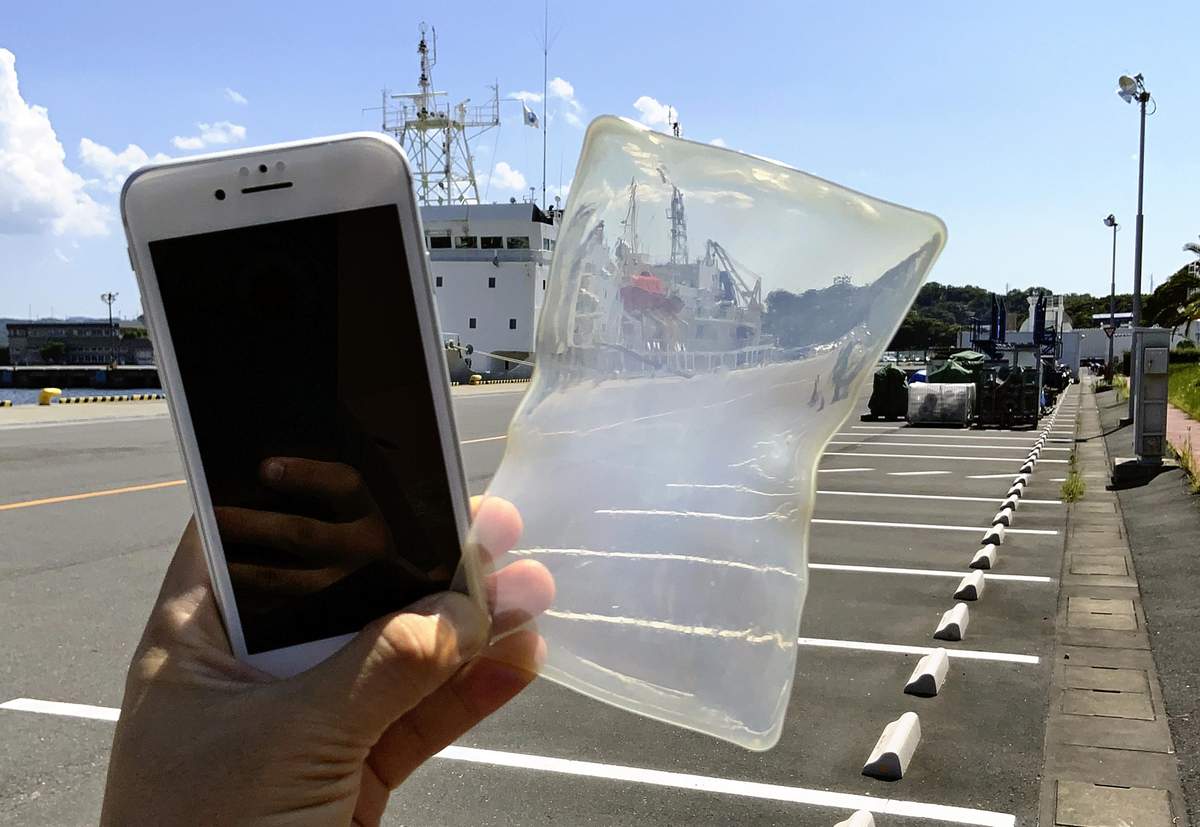
Scenery 100 meters away is seen through a sheet of transparent paper which is 0.7 millimeters thick.
14:47 JST, June 5, 2025
A team of researchers with the Japan Agency for Marine-Earth Science and Technology (JAMSTEC) and other entities have developed thick sheets of transparent paper using cellulose, a material made from plant biomass.
The transparent paper sheets can be broken down by microbes into water and carbon dioxide. Also, they can be used to make containers because they are thicker than conventional cellulose-based materials. The new material is expected to replace plastics for this purpose, as plastics are a source of ocean pollution.
To make the paper sheets, the team used cellulose powder made from fibers found on the surfaces of cotton seeds. They dissolved the powder in a lithium bromide-water solution, mixing it in as they raised it to a high temperature until it became a gel, at which point the material was shaped and dried.
When the researchers shaped the material into cups and straws, they found that it was about as strong as polycarbonate, a type of plastic.
The paper sheets become transparent because they are packed tightly with nanometer-scale (one 1-billionth of a meter) fibers. The concentration of these fibers allows light to pass straight through the sheets without experiencing diffusion.
Even a sheet of the transparent paper that is 0.7 millimeters thick remains flexible, and scenery 100 meters away can be clearly seen through it.
On the assumption that the paper sheets will be washed into the ocean, the team investigated its biodegradability. The researchers sank the paper sheets into the ocean and checked whether microbes there were able to dissolve them.
The results showed that the deeper the place under the sea was, the slower the dissolution progressed, because there are fewer microbes in the deep ocean. But the paper sheets were mostly dissolved within four months even at 757 meters below the surface.
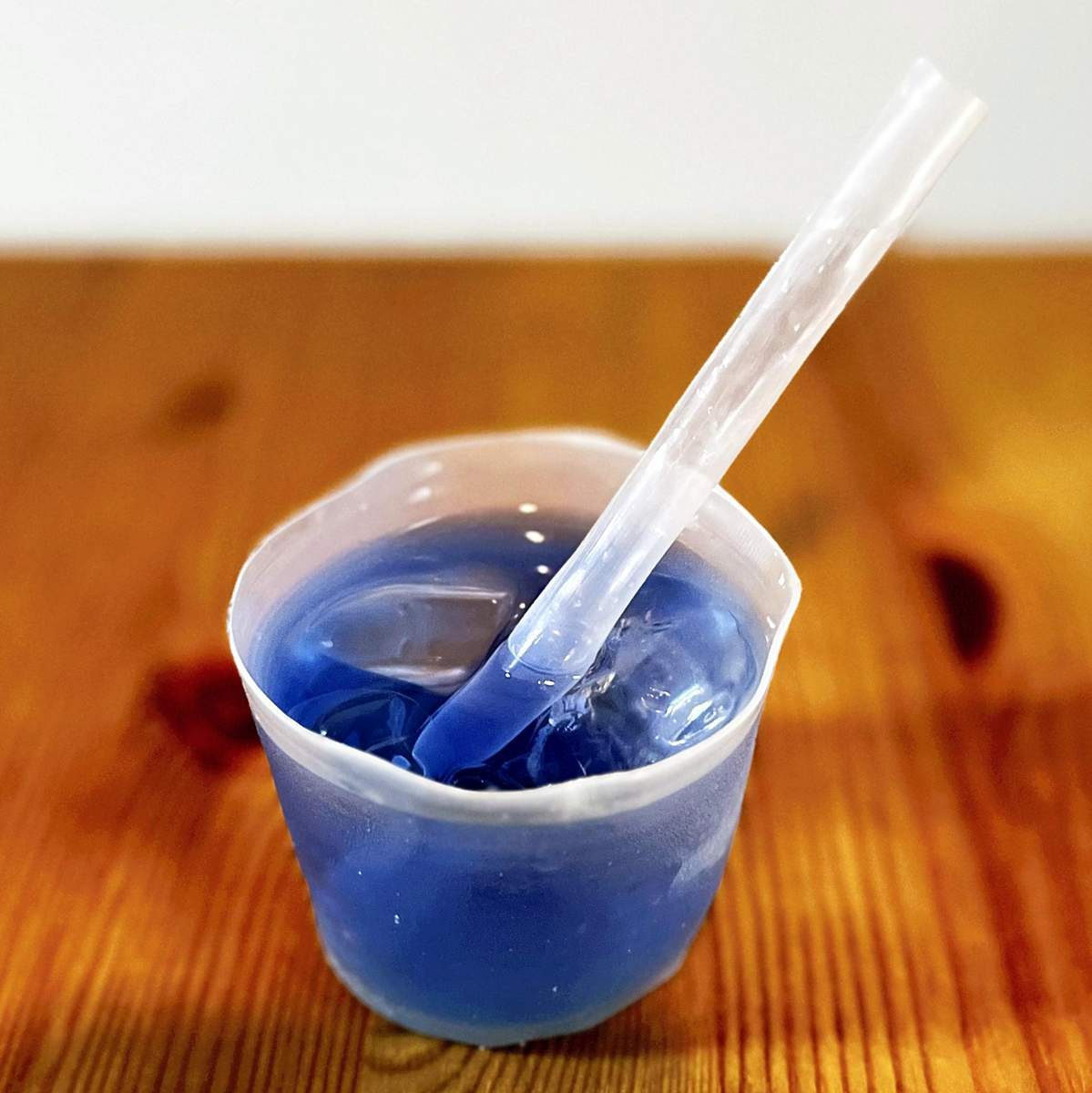
A cup and a straw made of the newly developed transparent paper
So far, paper packs have been the most common alternatives to plastic containers.
But business experts have pointed out that consumers are less willing to buy goods in paper packs because they cannot see the contents.
Transparent paper could overcome this problem, but bringing the material to market will require factories with the technology to mass-produce it.
Noriyuki Isobe, a deputy chief researcher for JAMSTEC, said, “If a plant for demonstration experiments of the technology is built, we estimate that the cost to produce the material will be about three times that of ordinary paper, while the volume of CO2 emissions can be kept to about half that of the plastic making process.”
Prof. Masaya Nogi of the University of Osaka, an expert on wooden materials, said, “There have been other types of transparent paper in the past, but the advantage of this over those is that it has been proven to be biodegradable in the deep sea.”







Most Read
Popular articles in the past 24 hours
-
JR Tokai Breaks Ground on Yamanashi Maglev Station; Will Be Part ...
-

Milano Cortina 2026: Japan’s Alpine Skier Muraoka Extends P...
-
Rising Kabuki Star Works to Ensure Deaf Audience's Enjoyment of P...
-

Lady Bess: Iroha Okuda, Mayuko Kominami Discuss Performing Elizab...
-

Japan Considering Taking Part in U.S. ‘Golden Dome’ Defense Syste...
-
46 Evacuated from UAE, Oman on Japanese Govt-chartered Flight
-

Driver Dies in Collision with Express Train at Crossing in Mito; ...
-

Japan's TEPCO Releases Footage from Fukushima N-Plant Reactor
Popular articles in the past week
-

Japan Figure Skating Legend Yuzuru Hanyu Is Proud Disaster Surviv...
-

Nippon Life Insurance's U.S. Arm Sues OpenAI Over Legal Assistanc...
-

Govt to Utilize ODA for Ensuring Economic Security; Securing Ener...
-

Massive Sewer Pipe Found Jutting Out of Highway in Osaka
-
15 Measles Patients Confirmed in Tokyo in Past 6 Days; 1 May Have...
-

Japan Govt to Tighten Requirements to Receive Permanent Residency...
-

Beckoning Cats Get Makeover to Fit Modern Lifestyles with Sleek D...
-
Japan Govt Survey Finds Just 10% of Workers Want Working Hours to...
Popular articles in the past month
-

Producer Behind Pop Group XG Arrested for Cocaine Possession
-

Japan PM Takaichi’s Cabinet Resigns en Masse
-

Man Infected with Measles Reportedly Dined at Restaurant in Tokyo...
-

Videos Plagiarized, Reposted with False Subtitles Claiming ‘Ryuky...
-
Japan Figure Skating Legend Yuzuru Hanyu Is Proud Disaster Surviv...
-

iPS Treatments Pass Key Milestone, but Broader Applications Far f...
-

Sanae Takaichi Elected Prime Minister of Japan; Keeps All Cabinet...
-

Nepal Bus Crash Kills 19 People, Injures 25 Including One Japanes...
Top Articles in Science & Nature
-
iPS Treatments Pass Key Milestone, but Broader Applications Far from Guaranteed
-

Record 700 Startups to Gather at SusHi Tech Tokyo in April; Event Will Center on Themes Like Artificial Intelligence and Robotics
-
iPS Cell Products for Parkinson’s, Heart Disease OK’d for Commercialization by Japan Health Ministry Panel
-

Japan to Ban Use of Power Banks on Airplanes
-

Parents in Japan to Get Instagram Notifications When Teens Repeatedly Search for Suicide Content
JN ACCESS RANKING
-
Producer Behind Pop Group XG Arrested for Cocaine Possession
-
Japan PM Takaichi’s Cabinet Resigns en Masse
-
Man Infected with Measles Reportedly Dined at Restaurant in Tokyo Station
-
Videos Plagiarized, Reposted with False Subtitles Claiming ‘Ryukyu Belongs to China’; Anti-China False Information Also Posted in Japan
-
Japan Figure Skating Legend Yuzuru Hanyu Is Proud Disaster Survivor and Gold Medalist, Vows to Continue Support Efforts