
Research Team Develops Auto Parts Made from Recycled Plastic; Wardrobes Turned into Glove Compartments
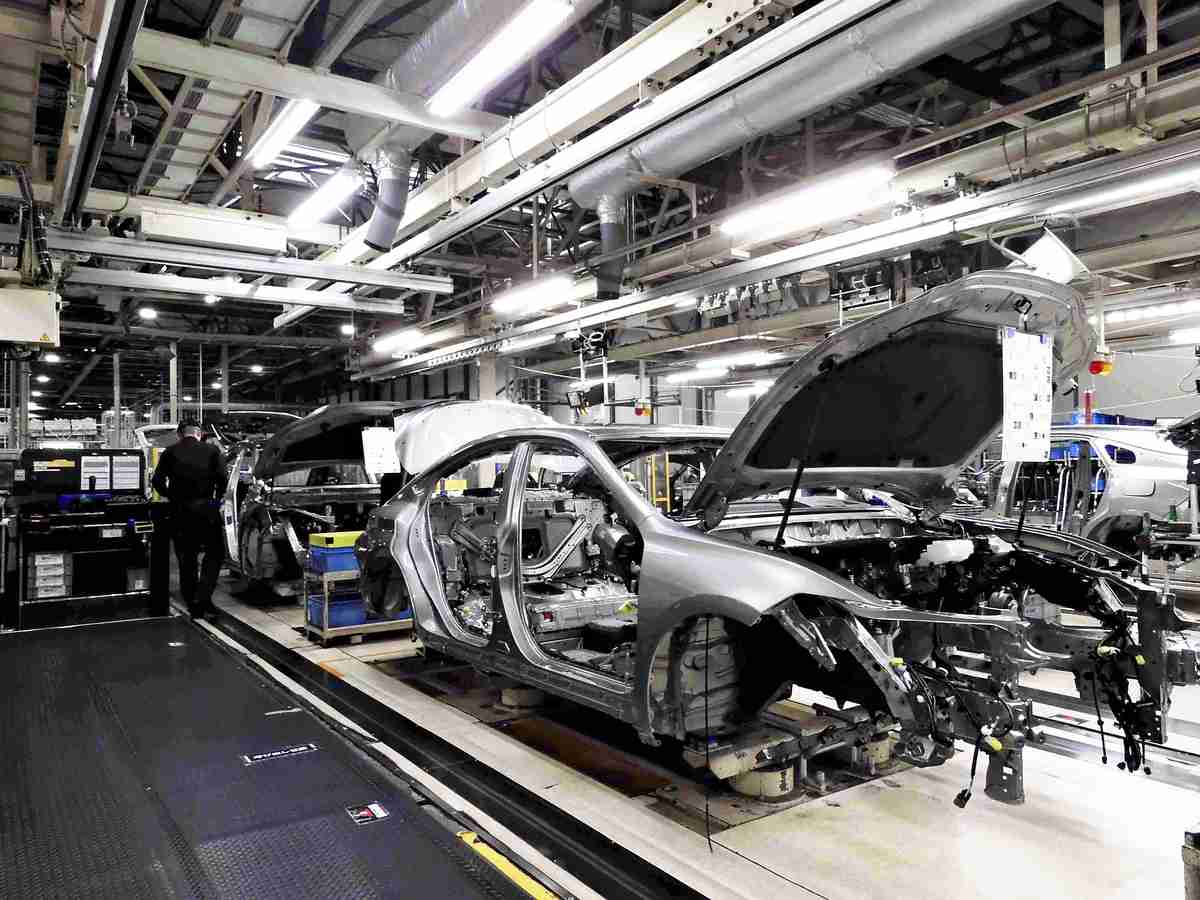
Vehicles are assembled at a Toyota Motor Corp. plant in Fukuoka Prefecture in November 2023.
16:38 JST, May 17, 2025
An industry-academia-government research team, comprising auto manufacturers, Tohoku University, the Environment Ministry and other organizations, has succeeded in developing interior parts for vehicles using recycled plastic, it has been learned.
The parts are made from recycled wardrobes and will be unveiled at a technology exhibition to be held later this month.
The use of recycled plastic will contribute to economic security — as resources can be obtained domestically — and the reduction of carbon dioxide emissions. The team plans to continue to develop samples of other parts with the aim of expanding their use in the domestic production of vehicles.
Since many used cars are exported, there is a lack of parts that can be used as raw materials for recycled plastic. Therefore, there is demand for developing a technology that can utilize large amounts discarded everyday goods as sources of recyclable plastic.
Plastic parts generally account for about half of the volume and 10% of the weight of vehicles. About 1 million tons of plastics are used annually in the domestic production of new vehicles for such parts as bumpers and engine covers. However, the use of recycled plastic has been limited.
The government has been promoting the development of automotive parts made from recycled household goods since 2023 as a large-scale research project to reduce oil imports for raw materials and advance decarbonization by promoting the domestic recirculation of plastics. Toyota Motor Corp. and Honda Motor Co., as well as chemical companies and auto parts manufacturers, are among the 25 firms participating in the project.
Ryohin Keikaku Co., which operates household goods stores, collected wardrobes made of the plastic material polypropylene and Mitsui Chemicals, Inc. and others manufactured materials containing 25% recycled plastic. Toyoda Gosei Co. has developed components for the glove compartment.
Interior components used in vehicles must meet durability and heat resistance standards and efforts must be made to ensure the user’s experience is not negatively impacted by things like odor and unevenness of color tinge. The use of recycled plastic has been considered challenging, but the research team met the conditions required for practical use in March.
The research team is currently developing prototype interior door parts and is also working on exterior parts.
The team is trying to establish procurement channels for such used items as tofu containers and contact lens cases. Technical challenges remain, such as ensuring the quality of recycled plastic even when non-plastic waste is mixed in.
The European Union is discussing a regulation requiring that at least 20% of the plastic used in vehicle production should be recycled plastic. The new regulation is expected to be introduced as early as 2031.
In Japan, the Environment Ministry and the automotive industry, among others, have set a target of having 15% of auto parts being made of recycled plastic.








Most Read
Popular articles in the past 24 hours
-

Japan, U.S. Fail to Make Final Decision on $550 Bil. Investment P...
-

Council Submits Proposals for Revising Retrial System; Some Legal...
-

Milano Cortina 2026: Japan’s Totsuka Wins Gold, Yamada Takes Bron...
-
Heirs to Kyoto Talent: Craftsman Works to Keep Tradition of ‘Kinr...
-

2026 Has Seen a Grim Dawn in Iran; What Will the Rest of the Year...
-
Exit of Opposition Veterans Brings Breath of Generational Change
-

Milano Cortina 2026: Japan Take Silver and Bronze in Bittersweet ...
-

New CRA Leader: Ogawa Should Quickly Present Party’s Vision for F...
Popular articles in the past week
-

Woman with Measles Visited Hospital in Tokyo Multiple Times Befor...
-

Prudential Life Insurance Plans to Fully Compensate for Damages C...
-

Woman with No Overseas Travel History Infected with Measles in Na...
-

LDP Wins Historic Landslide Victory
-

Measles Patient Flew Between Tokyo, Hokkaido in Late January; Lik...
-

LDP Wins Landslide Victory, Secures Single-party Majority; Ruling...
-

Milano Cortina 2026: Kokomo Murase Comes Out on Top After Overcom...
-

Tokyo, Many Regions across Japan Hit with Heavy Snow
Popular articles in the past month
-

Japan Institute to Use Domestic Commercial Optical Lattice Clock ...
-

Israeli Ambassador to Japan Speaks about Japan’s Role in the Reco...
-

Man Infected with Measles May Have Come in Contact with Many Peop...
-

China Eyes Rare Earth Foothold in Malaysia to Maintain Dominance,...
-

Australian Woman Dies After Mishap on Ski Lift in Nagano Prefectu...
-
Woman with Measles Visited Hospital in Tokyo Multiple Times Befor...
-
Prudential Life Insurance Plans to Fully Compensate for Damages C...
-

Foreign Snowboarder in Serious Condition After Hanging in Midair ...
Top Articles in Science & Nature

JN ACCESS RANKING
-
Japan Institute to Use Domestic Commercial Optical Lattice Clock to Set Japan Standard Time
-
Israeli Ambassador to Japan Speaks about Japan’s Role in the Reconstruction of Gaza
-
Man Infected with Measles May Have Come in Contact with Many People in Tokyo, Went to Store, Restaurant Around When Symptoms Emerged
-
China Eyes Rare Earth Foothold in Malaysia to Maintain Dominance, Counter Japan, U.S.
-
Australian Woman Dies After Mishap on Ski Lift in Nagano Prefecture