
Innovative Ideas ‘Get Bashed,’ Says Kitagawa; Nobel Laureate Once Faced Intense Criticism for Work That Eventually Earned Him the Prize
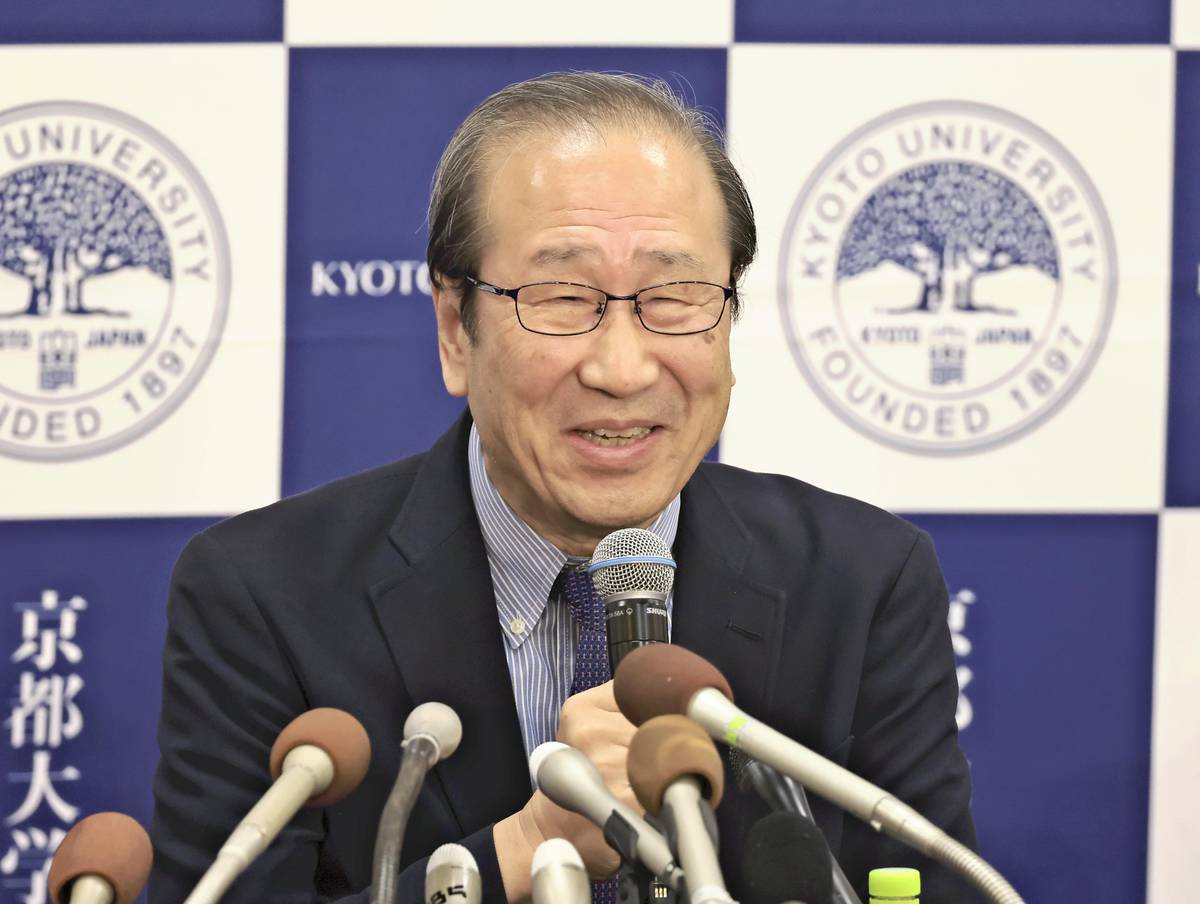
susumu kitagawa
13:56 JST, October 9, 2025
A watershed moment in Susumu Kitagawa’s research, which recently culminated in the Kyoto University professor winning the 2025 Nobel Prize in Chemistry, came in 1979, when he was appointed as an assistant at what is now known as Kindai University, then called Kinki University.
Kitagawa had completed his studies at Kyoto University’s graduate school. As a student, he had continually researched the use of calculations to explain the properties of chemical substances and reactions between them. However, at his new research laboratory, he was assigned a research topic in a completely different field — synthesizing compounds from metal ions and organic molecules.
The lab’s equipment at the time was inadequate for this research. Kitagawa turned to the Faculty of Medicine, which possessed state-of-the-art equipment, and was given permission to use these facilities at night. Kitagawa at times worked through the night on his experiments.
Kitagawa was swamped with his duties as an assistant, but in hopes of pushing his research forward, he identified students’ areas of expertise and learned how to entrust some of the work to them.
“Your research will never make progress if you don’t make good use of the whole organization around you,” Kitagawa said. “I wouldn’t have figured that out without my experience at Kinki University.”
After a lot of hard work, Kitagawa synthesized a compound that had many cavities. Kitagawa noticed that these cavities could be used to absorb and release gases, and he announced his findings in a paper published in 1997. However, Kitagawa initially came in for stinging criticism at international conferences and other forums. “It’s unbelievable that gas would enter these cavities,” one critic thundered, while others told Kitagawa he was “mistaken.”
“The more innovative your idea is, the more you get bashed,” Kitagawa said. “But if you give up then, that’s the end. I thought, ‘Damn it!’ and I tried again. I made efforts for improvement day by day.”
Kitagawa’s favorite saying, which comes from a Chinese history work called “Book of the Later Han,” states that it is only when a fierce wind blows that one can tell which grasses are strong enough to keep standing. It took considerable time for the accuracy of Kitagawa’s research to be widely recognized. The dogged strength found in weeds mirrors that which Kitagawa displayed during his research career.
“A person’s strength also becomes evident when they encounter difficulties,” Kitagawa said.


Related Tags


Most Read
Popular articles in the past 24 hours
-

McDonald's Japan Raises Prices; Big Mac to Cost ¥500, Double Chee...
-

Nepal Bus Crash Kills 19 People, Injures 25 Including One Japanes...
-

Japan’s Nikkei Stock Average Rises as AI-Related Stocks Shine; Co...
-

Aggression against Ukraine: Malignant Precedent Must Not Be Set t...
-
Joruri Bunraku Narrative Performed in Honor of Donald Keene by La...
-

Milano Cortina 2026: Gold Medal Olympic Figure Skaters Riku Miura...
-

Kanto's 1st Spring Wind Blows as Tokyo Sees Unseasonably High Tem...
-

How Keri Russell's Suede Coach Boots Ended up in My Closet
Popular articles in the past week
-

Producer Behind Pop Group XG Arrested for Cocaine Possession
-

Japan PM Takaichi’s Cabinet Resigns en Masse
-

Sanae Takaichi Elected Prime Minister of Japan; Keeps All Cabinet...
-

Japan's Govt to Submit Road Map for Growth Strategy in March, PM ...
-

Bus Carrying 40 Passengers Catches Fire on Chuo Expressway; All E...
-

Japan, U.S. Name 3 Inaugural Investment Projects; Reached Agreeme...
-

Riku-Ryu Pair Wins Gold Medal: Their Strong Bond Leads to Major C...
-

iPS Treatments Pass Key Milestone, but Broader Applications Far f...
Popular articles in the past month
-
Producer Behind Pop Group XG Arrested for Cocaine Possession
-
Japan PM Takaichi’s Cabinet Resigns en Masse
-

Japan Institute to Use Domestic Commercial Optical Lattice Clock ...
-

Man Infected with Measles Reportedly Dined at Restaurant in Tokyo...
-

Israeli Ambassador to Japan Speaks about Japan’s Role in the Reco...
-

Videos Plagiarized, Reposted with False Subtitles Claiming ‘Ryuky...
-

Man Infected with Measles May Have Come in Contact with Many Peop...
-

Prudential Life Insurance Plans to Fully Compensate for Damages C...
Top Articles in Science & Nature
-
iPS Treatments Pass Key Milestone, but Broader Applications Far from Guaranteed
-
Record 700 Startups to Gather at SusHi Tech Tokyo in April; Event Will Center on Themes Like Artificial Intelligence and Robotics
-
iPS Cell Products for Parkinson’s, Heart Disease OK’d for Commercialization by Japan Health Ministry Panel
-

Japan to Ban Use of Power Banks on Airplanes
JN ACCESS RANKING
-
Producer Behind Pop Group XG Arrested for Cocaine Possession
-
Japan PM Takaichi’s Cabinet Resigns en Masse
-
Man Infected with Measles Reportedly Dined at Restaurant in Tokyo Station
-
Israeli Ambassador to Japan Speaks about Japan’s Role in the Reconstruction of Gaza
-
Videos Plagiarized, Reposted with False Subtitles Claiming ‘Ryukyu Belongs to China’; Anti-China False Information Also Posted in Japan