
Detention of Japanese Astellas Pharma Employee in China May be Prolonged; Specific Actions that Led to Detention Not Revealed by Beijing
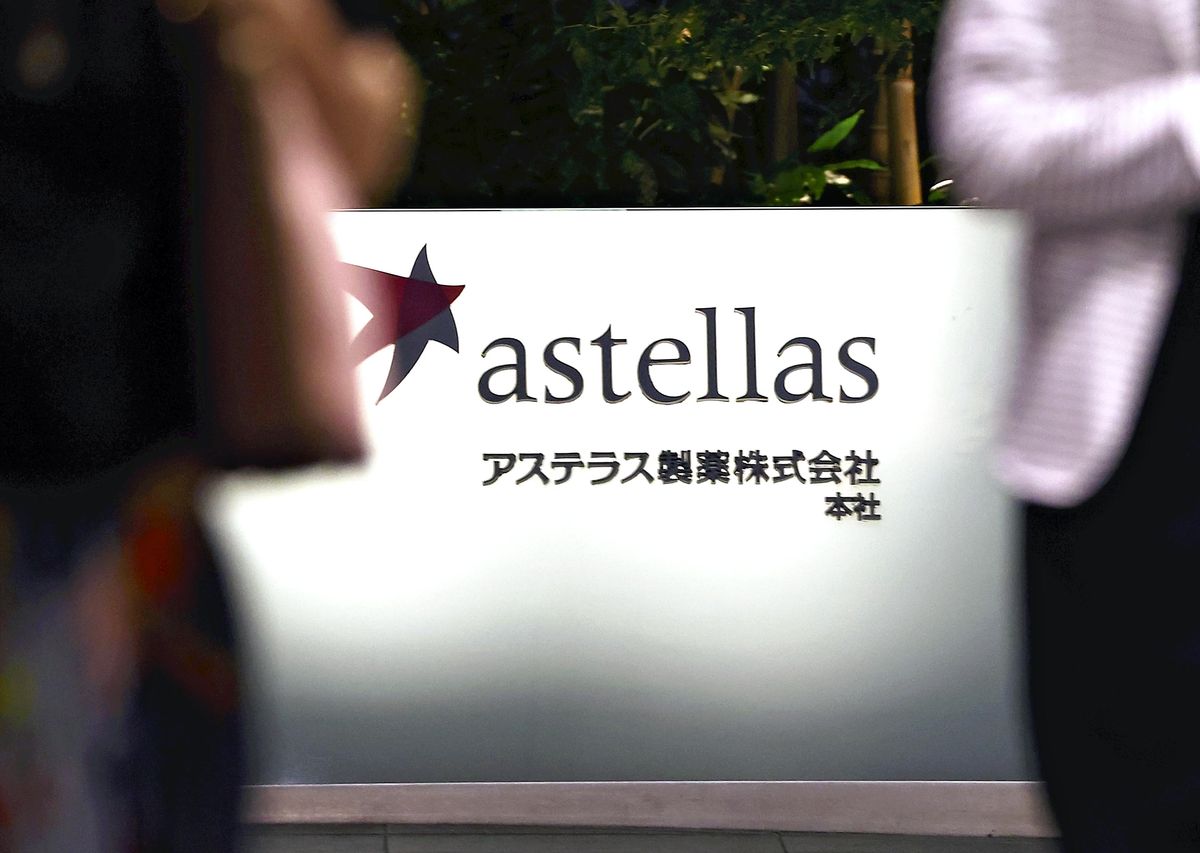
The Astellas Pharma Inc.’s logo in Chuo Ward, Tokyo, in October 2023
6:00 JST, March 21, 2025
BEIJING — A Japanese man, who was detained by Chinese authorities, will likely continue to remain in detention despite the Japanese government demanding his immediate release.
Thursday marked two years since the Astellas Pharma Inc. employee, who is in his 50s, was detained by the Chinese anti-espionage agency in Beijing.
The trial on espionage charges has begun without the Beijing side revealing what specific behaviors it deemed as problematic, hindering exchanges between those in the business communities of the two countries.
According to sources, the man was detained by state security authorities on March 20, 2023, while going to the Beijing airport by car to return home after having finished his term in China. He was indicted in August last year, and the first hearing was held in November at the Beijing No. 2 Intermediate People’s Court. The specific behaviors he is accused of have not been made clear.
The man was also vice chairman of the Japanese Chamber of Commerce and Industry in China, an economic group made up of Japanese-affiliated companies in China.
The man’s detainment led Japanese companies to quickly suspend their employees’ business trips to China.
Academic exchanges are also being affected, with one Japanese researcher involved in Chinese studies saying, “It’s not a situation in which I can travel to China.”
Since 2015, 17 Japanese nationals have been detained on suspicion of espionage and other accusations. Five have not been able to return home.
Chinese Foreign Minister Wang Yi, who is also a member of the Chinese Communist Party’s Politburo, will visit Japan soon. However, there are no signs of a resolution to the issue of Japanese nationals being detained.
Chinese President Xi Jinping’s administration enacted a revised anti-espionage law in July 2023 to strengthen crackdowns on espionage, raising concerns among Western companies operating in China.
Due in part to the effects of the prolonged recession in China, the net increase in foreign companies’ direct investments in the country last year fell by 90% compared to the previous year.
“As long as companies operate legally, and individuals act in accordance with the law, there is no need to worry,” a Chinese Foreign Ministry spokesperson said March 11.
However, corporate expatriates working in China are still concerned.







Most Read
Popular articles in the past 24 hours
-

German Journalist Traces Footsteps of Great-Grandfather Who Was P...
-

10 Foreign Tourists Sustain Injuries After Fire at Capsule Hotel ...
-

World Baseball Classic: Venezuela Beats Japan in Nail-biting Back...
-

Rapid Services Resume on JR Chuo Line; Suspension Caused by Accid...
-

Zelenskiy Says Ukraine Wants Money, Technology in Return for Midd...
-

Rapid Services on JR Chuo Line Suspended; Accident at Kokubunji S...
-

World Baseball Classic: Venezuela Beats Japan in Back-and-Forth Q...
-

World Baseball Classic: Red Sox’s Abreu Hits 3-run Homer, Giving ...
Popular articles in the past week
-

Japan Figure Skating Legend Yuzuru Hanyu Is Proud Disaster Surviv...
-
15 Measles Patients Confirmed in Tokyo in Past 6 Days; 1 May Have...
-

Massive Sewer Pipe Found Jutting Out of Highway in Osaka
-
Japan Govt to Tighten Requirements to Receive Permanent Residency...
-

Power Outage Forces About 980 Passengers in Yokohama to Walk to T...
-
JR Tokai Breaks Ground on Yamanashi Maglev Station; Will Be Part ...
-

Parents in Japan to Get Instagram Notifications When Teens Repeat...
-
'World's Oldest Bio-Business' Is Japan's Seed Koji Retailing, Mol...
Popular articles in the past month
-

Producer Behind Pop Group XG Arrested for Cocaine Possession
-

Japan PM Takaichi’s Cabinet Resigns en Masse
-

Man Infected with Measles Reportedly Dined at Restaurant in Tokyo...
-
Japan Figure Skating Legend Yuzuru Hanyu Is Proud Disaster Surviv...
-

iPS Treatments Pass Key Milestone, but Broader Applications Far f...
-

Sanae Takaichi Elected Prime Minister of Japan; Keeps All Cabinet...
-

South Korea Tightens Rules on Foreigners Buying Homes in Seoul Me...
-

Nepal Bus Crash Kills 19 People, Injures 25 Including One Japanes...
Top Articles in Science & Nature
-
iPS Treatments Pass Key Milestone, but Broader Applications Far from Guaranteed
-

Record 700 Startups to Gather at SusHi Tech Tokyo in April; Event Will Center on Themes Like Artificial Intelligence and Robotics
-
Parents in Japan to Get Instagram Notifications When Teens Repeatedly Search for Suicide Content
-
iPS Cell Products for Parkinson’s, Heart Disease OK’d for Commercialization by Japan Health Ministry Panel
-

Japan to Ban Use of Power Banks on Airplanes
JN ACCESS RANKING
-
Producer Behind Pop Group XG Arrested for Cocaine Possession
-
Japan PM Takaichi’s Cabinet Resigns en Masse
-
Man Infected with Measles Reportedly Dined at Restaurant in Tokyo Station
-
Japan Figure Skating Legend Yuzuru Hanyu Is Proud Disaster Survivor and Gold Medalist, Vows to Continue Support Efforts
-
iPS Treatments Pass Key Milestone, but Broader Applications Far from Guaranteed