
New Security Era: Japan Must Further Strengthen Alliance with U.S., Like-minded Nations
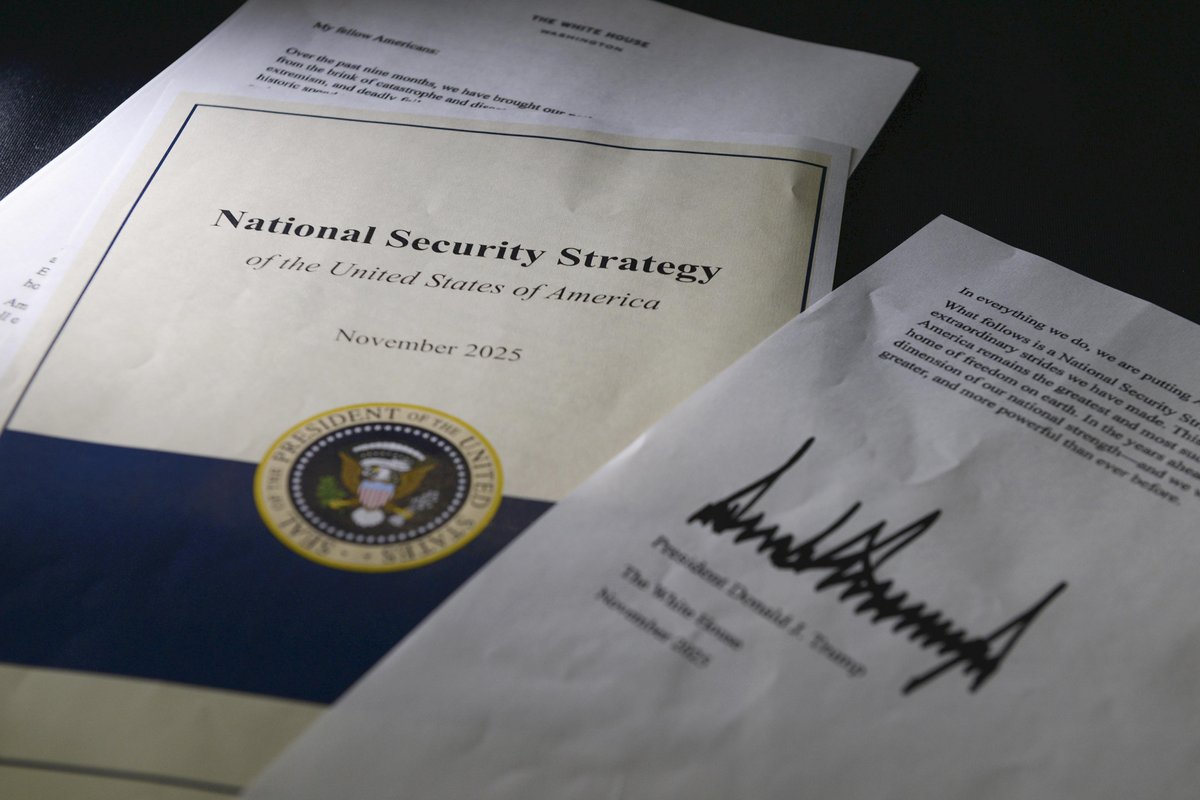
The U.S. National Security Strategy released in December
17:24 JST, January 16, 2026
The security environment surrounding Japan is growing increasingly severe with each passing year, primarily driven by China, which seeks to be ready to invade Taiwan by 2027. This special feature examines the current state of the Japan-U.S. alliance and the challenges facing it as it seeks to defend peace in the Indo-Pacific region.
Clad in black jerseys, Defense Minister Shinjiro Koizumi and Richard Marles, Australia’s defense minister and deputy prime minister, were seen jogging together on the grounds of the Defense Ministry in Tokyo’s Ichigaya district on Dec. 7.
Koizumi, who has jogged with Marles in Tokyo before, apparently sought to deepen ties with the Australian defense minister. Australia is a U.S. ally and Japan’s “quasi-ally,” and deepening ties would strengthen security cooperation between Japan and Australia, and ultimately between Japan, the United States and Australia.
After the jog in December, Koizumi wrote on X that the run gave them an opportunity to show their resolve to safeguard peace in the Indo-Pacific region and emphasized his close ties with Marles.
Japan is focusing on strengthening ties with like-minded nations that share its values. Since taking office in October, Koizumi has held talks, including on the phone, with defense ministers of countries such as the Philippines and New Zealand. A senior Defense Ministry official said Koizumi intends to build a network of cooperation in the Indo-Pacific region to keep the United States within the framework.
The administration of U.S. President Donald Trump declared that “the days of the United States propping up the entire world order like Atlas are over” in his National Security Strategy (NSS) released in December. The strategy emphasizes focusing on maintaining order in the Western Hemisphere. The United States’ attack on Venezuela, part of what it calls its “backyard,” exemplifies this shift.
In the NSS, the United States also demonstrated its interest in the Indo-Pacific region, where China is expanding its sphere in terms of military dominance. “Deterring a conflict over Taiwan, ideally by preserving military overmatch, is a priority,” the strategy says.
Naming two allies, Japan and South Korea, the strategy says, “we must urge these countries to increase defense spending.” This calls on the two countries on the front lines against China to proactively strengthen their defense capabilities and work to maintain regional order.
Stability in the Indo-Pacific region is of vital importance to Japan. China’s defense spending was about 1.785 trillion yuan (about ¥40 trillion) in 2025, about five times more than Japan’s initial defense budget for fiscal 2025 at about ¥8.7 trillion.
It is crucial for Japan, which cannot respond to security requirements alone, to share the burden of security that the United States has long shouldered in order to secure continued engagement with the United States.
The Japanese government is set to increase security-related expenditures, including defense spending, aiming for more than 2% of its gross domestic product. The government is expected to revise the National Defense Strategy and two other security-related documents by the end of the year. One of the pillars of the revision is strengthening the defense system in the Pacific, where the Chinese military is advancing.
Japan will demonstrate its support for U.S. military bases, such as the U.S. Naval Base in Yokosuka, Kanagawa Prefecture, and further enhance complementarities in the alliance.
Promoting exports of defense equipment to the United States and expanding the joint development of the equipment are also part of Japan’s efforts. Koizumi promoted the sale of Japanese defense equipment to the United States during his visit to the country. In addition to sharing equipment technology and information, Japan is expected to build long-term trust with the United States through parts supply and maintenance.
The security environment surrounding Japan is entering a new phase, marked especially by China’s ongoing military intimidation around Taiwan, the cooperation between China and Russia, and cooperation among China, Russia and North Korea. There is no doubt that forging multitiered cooperation with like-minded nations and further strengthening the Japan-U.S. alliance is the path that will lead Japan through these difficult times.


Related Tags



Most Read
Popular articles in the past 24 hours
-
Kesennuma, Miyagi Pref., Locals Raise Carp Streamers as Symbol of...
-

Iran Situation: Significance of Rule of Law Must Be Conveyed
-

Toyota Advancing Plant-Based Biofuel Development in Fukushima Tow...
-

Trump Says Iran Had a New Site for Developing Nuclear Weapons
-
2 People Reportedly Found on Mt. Fuji; Hiking Trail Currently Clo...
-

CARTOON OF THE DAY (March 10)
-
Rapeseed Flowers Reach Peak Viewing Period at Tokyo's Showa Kinen...
-

Japan's TEPCO to Raise Electricity Rates for Corporations in Apri...
Popular articles in the past week
-

Ibaraki Pref.'s 1st Foreign Bus Driver Hired in Tsukuba
-
Amid Strait of Hormuz Blockade, Shipping Companies Scramble to Ge...
-
Govt to Utilize ODA for Ensuring Economic Security; Securing Ener...
-
Japan Govt Survey Finds Just 10% of Workers Want Working Hours to...
-
Japan's 2nd Round of U.S. Investments May Be Worth Over $100 Bill...
-

Imperial Family Watches World Baseball Classic Game Against Austr...
-

Nippon Life Insurance's U.S. Arm Sues OpenAI Over Legal Assistanc...
-

Donald Keene’s Drinking Buddy and Translator Yukio Kakuchi Pays T...
Popular articles in the past month
-

Producer Behind Pop Group XG Arrested for Cocaine Possession
-

Japan PM Takaichi’s Cabinet Resigns en Masse
-

Man Infected with Measles Reportedly Dined at Restaurant in Tokyo...
-

Videos Plagiarized, Reposted with False Subtitles Claiming ‘Ryuky...
-

iPS Treatments Pass Key Milestone, but Broader Applications Far f...
-

Sanae Takaichi Elected Prime Minister of Japan; Keeps All Cabinet...
-

Nepal Bus Crash Kills 19 People, Injures 25 Including One Japanes...
-

South Korea Tightens Rules on Foreigners Buying Homes in Seoul Me...
Top Articles in Politics
-
Japan PM Takaichi’s Cabinet Resigns en Masse
-
Sanae Takaichi Elected Prime Minister of Japan; Keeps All Cabinet Appointees from Previous Term
-

Japan’s Govt to Submit Road Map for Growth Strategy in March, PM Takaichi to Announce in Upcoming Policy Speech
-
CRA Leadership Election Will Center on Party Rebuilding; Lower House Defeat Leaves Divisions among Former CDPJ, Komeito Members
-
LDP Begins Training New Lawmakers to Avoid Scandal, Gaffes; Historic Victory in Latest Election Heightens Focus on Party
JN ACCESS RANKING
-
Producer Behind Pop Group XG Arrested for Cocaine Possession
-
Japan PM Takaichi’s Cabinet Resigns en Masse
-
Man Infected with Measles Reportedly Dined at Restaurant in Tokyo Station
-
Videos Plagiarized, Reposted with False Subtitles Claiming ‘Ryukyu Belongs to China’; Anti-China False Information Also Posted in Japan
-
iPS Treatments Pass Key Milestone, but Broader Applications Far from Guaranteed