
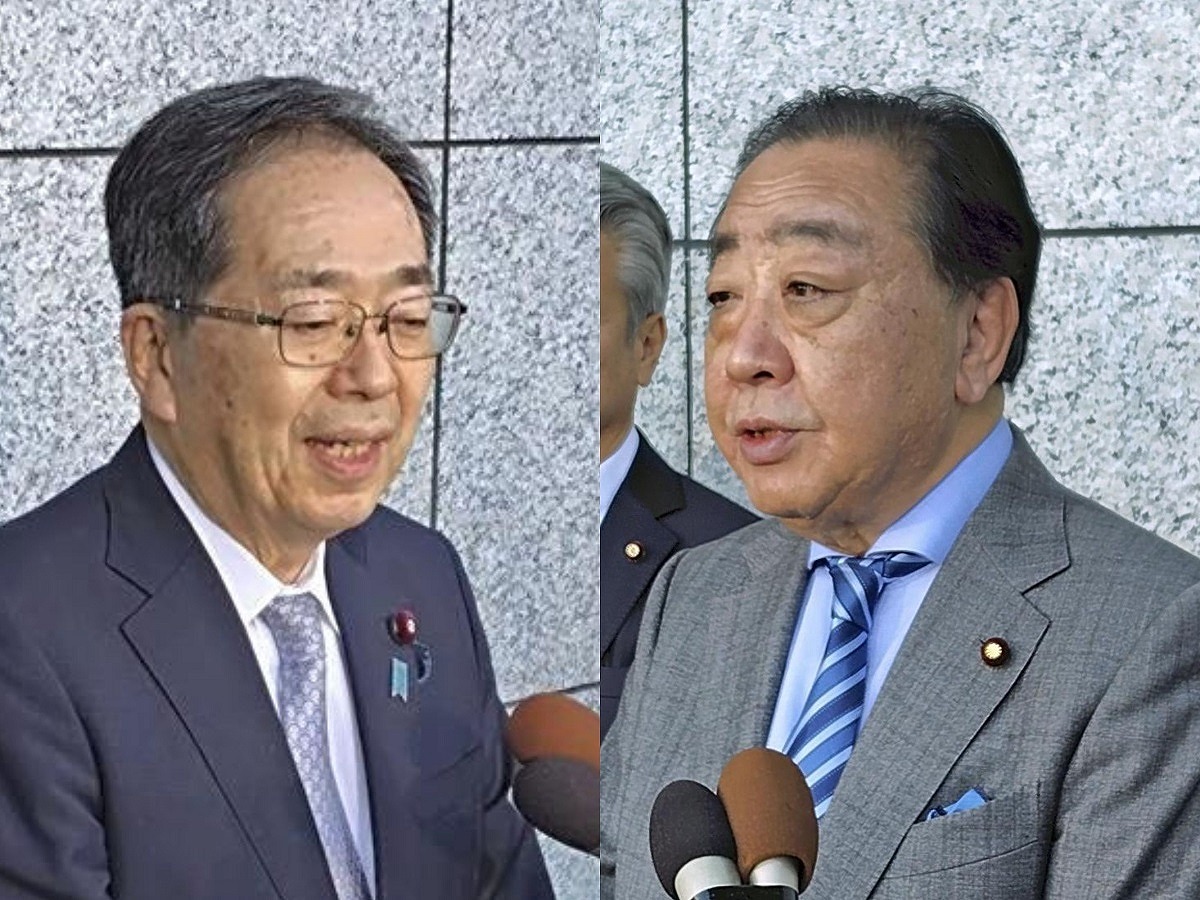
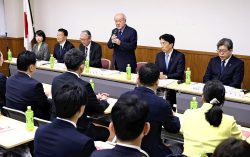
Komeito leader Tetsuo Saito, left, and CDPJ leader Yoshihiko Noda
15:18 JST, January 15, 2026
Aiming for a change of government, the Constitutional Democratic Party of Japan has reached an agreement with Komeito to advance cooperation at a “higher level” in the next House of Representatives election. The two parties are now discussing the possibility of forming a new party together and adopting a unified proportional representation list system for the election.
Under the system, multiple parties incorporate their officially endorsed candidate lists for proportional representation elections into a single list. It is believed this approach could accumulate more votes and potentially secure more seats.
Both parties aim to maximize seats through this method. In the proportional representation race of the 2024 lower house election, in which 176 seats were up for grabs, the CDPJ secured about 11.56 million votes and 44 seats, while Komeito obtained about 5.96 million votes and 20 seats. Combined, they surpassed the ruling Liberal Democratic Party’s 59 seats.
Komeito, in particular, places emphasis on the proportional representation system and puts top priority on the recovery of votes gained through this system. The CDPJ is considering refraining from fielding candidates in four single-seat districts where Komeito incumbents are running, hoping to win Komeito’s favor.
However, numerous challenges stand in their way. Since proportional representation winners are determined by the order on the party list, having candidates from multiple parties on the same list creates conflicting interests.
Furthermore, candidates who run in single-seat districts for either the CDPJ or Komeito cannot simultaneously run on the unified proportional representation list. Of the 148 CDPJ members elected in the 2024 House of Representatives election, 43 recovered through proportional representation. If dual candidacy is not available, many could lose their seats. Forming a new party is seen as a potential solution to this flaw, but it is no easy task to establish a new party’s presence among voters in a short election campaign.
Some Komeito members are cautious about such an idea as it intensifies their party’s confrontation with the LDP. Within the CDPJ, some suggest adding the Democratic Party for the People to the unified list, but DPFP executives are dismissive.
Prof. Toru Yoshida of Doshisha University said, “For the CDPJ, it [the system] could be a means to draw in Komeito and the DPFP, but voters would find it difficult because they wouldn’t know which party’s candidate their vote ultimately supports.”






Most Read
Popular articles in the past 24 hours
-

Kesennuma, Miyagi Pref., Locals Raise Carp Streamers as Symbol of...
-

Iran Situation: Significance of Rule of Law Must Be Conveyed
-

Toyota Advancing Plant-Based Biofuel Development in Fukushima Tow...
-

Trump Says Iran Had a New Site for Developing Nuclear Weapons
-

2 People Reportedly Found on Mt. Fuji; Hiking Trail Currently Clo...
-

CARTOON OF THE DAY (March 10)
-

Rapeseed Flowers Reach Peak Viewing Period at Tokyo's Showa Kinen...
-

Japan's TEPCO to Raise Electricity Rates for Corporations in Apri...
Popular articles in the past week
-

Ibaraki Pref.'s 1st Foreign Bus Driver Hired in Tsukuba
-

Amid Strait of Hormuz Blockade, Shipping Companies Scramble to Ge...
-

Govt to Utilize ODA for Ensuring Economic Security; Securing Ener...
-
Japan Govt Survey Finds Just 10% of Workers Want Working Hours to...
-

Japan's 2nd Round of U.S. Investments May Be Worth Over $100 Bill...
-

Imperial Family Watches World Baseball Classic Game Against Austr...
-

Nippon Life Insurance's U.S. Arm Sues OpenAI Over Legal Assistanc...
-

Donald Keene’s Drinking Buddy and Translator Yukio Kakuchi Pays T...
Popular articles in the past month
-

Producer Behind Pop Group XG Arrested for Cocaine Possession
-

Japan PM Takaichi’s Cabinet Resigns en Masse
-

Man Infected with Measles Reportedly Dined at Restaurant in Tokyo...
-

Videos Plagiarized, Reposted with False Subtitles Claiming ‘Ryuky...
-

iPS Treatments Pass Key Milestone, but Broader Applications Far f...
-

Sanae Takaichi Elected Prime Minister of Japan; Keeps All Cabinet...
-

Nepal Bus Crash Kills 19 People, Injures 25 Including One Japanes...
-

South Korea Tightens Rules on Foreigners Buying Homes in Seoul Me...
Top Articles in Politics
-
Japan PM Takaichi’s Cabinet Resigns en Masse
-
Sanae Takaichi Elected Prime Minister of Japan; Keeps All Cabinet Appointees from Previous Term
-

Japan’s Govt to Submit Road Map for Growth Strategy in March, PM Takaichi to Announce in Upcoming Policy Speech
-
CRA Leadership Election Will Center on Party Rebuilding; Lower House Defeat Leaves Divisions among Former CDPJ, Komeito Members
-
LDP Begins Training New Lawmakers to Avoid Scandal, Gaffes; Historic Victory in Latest Election Heightens Focus on Party
JN ACCESS RANKING
-
Producer Behind Pop Group XG Arrested for Cocaine Possession
-
Japan PM Takaichi’s Cabinet Resigns en Masse
-
Man Infected with Measles Reportedly Dined at Restaurant in Tokyo Station
-
Videos Plagiarized, Reposted with False Subtitles Claiming ‘Ryukyu Belongs to China’; Anti-China False Information Also Posted in Japan
-
iPS Treatments Pass Key Milestone, but Broader Applications Far from Guaranteed