
Online Campaign Videos Pay Off For Japan’s DPFP; Opposition Party Outpolls LDP Among Younger Voters
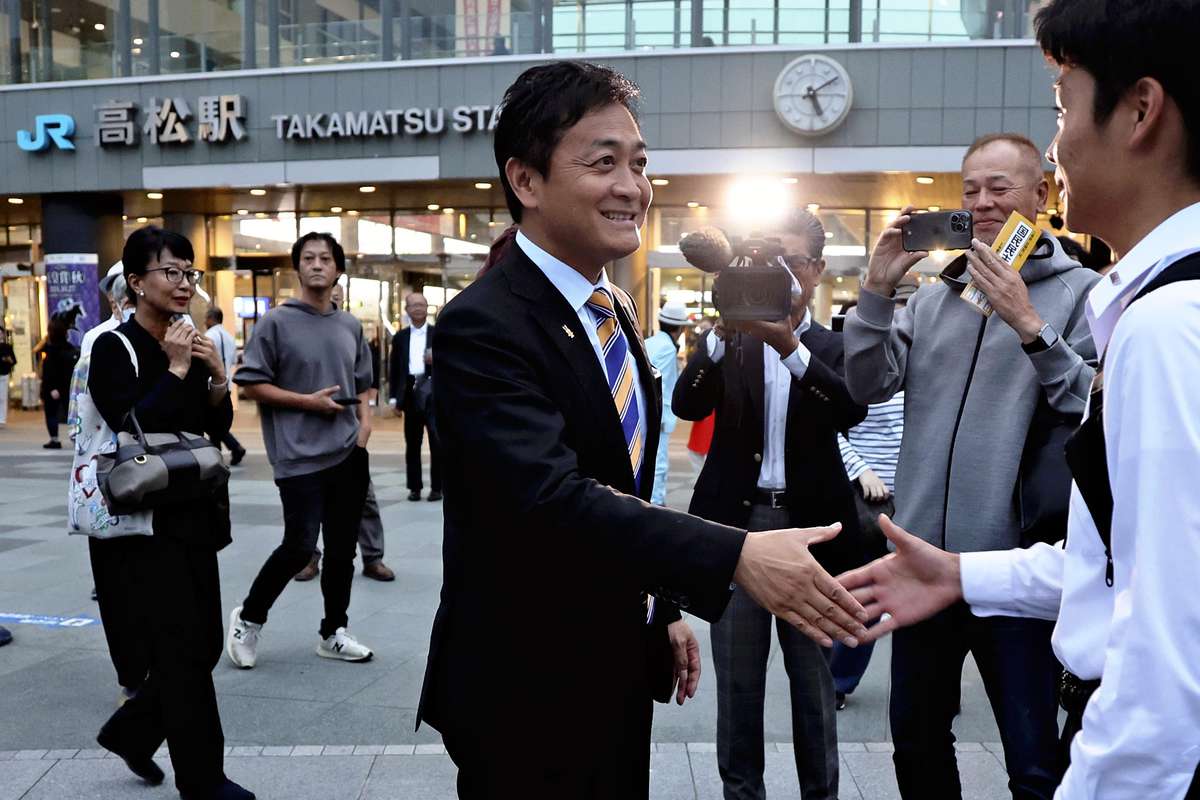
Democratic Party for the People leader Yuichiro Tamaki, center, shakes hands with a supporter in Takamatsu on Oct. 24.
14:08 JST, November 5, 2024
In last month’s House of Representatives election, the Democratic Party for the People expanded its support especially among younger voters and significantly increased its number of seats, partly due to the use of the internet in its election campaign.
The DPFP secured 28 seats, four times more than it had before the lower house election.
The DPFP’s internet-focused approach will likely influence the campaign strategies of the Liberal Democratic Party and the Constitutional Democratic Party of Japan for the House of Councillors election to be held next summer, observers said.
“We made sure to get our message across through videos. This time, the internet and the real world were successfully connected,” DPFP leader Yuichiro Tamaki said in a television program on Sunday.
The videos Tamaki referred to were short, lasting only a few dozen seconds, targeting people in their 20s and 30s who are accustomed to watching videos on social media sites like YouTube and the video-sharing app TikTok.
During the campaign, the DPFP posted three or four videos a day on the internet to introduce its lower house election pledge to increase people’s take-home pay. In this way, the party successfully attracted many people to its YouTube channel.
While speaking on the street, Tamaki encouraged people to make videos of his speech and share them online, saying they were copyright-free. In this way, he was able to get his audience to disseminate video highlights of his speeches on social media.
In an exit poll conducted jointly by the Yomiuri Shimbun and Nippon TV, when voters were asked which party they had voted for in the proportional representation segment of the election, 25% of those aged 18-29 said they voted for the DPFP, while 20% said they voted for the LDP. Among respondents aged 30-39, 22% said they voted for the DPFP and 20% for the LDP.
The DPFP won the largest shares of votes among all parties for both age groups.
Tamaki and other DPFP senior officials adopted the methods of Shinji Ishimaru, the former mayor of Akitakata in Hiroshima Prefecture, who finished second in the Tokyo gubernatorial election in July.
The Sanseito party also focused on campaigning via the internet. The party distributed interviews with its leader Sohei Kamiya and his stump speeches via X, formerly Twitter, and other means. It secured three seats in the lower house with 1.87 million votes in the proportional representation segments.
An LDP official said, “If we don’t rethink our strategy for reaching out to the social media generation, the exodus of support from the LDP will not stop.”







Most Read
Popular articles in the past 24 hours
-

‘Dry Bonsai’ Gives New Life to Withered Trees, Allows Free Artist...
-

Japanese Students Use Traditional Pickle to Create Novel Wagashi ...
-

McDonald's Japan Raises Prices; Big Mac to Cost ¥500, Double Chee...
-

Nepal Bus Crash Kills 19 People, Injures 25 Including One Japanes...
-

Japan’s Nikkei Stock Average Rises as AI-Related Stocks Shine; Co...
-

Astellas Collaborates with Vir to Develop Its Experimental Prosta...
-

Early-Blooming Kawazu Cherry Blossoms Create Sea of Pink at Park ...
-

Joruri Bunraku Narrative Performed in Honor of Donald Keene by La...
Popular articles in the past week
-

Producer Behind Pop Group XG Arrested for Cocaine Possession
-

Japan PM Takaichi’s Cabinet Resigns en Masse
-

Sanae Takaichi Elected Prime Minister of Japan; Keeps All Cabinet...
-

Japan's Govt to Submit Road Map for Growth Strategy in March, PM ...
-

Bus Carrying 40 Passengers Catches Fire on Chuo Expressway; All E...
-

U.S. Firm to Build Training Hub in Fukushima N-plant for Debris R...
-

Japan, U.S. Name 3 Inaugural Investment Projects; Reached Agreeme...
-

Riku-Ryu Pair Wins Gold Medal: Their Strong Bond Leads to Major C...
Popular articles in the past month
-
Producer Behind Pop Group XG Arrested for Cocaine Possession
-
Japan PM Takaichi’s Cabinet Resigns en Masse
-

Japan Institute to Use Domestic Commercial Optical Lattice Clock ...
-

Man Infected with Measles Reportedly Dined at Restaurant in Tokyo...
-

Israeli Ambassador to Japan Speaks about Japan’s Role in the Reco...
-

Videos Plagiarized, Reposted with False Subtitles Claiming ‘Ryuky...
-

Man Infected with Measles May Have Come in Contact with Many Peop...
-

Prudential Life Insurance Plans to Fully Compensate for Damages C...
Top Articles in Politics
-
Japan PM Takaichi’s Cabinet Resigns en Masse
-
Sanae Takaichi Elected Prime Minister of Japan; Keeps All Cabinet Appointees from Previous Term
-
Japan’s Govt to Submit Road Map for Growth Strategy in March, PM Takaichi to Announce in Upcoming Policy Speech
-

LDP Wins Historic Landslide Victory
-

LDP Wins Landslide Victory, Secures Single-party Majority; Ruling Coalition with JIP Poised to Secure Over 300 seats (UPDATE 1)
JN ACCESS RANKING
-
Producer Behind Pop Group XG Arrested for Cocaine Possession
-
Japan PM Takaichi’s Cabinet Resigns en Masse
-
Japan Institute to Use Domestic Commercial Optical Lattice Clock to Set Japan Standard Time
-
Man Infected with Measles Reportedly Dined at Restaurant in Tokyo Station
-
Israeli Ambassador to Japan Speaks about Japan’s Role in the Reconstruction of Gaza