
Efforts Needed To Ensure Proposed Japan-ROK-U.S. Nuclear Consultative Body is Effective
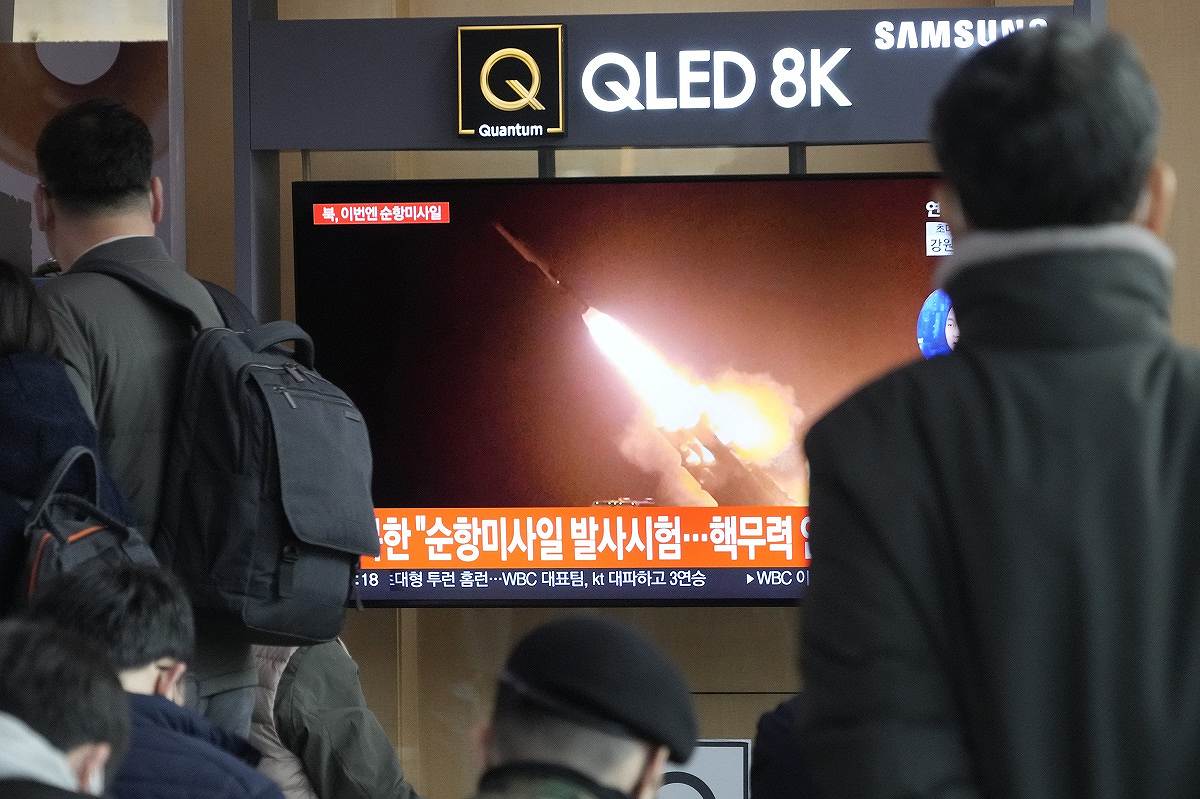
A TV screen at Seoul Railway Station shows a file image of a North Korean missile launch during a news program on Feb. 24.
21:00 JST, March 8, 2023
WASHINGTON — The United States’ move to create a trilateral consultative body on nuclear deterrence with Japan and South Korea reflects concerns about the increased anxiety among its allies regarding the U.S. nuclear umbrella.
Washington likely hopes to use the opportunity of improved Japan-South Korea relations to cement trilateral security cooperation and form a united front against North Korea and China, among others.
Russia has been dangling the threat of nuclear weapons at the United States and Europe amid its invasion of Ukraine. As if inspired by Russia, North Korea has repeatedly engaged in nuclear provocations, triggering talk in South Korea about the possible acquisition of nuclear capabilities.
The United States is trying to contain such moves in East Asia by strengthening information sharing with Japan and South Korea on U.S. nuclear capabilities. However, there are subtle differences between the positions of Japan and South Korea on nuclear deterrence.
South Korea has expressed interest in discussing specific details about the use of nuclear weapons in an emergency to develop practical deterrence. Meanwhile, Prime Minister Fumio Kishida, leader of the only nation that has experienced atomic bombings, has vowed to work toward nuclear abolition. Therefore, Tokyo would prefer not to be involved in the decision-making process regarding the use of U.S. nuclear weapons.
Also, while Japan and South Korea share the security challenges posed by North Korea, South Korea’s stance toward China, which is rapidly advancing its nuclear arms program, differs from that of Japan and the United States.
It is clear that issues will need to be addressed before a stable and functional consultative body can be established.



Most Read
Popular articles in the past 24 hours
-
‘Dry Bonsai’ Gives New Life to Withered Trees, Allows Free Artist...
-

McDonald's Japan Raises Prices; Big Mac to Cost ¥500, Double Chee...
-

Nepal Bus Crash Kills 19 People, Injures 25 Including One Japanes...
-

Japan’s Nikkei Stock Average Rises as AI-Related Stocks Shine; Co...
-

Aggression against Ukraine: Malignant Precedent Must Not Be Set t...
-
Joruri Bunraku Narrative Performed in Honor of Donald Keene by La...
-

Astellas Collaborates with Vir to Develop Its Experimental Prosta...
-

Early-Blooming Kawazu Cherry Blossoms Create Sea of Pink at Park ...
Popular articles in the past week
-

Producer Behind Pop Group XG Arrested for Cocaine Possession
-

Japan PM Takaichi’s Cabinet Resigns en Masse
-

Sanae Takaichi Elected Prime Minister of Japan; Keeps All Cabinet...
-

Japan's Govt to Submit Road Map for Growth Strategy in March, PM ...
-

Bus Carrying 40 Passengers Catches Fire on Chuo Expressway; All E...
-

Japan, U.S. Name 3 Inaugural Investment Projects; Reached Agreeme...
-

Riku-Ryu Pair Wins Gold Medal: Their Strong Bond Leads to Major C...
-

Tokyo Skytree's Elevator Stops, Trapping 20 People; All Rescued (...
Popular articles in the past month
-
Producer Behind Pop Group XG Arrested for Cocaine Possession
-
Japan PM Takaichi’s Cabinet Resigns en Masse
-

Japan Institute to Use Domestic Commercial Optical Lattice Clock ...
-

Man Infected with Measles Reportedly Dined at Restaurant in Tokyo...
-

Israeli Ambassador to Japan Speaks about Japan’s Role in the Reco...
-

Videos Plagiarized, Reposted with False Subtitles Claiming ‘Ryuky...
-

Man Infected with Measles May Have Come in Contact with Many Peop...
-

Prudential Life Insurance Plans to Fully Compensate for Damages C...
Top Articles in Politics
-
Japan PM Takaichi’s Cabinet Resigns en Masse
-
Sanae Takaichi Elected Prime Minister of Japan; Keeps All Cabinet Appointees from Previous Term
-
Japan’s Govt to Submit Road Map for Growth Strategy in March, PM Takaichi to Announce in Upcoming Policy Speech
-

LDP Wins Historic Landslide Victory
-

LDP Wins Landslide Victory, Secures Single-party Majority; Ruling Coalition with JIP Poised to Secure Over 300 seats (UPDATE 1)
JN ACCESS RANKING
-
Producer Behind Pop Group XG Arrested for Cocaine Possession
-
Japan PM Takaichi’s Cabinet Resigns en Masse
-
Japan Institute to Use Domestic Commercial Optical Lattice Clock to Set Japan Standard Time
-
Man Infected with Measles Reportedly Dined at Restaurant in Tokyo Station
-
Israeli Ambassador to Japan Speaks about Japan’s Role in the Reconstruction of Gaza