
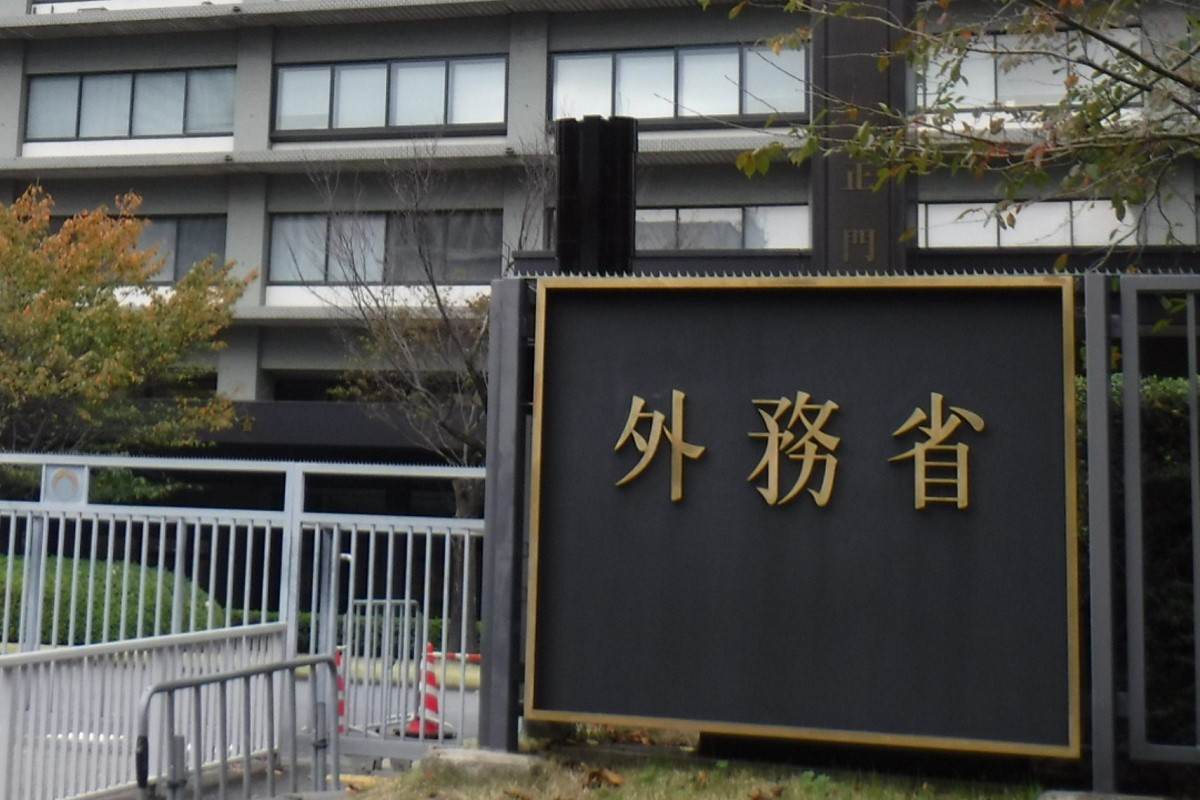
The Foreign Ministry head office is seen in Chiyoda Ward, Tokyo, on Nov. 1, 2020.
11:47 JST, December 25, 2020
The government has decided in principle to stop providing official development assistance (ODA) for the construction of new coal-fired power plants overseas.
The move is aimed at contributing to decarbonization within the international community by reallocating ODA from coal-fired power plants, which emit large amounts of carbon dioxide (CO2), to support for environmentally friendly renewable energy sources.
The re-examining of ODA follows a decision by the government in July that it would halt public funding for exports of coal-fired power plants with low environmental performance.
The government will no longer accept requests from other countries for assistance in the form of ODA, including yen loans, for coal-fired power projects.
ODA for coal-fired power plants will be provided in extremely limited cases, such as ones in which the latest technology is used to reduce CO2 emissions, according to a senior Foreign Ministry official. But because introducing such technology presents a high hurdle in terms of costs for emerging and developing nations, the provision of ODA for new coal-fired power plants in essence will be ended.
Prime Minister Yoshihide Suga has set a goal of zero greenhouse gas emissions by 2050, and expressed his determination to achieve this at United Nations-related conferences. Suga aims to demonstrate to the world his commitment to the environment by focusing ODA on decarbonization initiatives.
Coal-fired power continues to be implemented mainly in developing countries as an cheap energy source. Japan allocated about 5% of ¥1.3705 trillion in yen loans in fiscal year 2018 to support the introduction of this type of energy source. Most of the support went to Asian nations such as Vietnam and Bangladesh.
The government will provide support to developing and emerging countries for projects that focus on introducing technologies for renewable energy, such as wind and geothermal power, as well as efforts to reduce greenhouse gas emissions.
In its strategy for development of overseas infrastructure systems, which was revised in December, the government set a target of increasing the amount of orders for infrastructure exports from ¥25 trillion in 2018 to ¥34 trillion in 2025. It aims to use of ODA to prime the pump for expanding exports of decarbonization technologies to Asian and African nations.









Most Read
Popular articles in the past 24 hours
-

Japan Train Company to Increase Fares, Including in Tokyo Metropo...
-

Japan Govt to Tighten Requirements to Receive Permanent Residency...
-

Tail of ANA Plane Struck Runway During Landing in Houston; No Inj...
-

Samurai Japan Holds First Practice in Miami; Team Will Play again...
-

Medical Care at Home and Disasters: Ensure Systems to Provide Con...
-

Iran Targets Busiest International Airport as Top UN Body Demands...
-

Japan to Face Venezuela in World Baseball Classic Quarterfinals
-

North Korean Leader Kim and His Daughter Try out New Pistols at S...
Popular articles in the past week
-

Japan Figure Skating Legend Yuzuru Hanyu Is Proud Disaster Surviv...
-

Nippon Life Insurance's U.S. Arm Sues OpenAI Over Legal Assistanc...
-

Ibaraki Pref.'s 1st Foreign Bus Driver Hired in Tsukuba
-

Govt to Utilize ODA for Ensuring Economic Security; Securing Ener...
-
Massive Sewer Pipe Found Jutting Out of Highway in Osaka
-

Beckoning Cats Get Makeover to Fit Modern Lifestyles with Sleek D...
-
Japan Govt Survey Finds Just 10% of Workers Want Working Hours to...
-

Japan's 2nd Round of U.S. Investments May Be Worth Over $100 Bill...
Popular articles in the past month
-

Producer Behind Pop Group XG Arrested for Cocaine Possession
-

Japan PM Takaichi’s Cabinet Resigns en Masse
-

Man Infected with Measles Reportedly Dined at Restaurant in Tokyo...
-

Videos Plagiarized, Reposted with False Subtitles Claiming ‘Ryuky...
-

iPS Treatments Pass Key Milestone, but Broader Applications Far f...
-
Japan Figure Skating Legend Yuzuru Hanyu Is Proud Disaster Surviv...
-

Sanae Takaichi Elected Prime Minister of Japan; Keeps All Cabinet...
-

Nepal Bus Crash Kills 19 People, Injures 25 Including One Japanes...
Top Articles in Politics
-
Japan PM Takaichi’s Cabinet Resigns en Masse
-
Sanae Takaichi Elected Prime Minister of Japan; Keeps All Cabinet Appointees from Previous Term
-

Japan’s Govt to Submit Road Map for Growth Strategy in March, PM Takaichi to Announce in Upcoming Policy Speech
-
LDP Begins Training New Lawmakers to Avoid Scandal, Gaffes; Historic Victory in Latest Election Heightens Focus on Party
-

Japan PM Sanae Takaichi Welcomes Peach Ambassadors Koga Momo Musume to Official Residence
JN ACCESS RANKING
-
Producer Behind Pop Group XG Arrested for Cocaine Possession
-
Japan PM Takaichi’s Cabinet Resigns en Masse
-
Man Infected with Measles Reportedly Dined at Restaurant in Tokyo Station
-
Videos Plagiarized, Reposted with False Subtitles Claiming ‘Ryukyu Belongs to China’; Anti-China False Information Also Posted in Japan
-
iPS Treatments Pass Key Milestone, but Broader Applications Far from Guaranteed