
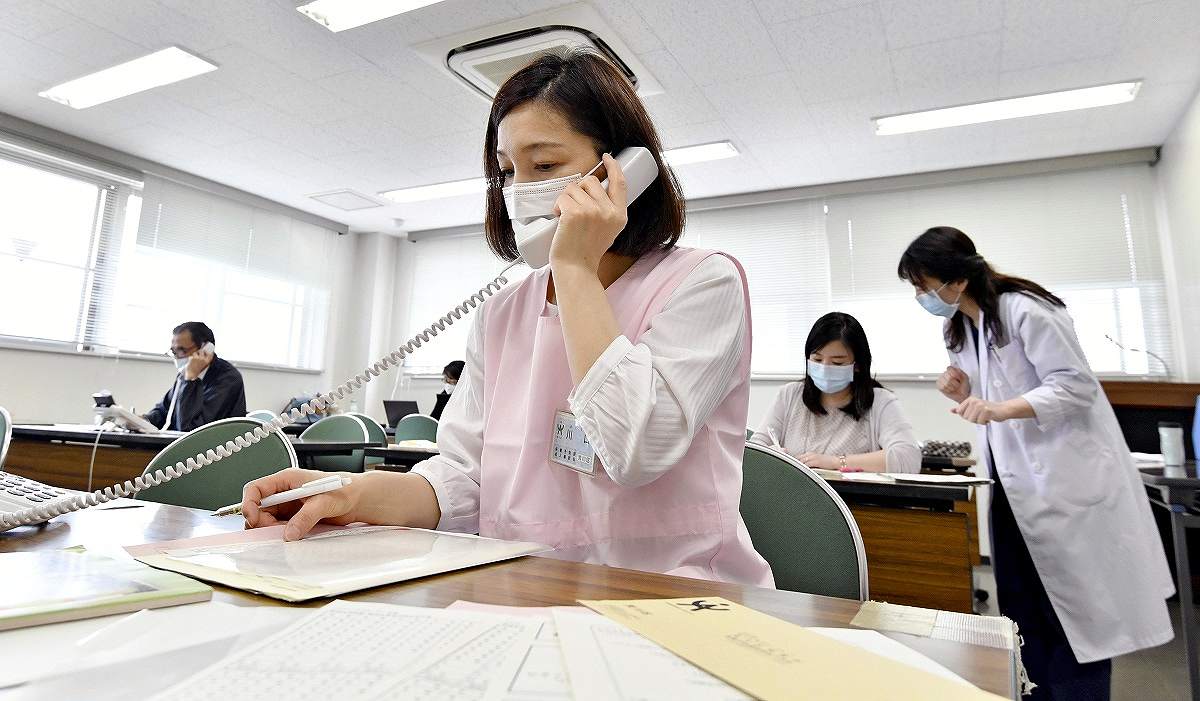
A public health nurse and others work at the office of the Arakawa ward government in Tokyo in May.
16:54 JST, December 9, 2020
The government plans to register 3,000 potential nurses who are qualified but not working for reasons such as pregnancy or childcare leave with its human resource bank by the end of March next year amid the spread of the coronavirus.
There are plans to send them to areas facing a potential shortage of health care workers due to more people becoming infected with the virus.
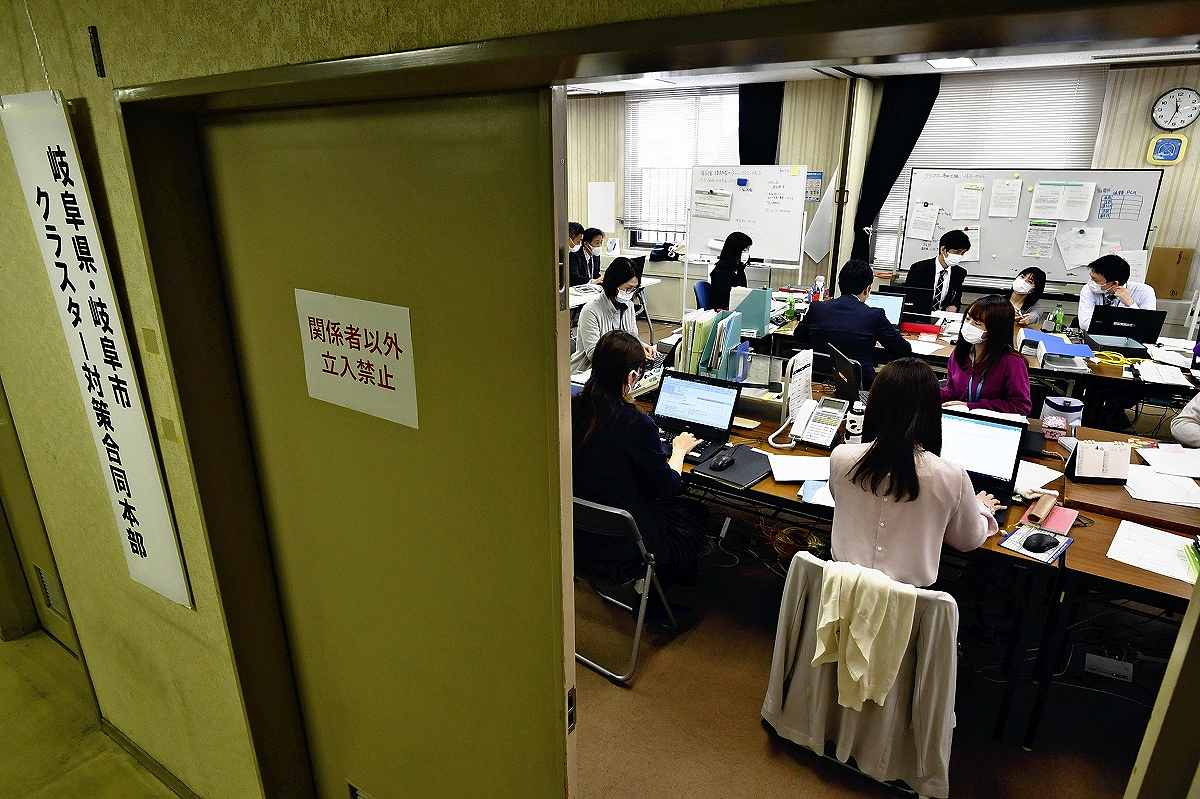
A public health nurse and others work at the Gifu city public health center in Gifu in April.
This summer, the government established the human resource bank in response to a shortage of workers at public health centers due to the spread of infections in spring. Currently, about 1,200 people that include public health center officials, nurses and doctors are registered.
The government aims to speed up the registration with the help of medical organizations and academic societies as there is no sign of the pandemic subsiding.
Under the human resource bank scheme, the government asks prefectures, government-designated and other municipalities in need of manpower if they need health care workers sent from the bank. The government will then do so based on information such as the workers’ qualifications and experience, as well as their availability in terms of location.
Prefectural and other municipal governments will directly communicate with the workers and decide on the period of the contract. Expenses such as daily pay and transportation fees will be covered mostly by the pandemic-related emergency comprehensive support grant allocated by the national government.
Eight people have already been sent to Hokkaido, where infections are rising again, and three to Nagoya as of mid-November, according to the Health, Labor and Welfare Ministry. The ministry plans to dispatch more in the future.
In regions with limited medical resources, a labor shortage may lead to an explosive spread of the virus as the medical care system can instantly become strained following the frequent occurrence of clusters, for example.
“The government must join regional efforts to help alleviate the situation and actively manage human resources,” said a senior government official.






Most Read
Popular articles in the past 24 hours
-
Japan Govt Aims for 10-Fold Increase in Computing Power of Superc...
-

Reopened Fukushima Municipalities Lure New Residents with Educati...
-
Kesennuma, Miyagi Pref., Locals Raise Carp Streamers as Symbol of...
-

Iran Situation: Significance of Rule of Law Must Be Conveyed
-

2 People Reportedly Found on Mt. Fuji; Hiking Trail Currently Clo...
-

Trump Says Iran Had a New Site for Developing Nuclear Weapons
-

Japan's TEPCO to Raise Electricity Rates for Corporations in Apri...
-

Rapeseed Flowers Reach Peak Viewing Period at Tokyo's Showa Kinen...
Popular articles in the past week
-

Ibaraki Pref.'s 1st Foreign Bus Driver Hired in Tsukuba
-

Amid Strait of Hormuz Blockade, Shipping Companies Scramble to Ge...
-

Govt to Utilize ODA for Ensuring Economic Security; Securing Ener...
-
Japan Govt Survey Finds Just 10% of Workers Want Working Hours to...
-

Japan's 2nd Round of U.S. Investments May Be Worth Over $100 Bill...
-

Imperial Family Watches World Baseball Classic Game Against Austr...
-

Donald Keene’s Drinking Buddy and Translator Yukio Kakuchi Pays T...
-

Japan’s Govt Says No Immediate Impact on Oil Supply; No Releases ...
Popular articles in the past month
-

Producer Behind Pop Group XG Arrested for Cocaine Possession
-

Japan PM Takaichi’s Cabinet Resigns en Masse
-

Man Infected with Measles Reportedly Dined at Restaurant in Tokyo...
-

Videos Plagiarized, Reposted with False Subtitles Claiming ‘Ryuky...
-

iPS Treatments Pass Key Milestone, but Broader Applications Far f...
-

Sanae Takaichi Elected Prime Minister of Japan; Keeps All Cabinet...
-

Nepal Bus Crash Kills 19 People, Injures 25 Including One Japanes...
-

Japan's Govt to Submit Road Map for Growth Strategy in March, PM ...
Top Articles in Politics
-
Japan PM Takaichi’s Cabinet Resigns en Masse
-
Sanae Takaichi Elected Prime Minister of Japan; Keeps All Cabinet Appointees from Previous Term
-
Japan’s Govt to Submit Road Map for Growth Strategy in March, PM Takaichi to Announce in Upcoming Policy Speech
-
CRA Leadership Election Will Center on Party Rebuilding; Lower House Defeat Leaves Divisions among Former CDPJ, Komeito Members
-
LDP Begins Training New Lawmakers to Avoid Scandal, Gaffes; Historic Victory in Latest Election Heightens Focus on Party
JN ACCESS RANKING
-
Producer Behind Pop Group XG Arrested for Cocaine Possession
-
Japan PM Takaichi’s Cabinet Resigns en Masse
-
Man Infected with Measles Reportedly Dined at Restaurant in Tokyo Station
-
Videos Plagiarized, Reposted with False Subtitles Claiming ‘Ryukyu Belongs to China’; Anti-China False Information Also Posted in Japan
-
iPS Treatments Pass Key Milestone, but Broader Applications Far from Guaranteed