
Upper House Election: Japan’s Declining Population, Other Factors Leading to Fewer Polling Stations for House of Councillors Election
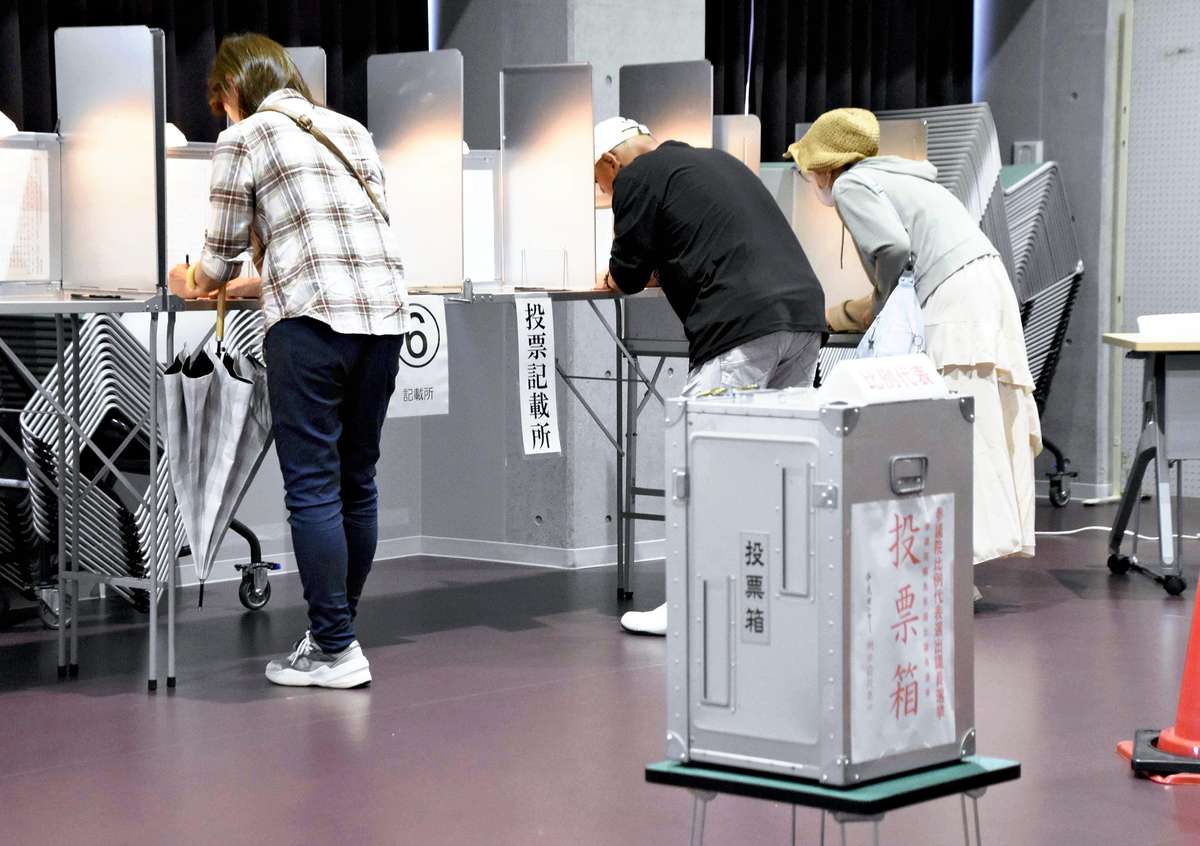
People cast their ballot during early voting ahead of Sunday’s House of Councillors election in Fukushima City on July 4.
14:58 JST, July 19, 2025
The number of polling stations for the House of Councillors election is on a downward trend due to difficulties in securing local government staffers for election administration and election observers along with such factors as a declining population.
According to the Internal Affairs and Communications Ministry, 44,758 polling stations will be set up on Sunday’s upper house election. This is 1,267 fewer than the previous upper house election in 2022. Except for Okinawa, 46 of the nation’s 47 prefectures saw a decline.
The number of polling stations that will close earlier is also increasing. Under the Public Offices Election Law, voting hours are set from 7 a.m. to 8 p.m., but the time can be changed by up to four hours under certain circumstances. This time, 18,142 polling stations — accounting for 40% of the total — are expected to close earlier than 8 p.m. This is 890 more than in the previous election.
The number of polling stations for the upper house election peaked during the 2001 upper house election at 53,439.
Compared to the 2022 election, Hokkaido saw the largest decrease, with a 109 reduction of stations. “Securing staffers for election administration work is challenging, and more municipalities are reducing the number of polling stations,” explained an election official of the Hokkaido prefectural government.
The official said the prefecture has adopted several measures to secure voting opportunities for voters, such as dispatching mobile polling stations for early voting.


Related Tags




Most Read
Popular articles in the past 24 hours
-

Japan Train Company to Increase Fares, Including in Tokyo Metropo...
-

Japan Govt to Tighten Requirements to Receive Permanent Residency...
-

Tail of ANA Plane Struck Runway During Landing in Houston; No Inj...
-

Samurai Japan Holds First Practice in Miami; Team Will Play again...
-

Medical Care at Home and Disasters: Ensure Systems to Provide Con...
-

Iran Targets Busiest International Airport as Top UN Body Demands...
-

Japan to Face Venezuela in World Baseball Classic Quarterfinals
-

North Korean Leader Kim and His Daughter Try out New Pistols at S...
Popular articles in the past week
-

Japan Figure Skating Legend Yuzuru Hanyu Is Proud Disaster Surviv...
-

Nippon Life Insurance's U.S. Arm Sues OpenAI Over Legal Assistanc...
-

Ibaraki Pref.'s 1st Foreign Bus Driver Hired in Tsukuba
-
Govt to Utilize ODA for Ensuring Economic Security; Securing Ener...
-
Massive Sewer Pipe Found Jutting Out of Highway in Osaka
-

Beckoning Cats Get Makeover to Fit Modern Lifestyles with Sleek D...
-
Japan Govt Survey Finds Just 10% of Workers Want Working Hours to...
-

Japan's 2nd Round of U.S. Investments May Be Worth Over $100 Bill...
Popular articles in the past month
-

Producer Behind Pop Group XG Arrested for Cocaine Possession
-

Japan PM Takaichi’s Cabinet Resigns en Masse
-

Man Infected with Measles Reportedly Dined at Restaurant in Tokyo...
-

Videos Plagiarized, Reposted with False Subtitles Claiming ‘Ryuky...
-

iPS Treatments Pass Key Milestone, but Broader Applications Far f...
-
Japan Figure Skating Legend Yuzuru Hanyu Is Proud Disaster Surviv...
-

Sanae Takaichi Elected Prime Minister of Japan; Keeps All Cabinet...
-

Nepal Bus Crash Kills 19 People, Injures 25 Including One Japanes...
Top Articles in Politics
-
Japan PM Takaichi’s Cabinet Resigns en Masse
-
Sanae Takaichi Elected Prime Minister of Japan; Keeps All Cabinet Appointees from Previous Term
-
Japan’s Govt to Submit Road Map for Growth Strategy in March, PM Takaichi to Announce in Upcoming Policy Speech
-
LDP Begins Training New Lawmakers to Avoid Scandal, Gaffes; Historic Victory in Latest Election Heightens Focus on Party
-

Japan PM Sanae Takaichi Welcomes Peach Ambassadors Koga Momo Musume to Official Residence
JN ACCESS RANKING
-
Producer Behind Pop Group XG Arrested for Cocaine Possession
-
Japan PM Takaichi’s Cabinet Resigns en Masse
-
Man Infected with Measles Reportedly Dined at Restaurant in Tokyo Station
-
Videos Plagiarized, Reposted with False Subtitles Claiming ‘Ryukyu Belongs to China’; Anti-China False Information Also Posted in Japan
-
iPS Treatments Pass Key Milestone, but Broader Applications Far from Guaranteed