
Upper House Election: Topic of Foreign Nationals Becomes Key Issue in Japan Election; Baseless Criticisms Against Foreigners Spread on Social Media
20:00 JST, July 18, 2025
Foreign nationals have become a topic of contention in the House of Councillors election campaign, fanned by public concerns over an increasing number of foreign nationals and rising prices. The extreme criticisms online could lead to discrimination.
“I feel that wealthy foreigners are buying condominiums one after another and driving up prices,” said a 30-year-old company employee in Tokyo.
He and his wife are looking for a place to live, but even with a household income of about ¥14 million, they cannot afford a three-bedroom condominium in central Tokyo.
The surge in real estate prices is mostly attributed to the rising cost of materials and labor, but some point out that foreigners purchasing property as an investment is also a factor. Some countries restrict overseas buyers from purchasing property.
“I want lawmakers to create a policy to curb foreigners from buying condominiums in Japan,” he said.
As the COVID-19 pandemic has subsided, more investments are being made into Japan and more people are coming to the country. A record 3.76 million foreign nationals were living in Japan as of the end of 2024. This influx of money and people have exacerbated tensions.
Disputes involving foreign nationals, including improper trash disposal and violence, occur nationwide, leading some political parties to pledge restrictions on real estate acquisitions and entry of foreigners in their campaigns.
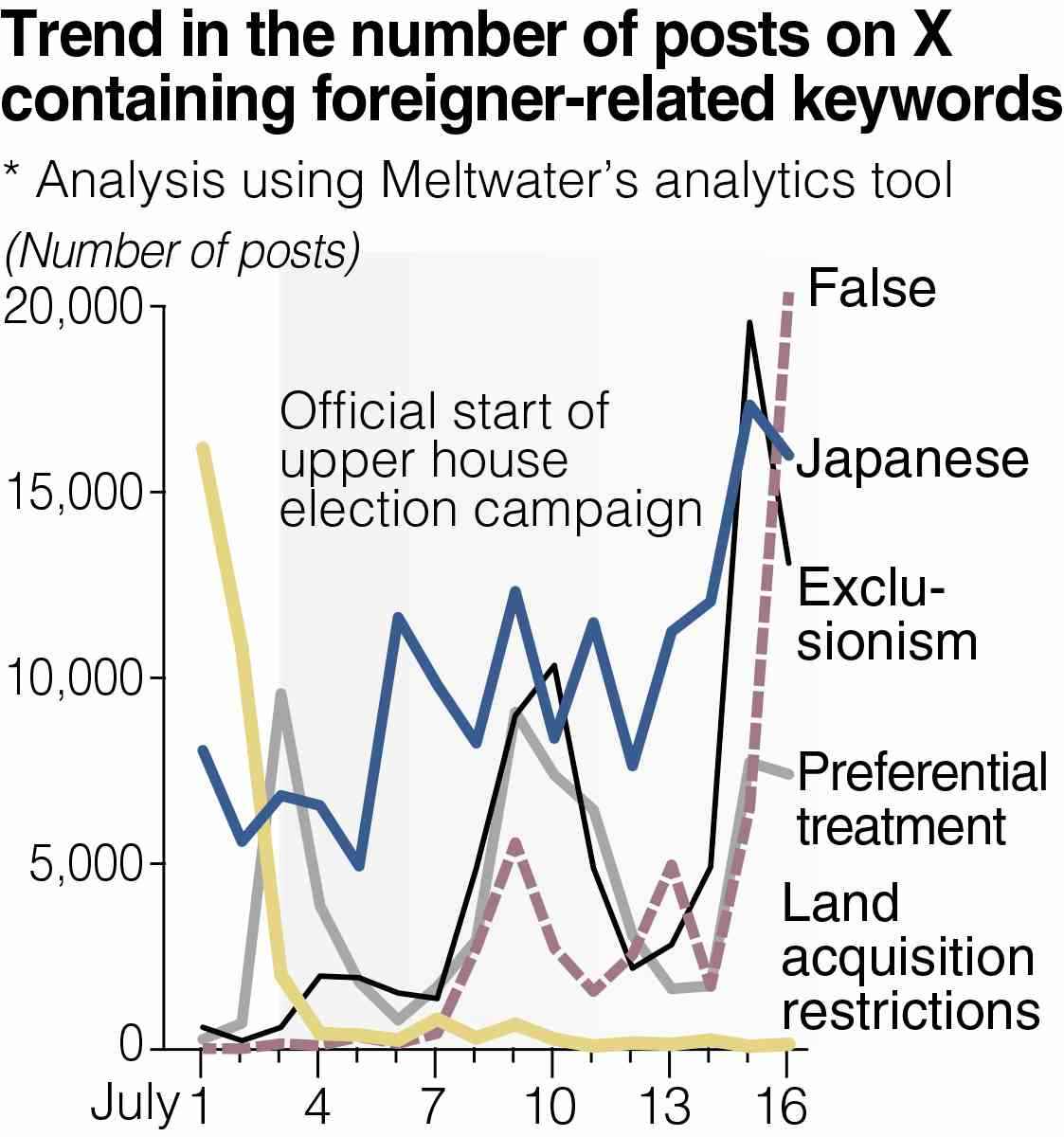
Baseless criticisms against foreign nationals have been seen on social media, and some candidates have made extreme statements in their speeches, such as “More than a few foreigners harm Japanese people.”
“I’ve worked so hard, so it makes me sad to be told that foreigners aren’t needed,” said a 30-year-old Vietnamese national who manages a restaurant in Kanagawa Prefecture.
The Vietnamese national came to Japan in 2016, earned a residence status of specified skilled worker in the food service industry and has been working at his current job for the past two years. As a manager, he is responsible for his staff, who are all foreigners.
His take-home pay is about ¥230,000, and he sends some of it to his 65-year-old mother, who lives in Vietnam.
“I want people to see that I’m a contributing member of society,” he said.
Waseda University Prof. Shunsuke Tanabe said, “The phenomenon of strengthening regulations on foreigners against the backdrop of public dissatisfaction and anxiety can be seen overseas as well.”
“At a time when the economy needs a boost, taking away the rights of some foreigners will not solve the problem,” Tanabe added. “Voters should rationally judge the pledges made by each candidate.”


Related Tags
Most Read
Popular articles in the past 24 hours
-

Japanese Shipping Giants Halt Strait of Hormuz Transit as Iran Co...
-

U.S. Launches Attacks on Iran: Avoid Escalation of Conflict by An...
-

Sawtooth Roof Factory Stands as Monument to Ashikaga Textile Hist...
-

Parents of Japanese Teen Shot in U.S. Strive for Gun Control
-

Disinformation Spreads About Team Mirai, Ballot Readers; Online P...
-
Asahi Breweries to Stage Comeback with New Product in April; Comp...
-

Bank of Japan Deputy Governor Says Rate Hikes Likely to Continue
-
Japanese Government Bonds Rally, Yields Tumble as Iran Strikes Sp...
Popular articles in the past week
-

Nepal Bus Crash Kills 19 People, Injures 25 Including One Japanes...
-

Milano Cortina 2026: Japanese Gold Medalist Figure Skater Miura S...
-

Tokyo Spends Big on Children, Wins Over Parents
-

McDonald's Japan Raises Prices; Big Mac to Cost ¥500, Double Chee...
-

Japan’s Miura, Kihara Announce Withdrawal from Figure Skating Wor...
-

Exhibition Featuring Yoshiharu Tsuge’s Manga World Underway in Ch...
-

Yokohama to Test Out Renewable-Powered Offshore Floating Data Cen...
-
BOJ Keeping Eye on Economy and Takaichi's ‘Proactive Fiscal Polic...
Popular articles in the past month
-

Producer Behind Pop Group XG Arrested for Cocaine Possession
-

Japan PM Takaichi’s Cabinet Resigns en Masse
-

Man Infected with Measles Reportedly Dined at Restaurant in Tokyo...
-

Israeli Ambassador to Japan Speaks about Japan’s Role in the Reco...
-

Videos Plagiarized, Reposted with False Subtitles Claiming ‘Ryuky...
-

Man Infected with Measles May Have Come in Contact with Many Peop...
-

Prudential Life Insurance Plans to Fully Compensate for Damages C...
-

Woman with Measles Visited Hospital in Tokyo Multiple Times Befor...
Top Articles in Politics
-
Japan PM Takaichi’s Cabinet Resigns en Masse
-

Sanae Takaichi Elected Prime Minister of Japan; Keeps All Cabinet Appointees from Previous Term
-

Japan’s Govt to Submit Road Map for Growth Strategy in March, PM Takaichi to Announce in Upcoming Policy Speech
-

LDP Wins Historic Landslide Victory
-

LDP Wins Landslide Victory, Secures Single-party Majority; Ruling Coalition with JIP Poised to Secure Over 300 seats (UPDATE 1)
JN ACCESS RANKING
-
Producer Behind Pop Group XG Arrested for Cocaine Possession
-
Japan PM Takaichi’s Cabinet Resigns en Masse
-
Man Infected with Measles Reportedly Dined at Restaurant in Tokyo Station
-
Israeli Ambassador to Japan Speaks about Japan’s Role in the Reconstruction of Gaza
-
Videos Plagiarized, Reposted with False Subtitles Claiming ‘Ryukyu Belongs to China’; Anti-China False Information Also Posted in Japan